INK OF ANOTHER WORLD: Inside the Art of Kiryu (気流)
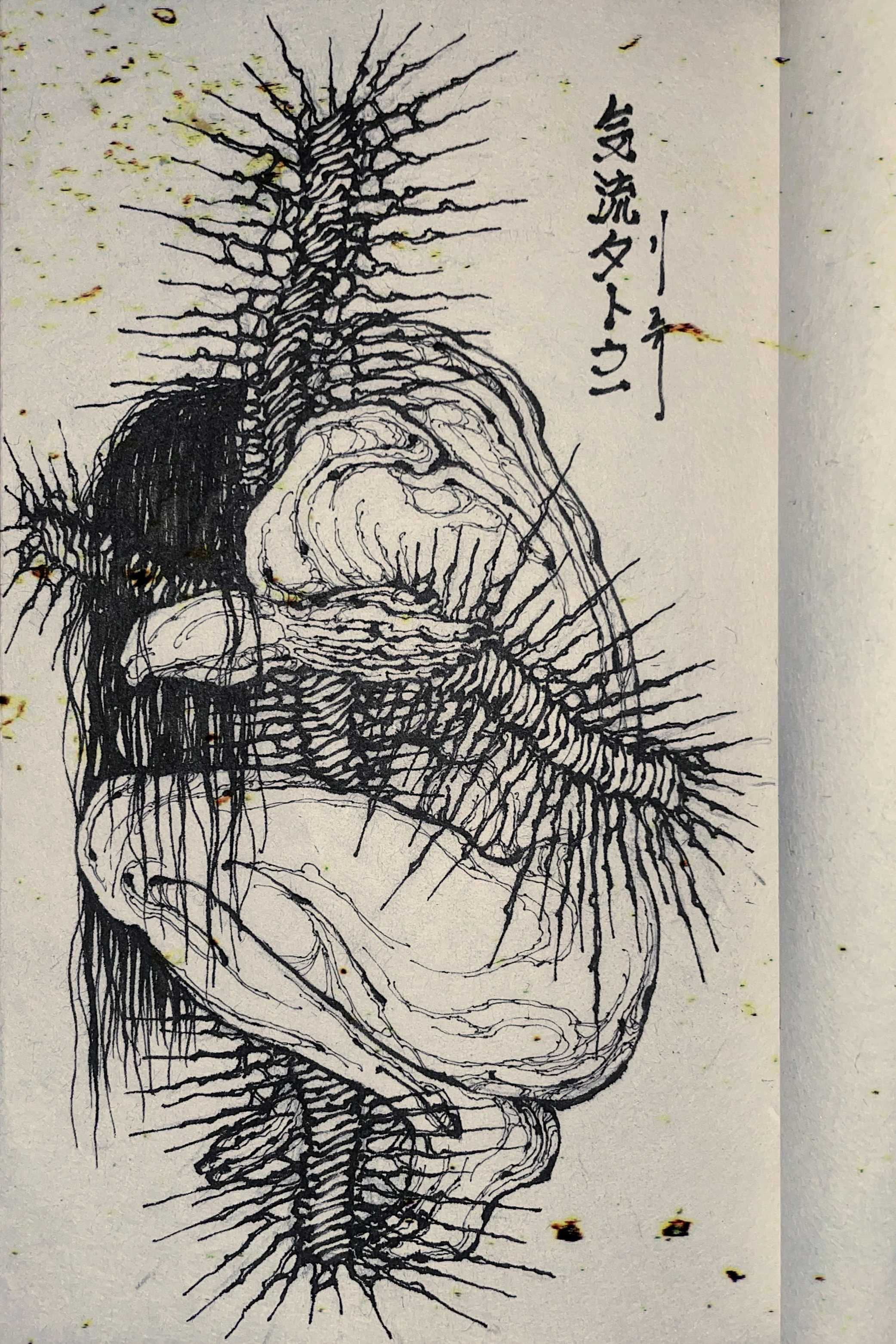
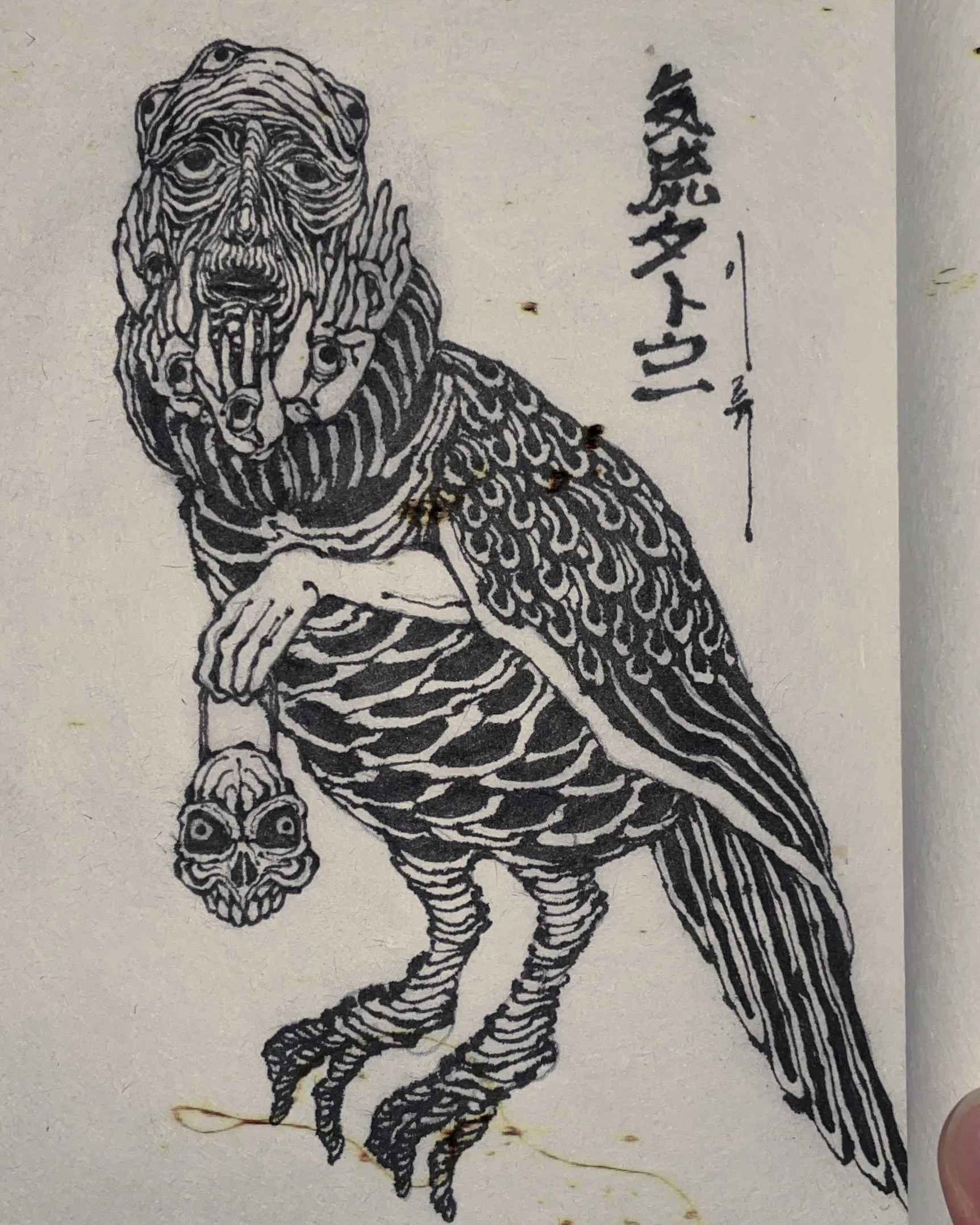
In the dim, intricate world where beauty and terror intertwine, few artists navigate that space as fluently as Kiryu, a Seoul-based tattooist whose work transforms anxiety, darkness, and raw emotion into hauntingly elegant forms. Known for his depictions of demons, yokai, and other mythical beings, Kiryu’s art is more than stylized horror; it’s an emotional landscape carved from lived experience, personal turmoil, and the quiet resilience that follows.
Though tattooing in Korea has long existed under legal and social constraints, Kiryu has cultivated a distinct voice within the shadows. His pieces often begin as illustrations born from moments of vulnerability: drawings created while confronting betrayal, isolation, or the unspoken heaviness many carry. For Kiryu, these images are not just designs, but also companions, anchors that helped him endure. And when clients choose to wear those images on their skin, the connection becomes even more profound.
With roots in anime, mythology, and the grotesque, Kiryu’s style blends fantasy with deeply human emotion, inviting viewers to find beauty where it is least expected. As he prepares for his first guest work in Tokyo, GATA sat down with him to explore the stories behind his creatures, his artistic philosophy, and the intimate power tattoos hold in shaping identity.
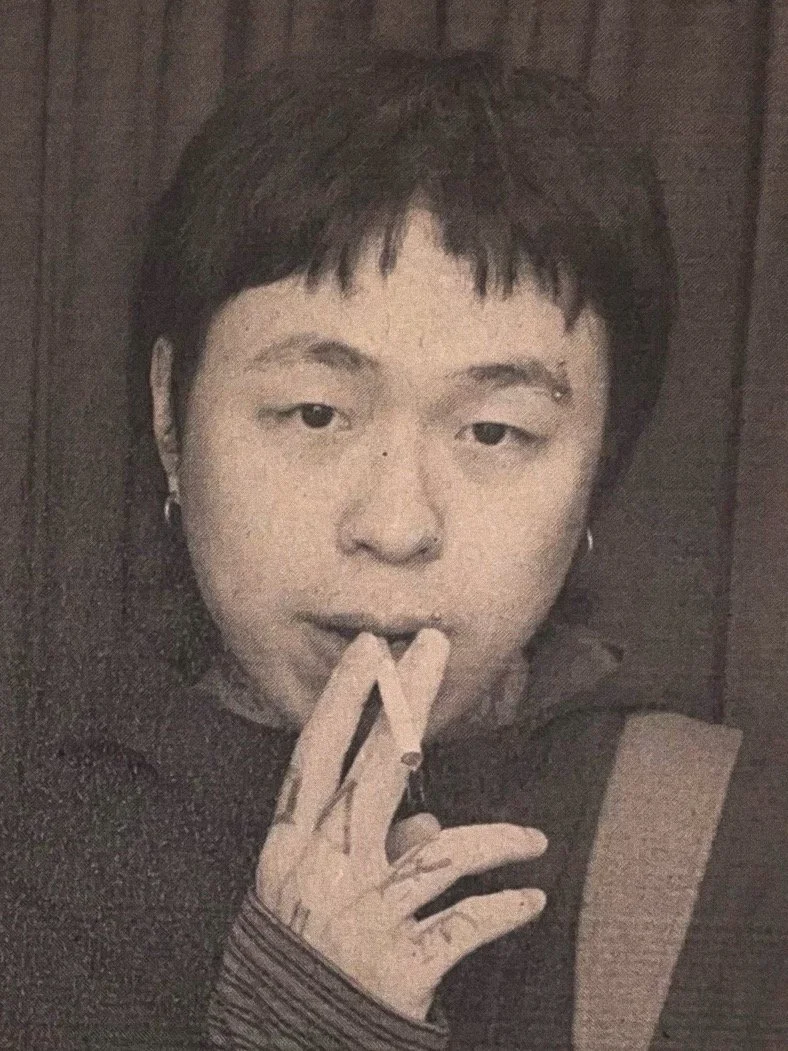
Kiryu speaks softly between slow drags of a cigarette, light funky music drifting through the room draped in sketches of eerie creatures…
GATA: Hello Kiryu! Before we begin, how was your day?
Kiryu: Hello! Nice to meet you. I actually had an appointment just finished work, quickly cleaned up, haha. It’s actually my first interview ever, so I’m a bit nervous,, but I’m happy to be here :)
GATA: For those who may not know you, could you briefly introduce yourself and tell us how you began your tattoo journey?
Kiryu: I’m currently working in Haebangchon, Seoul, doing art-related work. I draw comics and illustrations on my own, too. I don’t think I have enough skill yet to actively work as an artist, but I’m trying out different projects based on drawing.
As for how I first got into tattooing, well, tattoos aren’t like drawing on regular paper. You’re drawing on skin with a needle, so I always thought of it as a completely different field from what I do. Because of that, I never really paid much attention to it. But back in college, one of my classmates told me they were starting to do tattoos. Hearing that, I thought, “If someone I know, someone who’s my friend, can do it, then maybe it’s not such a distant field for me either.” It made me feel like I might be able to try it too. From then on my interest started growing, and that’s how I eventually started tattooing.
“I want to create artwork that offers comfort to someone. ”
GATA: What is the meaning behind Kiryu (気流) or this that your actual name,,?
Kiryu: Kiryu is my artist name. The meaning comes from 気流 (kiryu), which refers to the flow of air. When I first started tattooing, I had this kind of youthful ambition: I wanted to change the flow of tattoo culture and create my own current within it. So that meaning is built into the name. But honestly, when I think about it now, it feels a bit embarrassing; maybe I was being a little too ambitious. A lot of people get confused and think Kiryu is my actual given name.
GATA: Your tattoo work often depicts demonic or mythical creatures. What draws you to these darker, supernatural themes?
Kiryu: It’s a bit hard to say exactly when it all started, but if I had to pick one memorable moment… There’s this movie starring Hugh Jackman called Van Helsing. It has lots of fantasy elements like vampires and Frankenstein’s monster. I loved that movie so much that I watched it over ten times.
Because I enjoyed things like that and kept consuming that kind of content, I think my tastes naturally started shifting toward darker, more fantastical themes. And I also really love anime, especially Bleach. I’ve basically grown up with Bleach since around my first year of middle school. I read the manga obsessively, too. There are so many monster-like characters in Bleach, and they’re so cool; their designs, their powers, everything. Keeping up with that series definitely pushed my taste further in that direction.
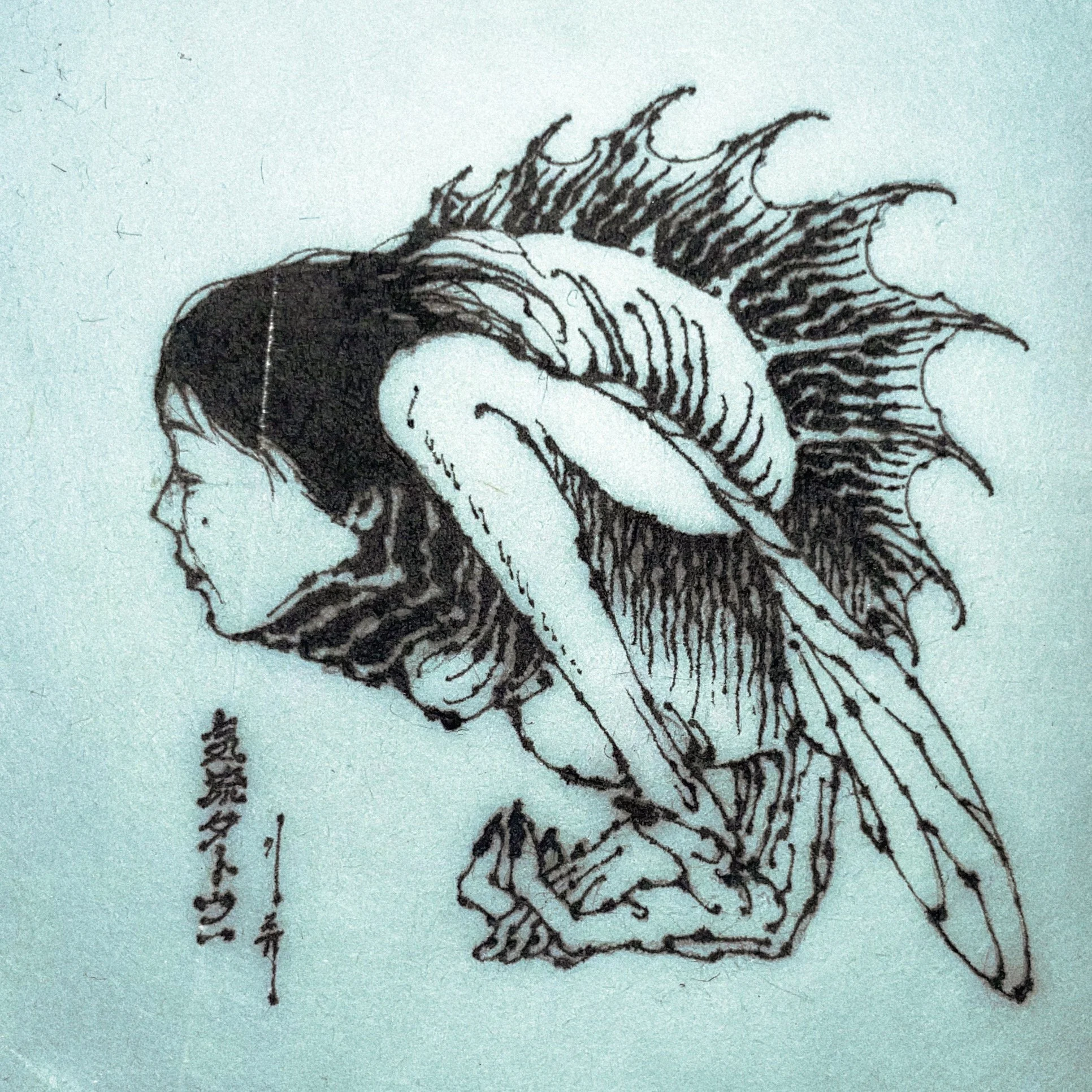
“I think I’m drawn to the grotesque. If we’re talking about non-conventional human forms, like limbs bent in unnatural directions or melting skin, I find those things beautiful, even cool. A kind of raw, imperfect beauty.”
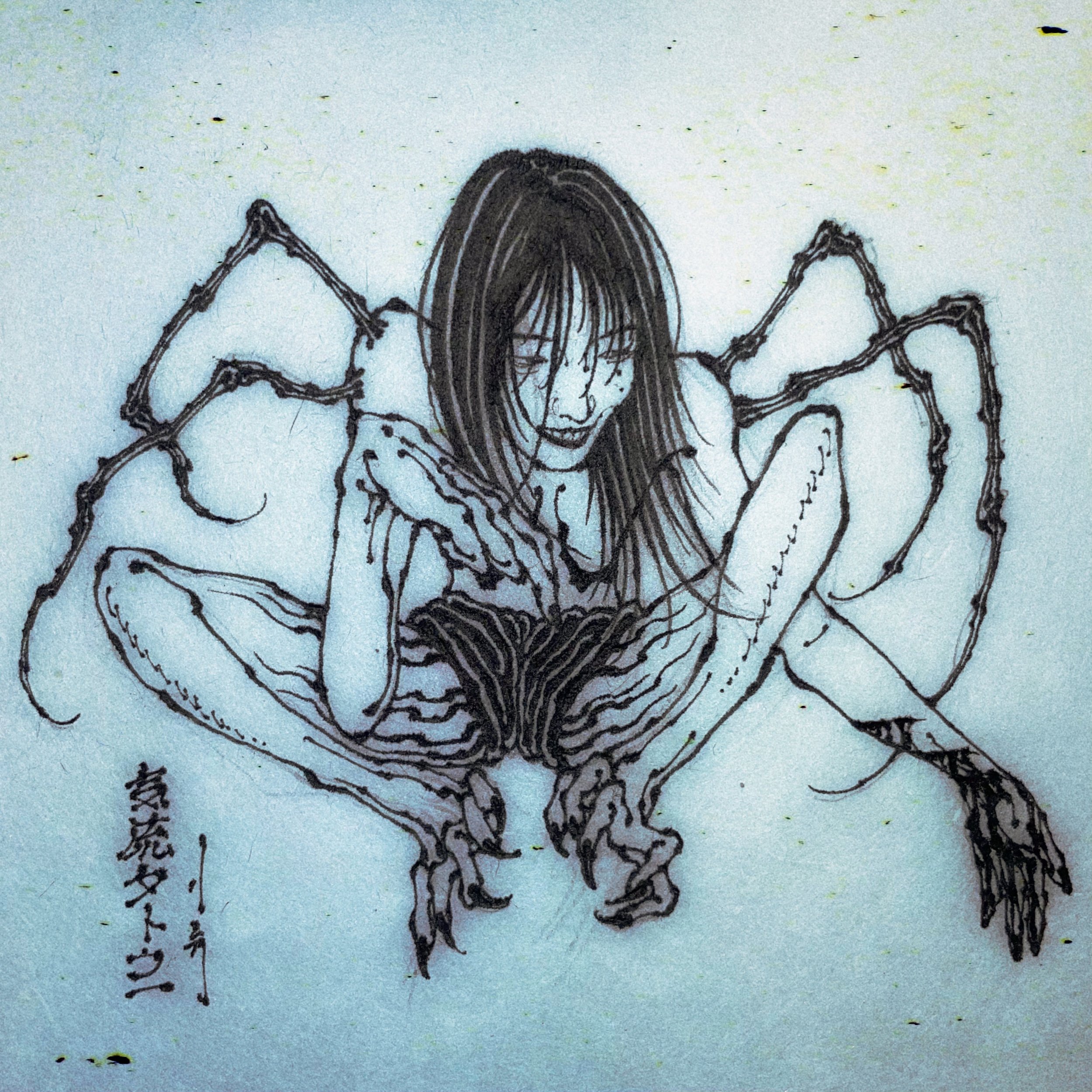
GATA: Do you see the creatures that you draw as purely fictional, or do they represent emotions, parts of human nature, or something else?
Kiryu: Personally, I think that when urban legends or ghost stories emerge, they come from the social atmosphere, people’s collective anxiety or sadness. So even though these stories are fictional, I believe that a single illustration can also carry those same qualities.
For me, when I draw, pulling up feelings of sadness or anxiety actually helps my process. Even when I’m not feeling that way, I’ll listen to dark music or watch certain films to bring those emotions to the surface. A lot of my work is born from that. So while some beings are purely fictional, I think many of them embody human anxiety.
GATA: Then would you say you highlight the emotion of anxiety; how widespread it is in the world?
Kiryu: Yes, that’s part of it. Honestly, everyone has experienced anxiety at some point, and many people are dealing with it right now. I think that even an illustration that draws out empathy can be comforting. I want to create artwork that offers comfort to someone. Fear, grotesqueness, beauty—those things are all valid reactions. The emotions or preferences someone feels when they look at an artwork are all different, and I think that diversity is a good thing. But ultimately, I hope that my work reaches a place of empathy or comfort.
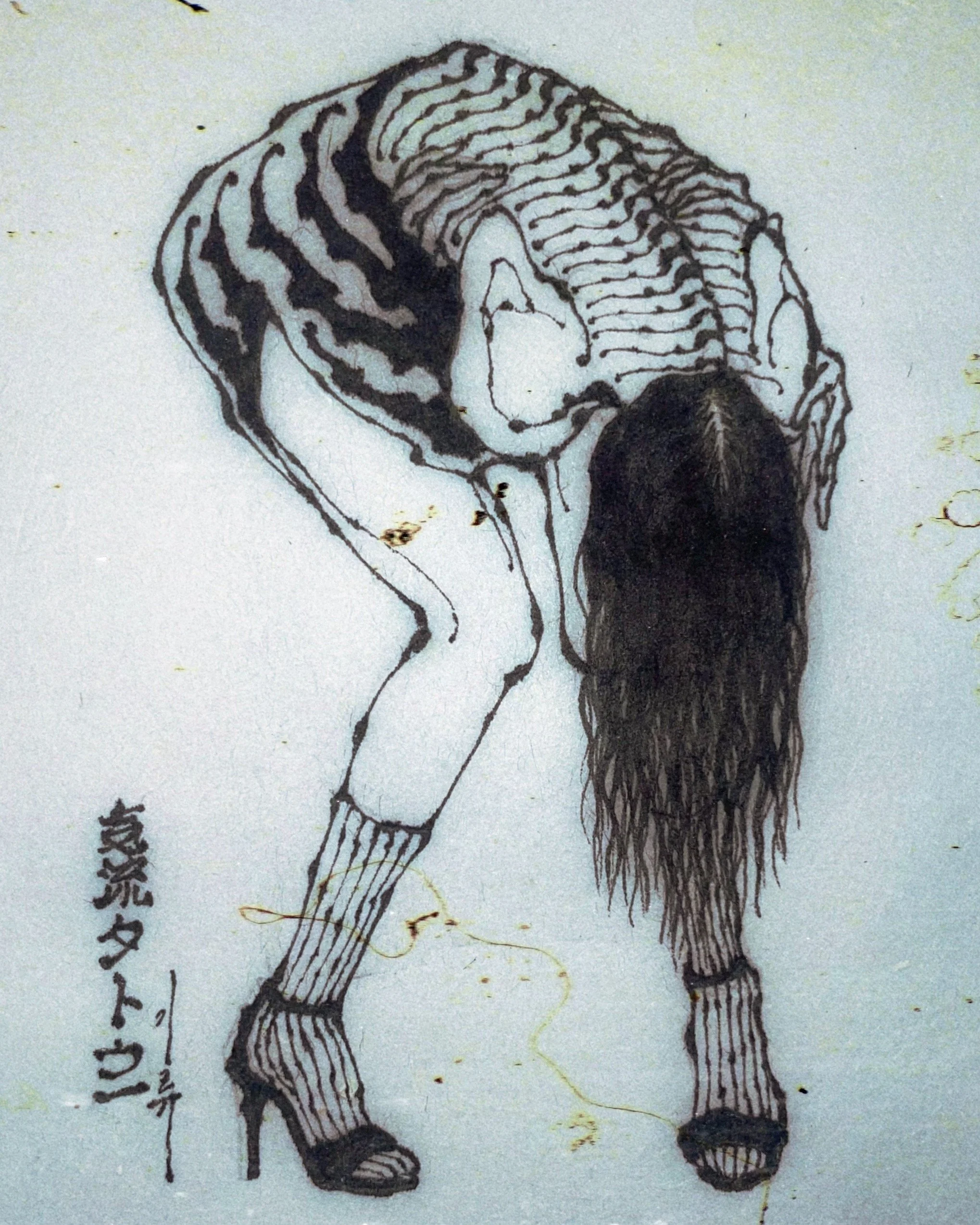
GATA: Many of your designs blur the line between beauty and horror. How do you define “beauty” in your work?
Kiryu: The feeling of something being “beautiful” is really hard to define. Even if you say you belong to a certain genre or category, “I’m this kind of person,” you can still find beauty in something completely different. So it’s hard to pin down. But if I had to choose one category, I think I’m drawn to the grotesque. If we’re talking about non-conventional human forms, like limbs bent in unnatural directions or melting skin, I find those things beautiful, even cool. A kind of raw, imperfect beauty?
GATA: Like Venus de Milo, right? They’re not intact, but they’re still beautiful.
Kiryu: Yes, I really like those kinds of sculptures too. Beauty isn’t fixed for each person, and people define beauty in their own way.
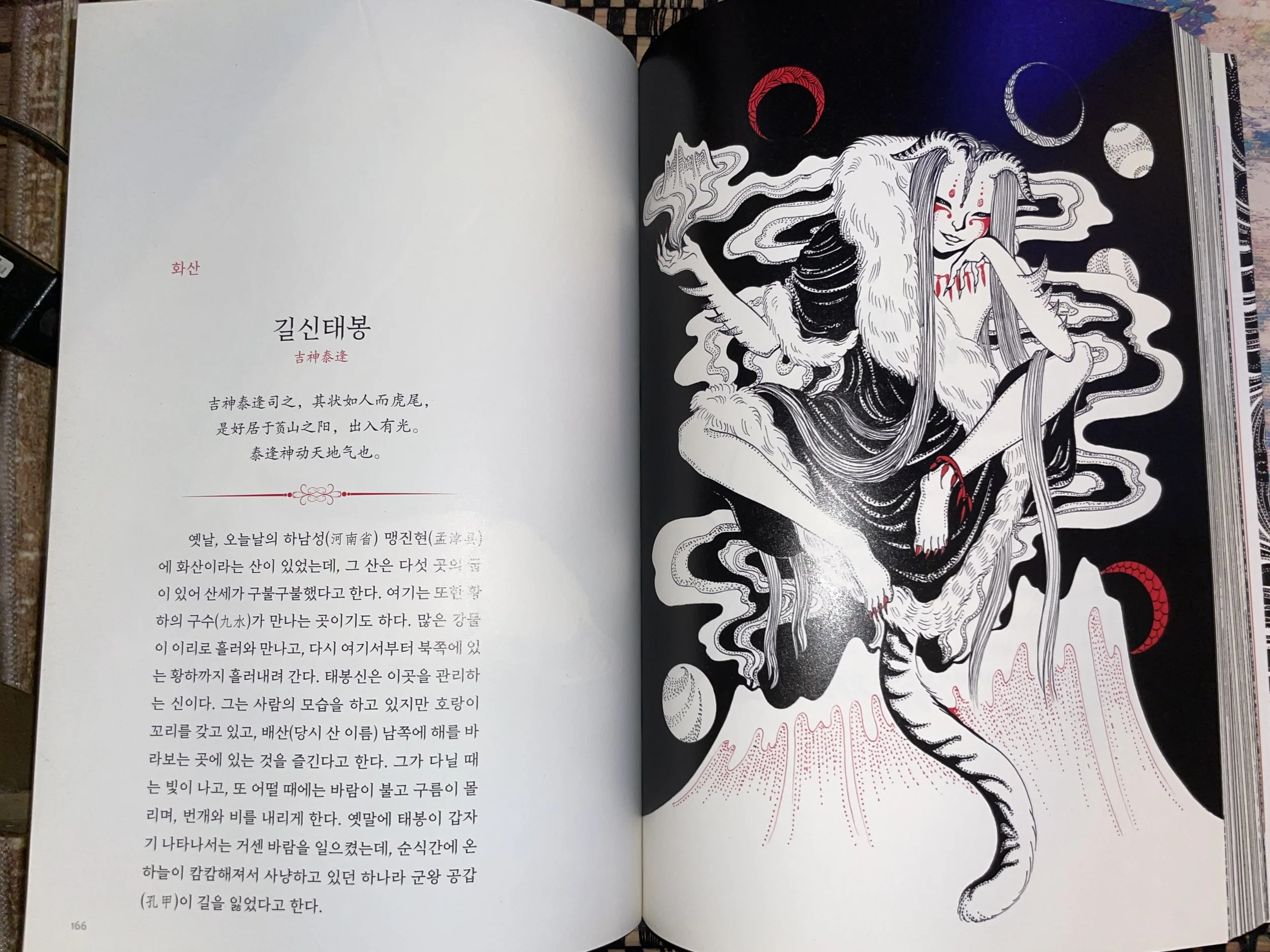
GATA: Are there particular myths, artworks, books, or films that inspire your imagery?
Kiryu: It’s something I saw a long time ago, but Shan Hai Jing. It’s an ancient Chinese text that mixes geography with mythology, full of imagined creatures, spirits, and medicinal herbs. Today, there are books that compile the monsters from Shan Hai Jing into illustrated bestiaries. I bought two different versions of those, and reading them really made me think a lot. They inspired me to try creating my own collection of yokai or nightmare-like beings from fairy tales—my own monster compendium.
GATA: Besides work, favorite movies/music recently?
Kiryu: As for films, this was when it was just released, but I really enjoyed The Substance. I found it incredibly entertaining. The sound design and direction stimulated all the senses, and there are these wonderfully bizarre, unsettling scenes. I loved the makeup, the overall atmosphere, and the direction. It left a strong impression on me.
For music, I’ve always loved songs by Kim Kwang-seok. He created music that really touched people’s emotions. He has passed away, but I still listen to his songs a lot. Another song I’ve been especially into lately is “Mirror” by Hanroro. It feels like a song that captures the anxiety of youth, their unstable daily emotions. The melody flows gently at first, and then in the second half, it suddenly swells, like a flame that shines brightest right before it bursts. There’s this moment where the sound erupts almost like an outpouring. The way the song shifts like that, I find the whole structure so moving, so I’ve been listening to it a lot.
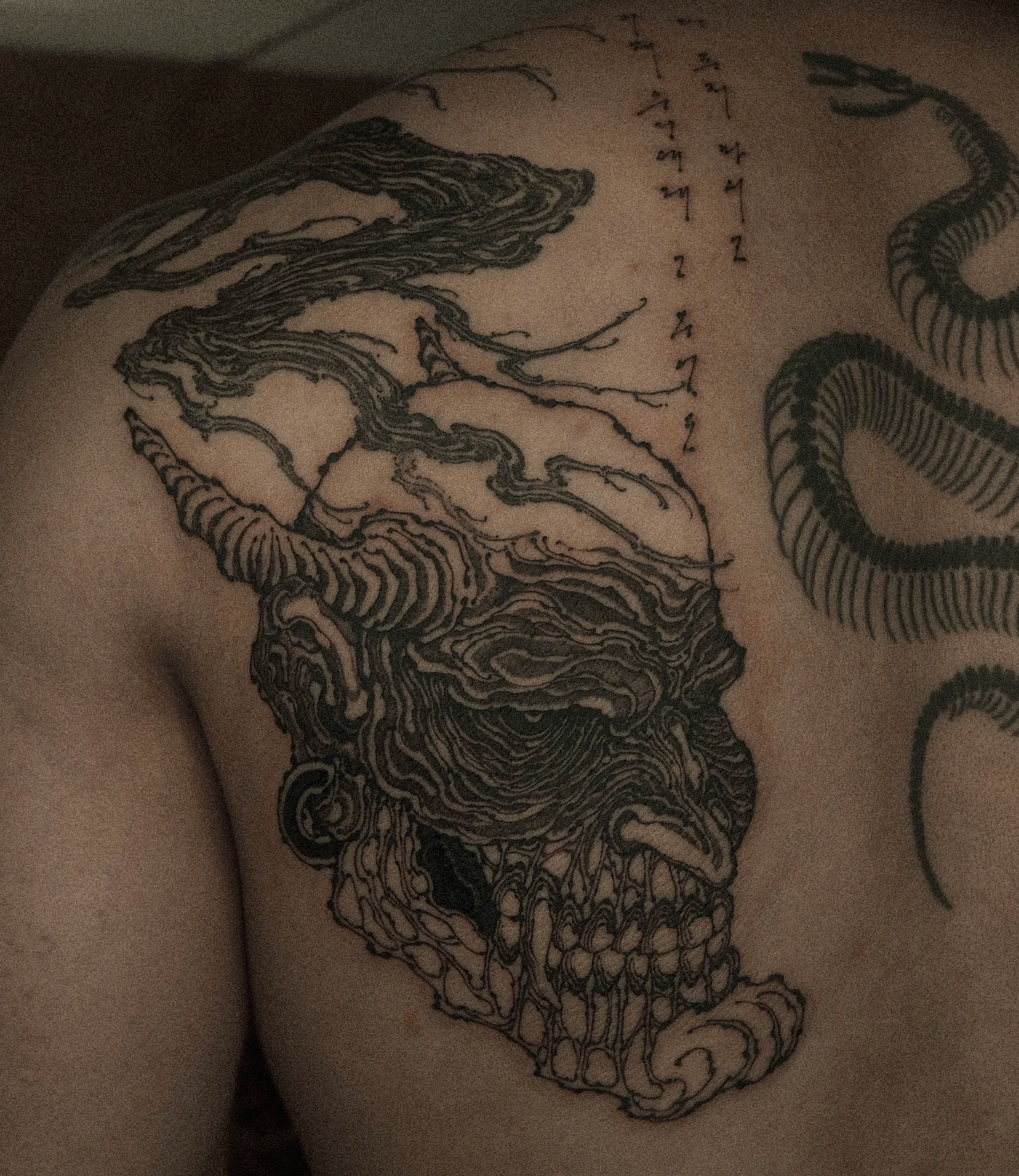
“Somehow, they fill a part of me I didn’t even know was missing. Tattoos can express beliefs or give meaning to life; they shape identity.”
GATA: If you were able to collaborate with or tattoo anyone, dead or alive, who would it be, and why?
Kiryu: Since my main profession is tattooing, one person immediately comes to mind. There’s an artist in Korea, Hongrim, who has been working in the industry for a very long time. I’ve loved his work ever since I first started tattooing, and I still do. I think his style, his illustrations, and even his approach to tattooing have influenced my own work a lot.
I’ve never met him in person (since I’m quite shy), but if I ever get the chance, I would love to have one of his tattoos on my body, or maybe do some kind of collaboration with him someday. I think if I reached out and said I’d like to meet him, it would probably be possible. But… yeah, the shyness gets in the way, haha. There was actually a funny moment with one of my clients. They came in with a tattoo by Hongrim on their shoulder. Right below it, they wanted a mask design in my style, so I did it for them. And it felt unintentionally like a collaboration, which made me quietly really happy.
GATA: Wow, and when that client goes back to Hongrim, won’t he be like, “What’s this?” It’s almost like he’ll be recommending you, like you engraved your business card there.
Kiryu: Maybe it could turn out that way. I like to think of it as fate, though I don’t know how he’ll feel about it.

GATA: Tattooing has roots in ritual and rebellion. What does it mean to you beyond the art, as a way of life or belief?
Kiryu: Even though tattooing has recently become legal in Korea, similar to Japan, and some related regulations are now being approved, the social perception is still very negative. Many people see tattoos as rebellious, or they default to assuming something bad. I’ve felt that a lot since getting tattoos myself; the looks, the comments, the way people speak to you differently. I’ve directly experienced all of that.
But despite that, I’m genuinely happy having tattoos as part of my body. Somehow, they fill a part of me I didn’t even know was missing. Tattoos can express beliefs or give meaning to life; they shape identity. Tattoos are what make me feel most like myself. And because of that, I want my clients to feel something similar. I want tattoos to be a way for them to discover their own sense of self, their own beliefs, a tool to help them find or express their identity. That’s something I really hope to provide through my work.
GATA: Korea has had a complicated history around tattooing, where only doctors have been legally allowed to tattoo. Has that ever impacted your work and artistic freedom? Any challenges you face as a tattoo artist, legally, culturally, or socially?
Kiryu: Yes. Since tattooing isn’t very open in Korea, it was really difficult during COVID. At that time, everyone was being careful with spending and saving money, so I thought not only I, but many others must have been struggling. During that period, I held an event: for about a month at the height of the first wave, I created a kind of symbol and offered to tattoo it for free, hoping they would bring positive energy to everyone. A lot of clients came, and even though it was COVID, I was able to do many pieces. The customers also gave me small gifts as a token of their gratitude. It’s such a vivid memory; it was really meaningful and stayed with me.
Thinking about other social and cultural factors, because I am technically working illegally, I always have to be cautious about police inspections or reports from neighbors or even other tattoo artists. That means I work under constant tension. Sometimes, if someone knocked on the door unexpectedly, I would have to hide what I was working on, literally sweating while trying to protect my work. Those experiences were stressful but memorable. Culturally, I think tattooing is a form of remarkable artistic expression. It shouldn’t just be seen as illegal or connected to negative stereotypes like the Yakuza; I hope more people recognize it as genuine art. To do that, I think mass media plays a key role. Right now, tattoos on television are often censored with mosaics or bandages, and when tattooed people appear in shows, it reinforces those negative stereotypes. I hope tattoos can be exposed more openly as an art form.
Personally, it’s a shame that the social atmosphere and the fact that it’s still illegal make a walk-in system impossible. Because everything has to be reservation-based here, and while I do enjoy that work, I’ve always wanted to explore more diverse projects. Most of the requests I receive are for designs created by my past self, which naturally limits the themes I can work with. Walk-ins, on the other hand, tend to come with impulsive ideas, and because of that spontaneity, whether in the theme or something else, I feel like I’d have more creative freedom.
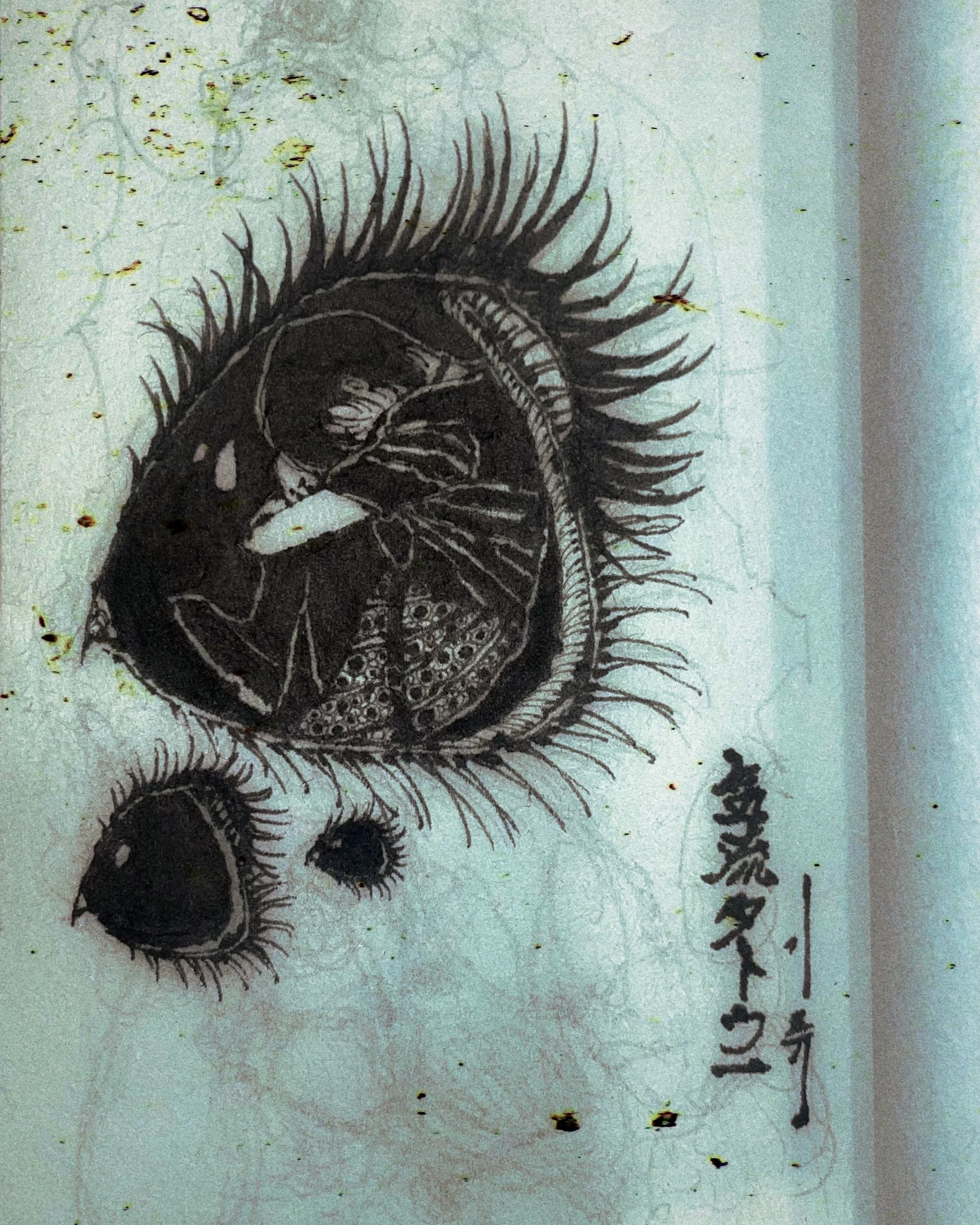
GATA: You have a pop-up in Tokyo this December! Is this your first time in Tokyo?
Kiryu: Yes, I often traveled to Tokyo, but the one in December is my first guest work there. I’ve also been to Osaka and Kyoto. One place I’ve always wanted to visit but haven’t yet is Sapporo. I’m excited.
GATA: What can visitors look forward to seeing there?
Kiryu: Well, I haven’t really prepared anything beyond what I usually do, so I guess the one thing clients can at least expect is high-quality work. That’s something I’m confident about. I tend to focus a lot on fine details and try to stay as true as possible to the original design when I work. Most of the clients who have come to me have left very satisfied, so I think people can definitely expect that. I don’t have a lot of Japanese clients in Korea. Occasionally a Japanese client comes by, but it’s rare, so few that you can count them on one hand. That’s why I was a bit nervous about doing guest work in Japan. I thought, “Maybe Japanese clients won’t prefer my style.” But contrary to my worries, I’ve already received quite a few inquiries, which I’m really grateful for, and it makes me excited to start working.
GATA: Do you have any tattoos yourself? If so, could you explain each one and its definition?
Kiryu: I usually don’t put too much “meaning” into the tattoos I get for myself. If it’s something that captures a momentary feeling or a personal record of where I am emotionally, I like that. But things like meaningful numbers or phrases, those can change over time, and the meaning can shift in ways you didn’t expect. So I tend to avoid tattoos that are tied to fixed meanings.
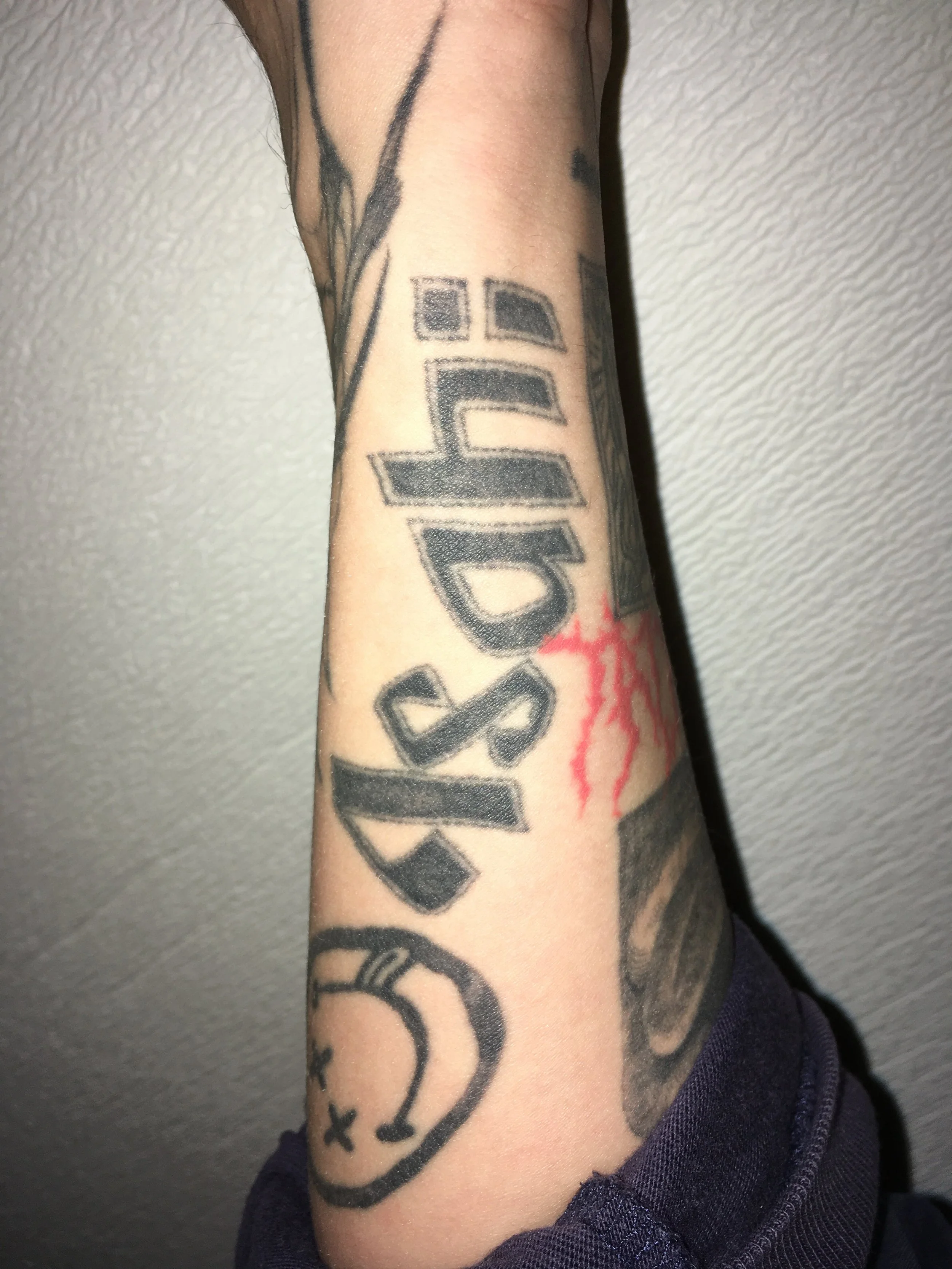
Most of the tattoos I get are simply designs or words that I find visually appealing. For example, one of the tattoos I have is “Asahi.” I really like the brand, so I decided to put it on my body. And people often assume I have something luxury-brand related because they see the word “Gucci,” but that’s actually my dog’s name. He’s a Pomeranian.
I also enjoy getting tattoos of characters I like. If you look here, I have the Joker from The Dark Knight, specifically the mask he wears at the beginning of the movie. I really love that design. Overall, I tend to collect pieces that just make me go, “Oh, that’s pretty,” rather than ones with deep symbolic meaning.
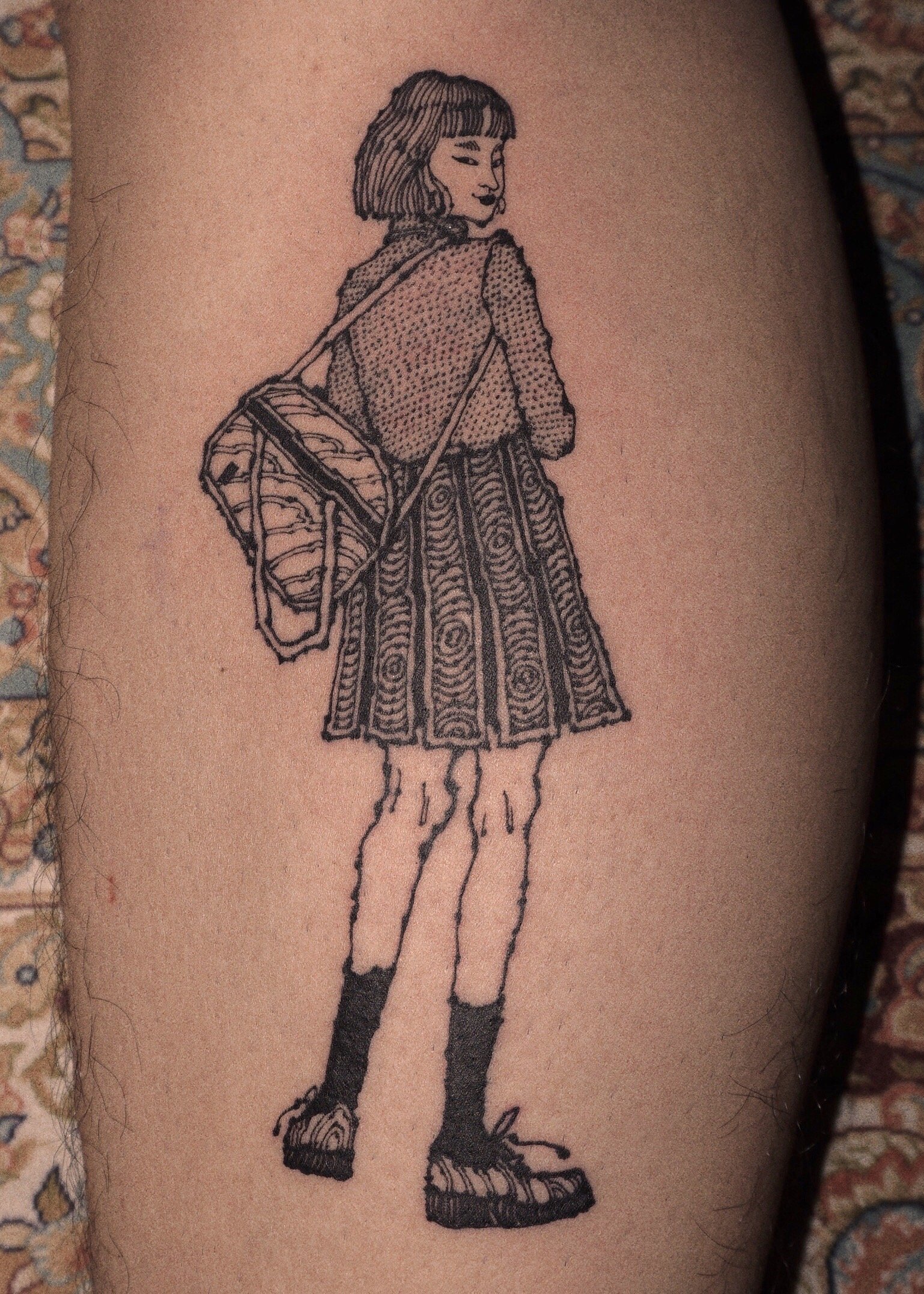
GATA: What is the most personal piece you’ve ever created (or had tattooed on yourself), and what does it mean to you?
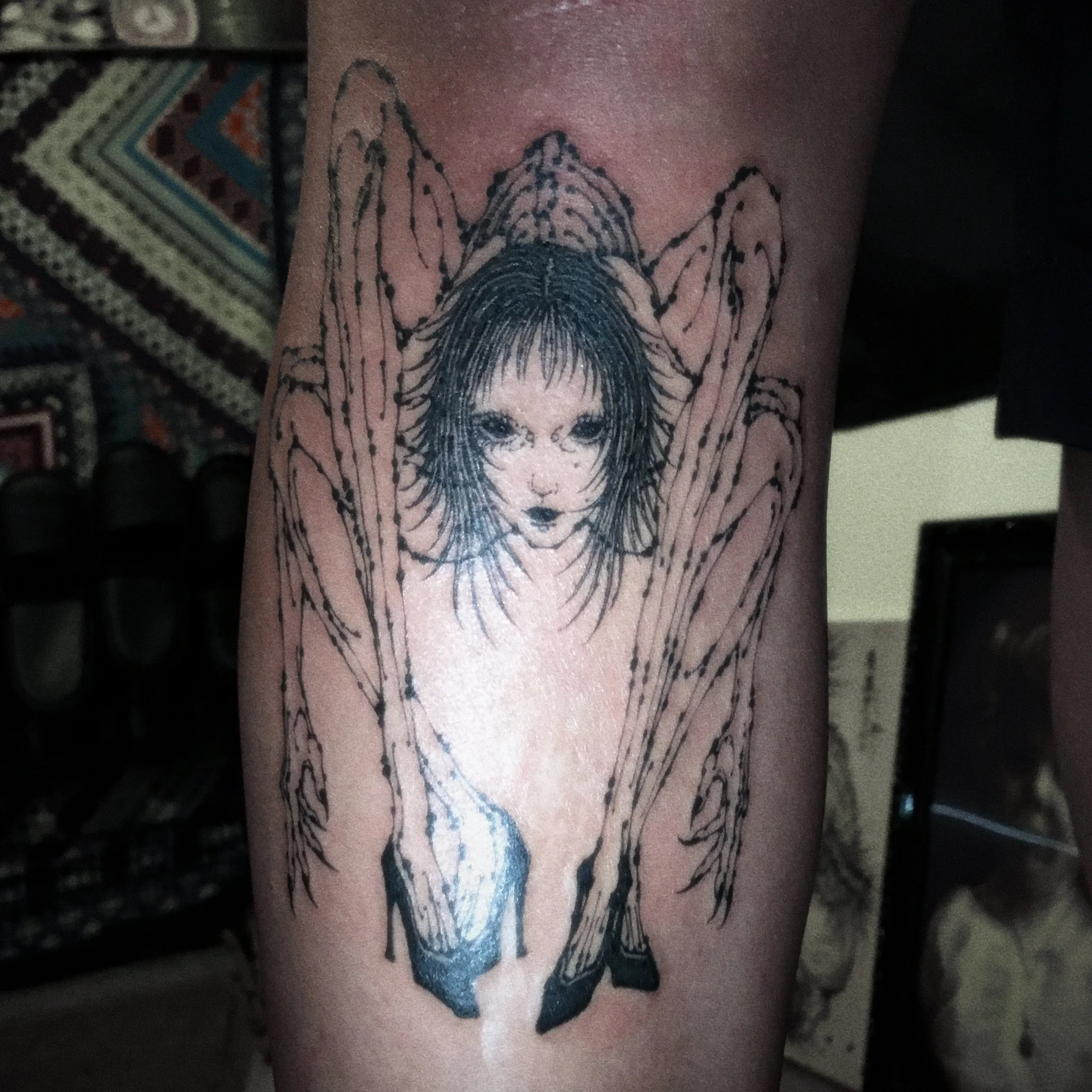
Kiryu: I have a tattoo on my leg that I did myself. It’s an original female character I created named Ryuki (Kiryu backwards). I liked it very much back then, so I decided to tattoo the first one on myself, but many of my customers get this Ryuki tattoo after seeing mine. So, it became a meaningful tattoo for me.
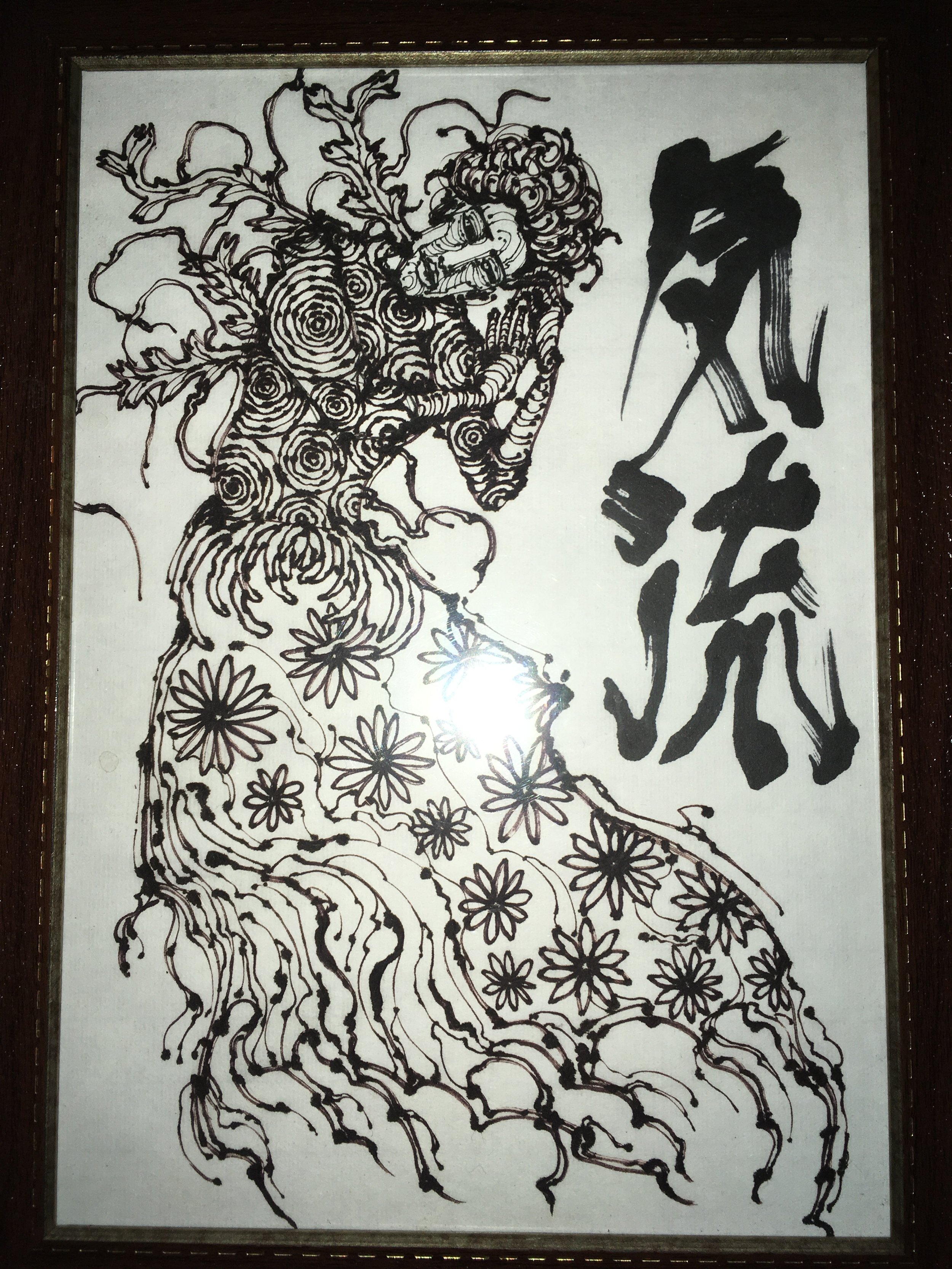
Among my customers, there is one tattoo that stands out as the most meaningful. I drew it during a very difficult time in my life, and after finishing the drawing, it gave me a lot of comfort. One female customer even chose to get it tattooed, which made it even more special to me.
When I meet someone for the first time, I tend to get shy because I feel a sort of wall between us. And about three years after I started tattooing, someone very close to me betrayed me. The stress and disappointment from that relationship hit me really hard, and I went through a rough period. But creating this drawing helped me recover in a way; it felt like I came back to life through that piece.
GATA: Lastly, what kind of message or feeling do you want your art to leave behind?
Kiryu: I think resonance and comfort. I’m grateful when people describe my tattoos as monstrous or cool, but what makes me happiest is when someone tells me they found them relatable or comforting. I was especially thankful when someone left a comment like that on my work, and it became a new goal for me from that moment on.
INTERVIEW AND WORDS BY SEUNGHEE RYU