ART THAT BLEEDS: GATA CHATS TO MULTIDISCIPLINARY ARTIST XENIX
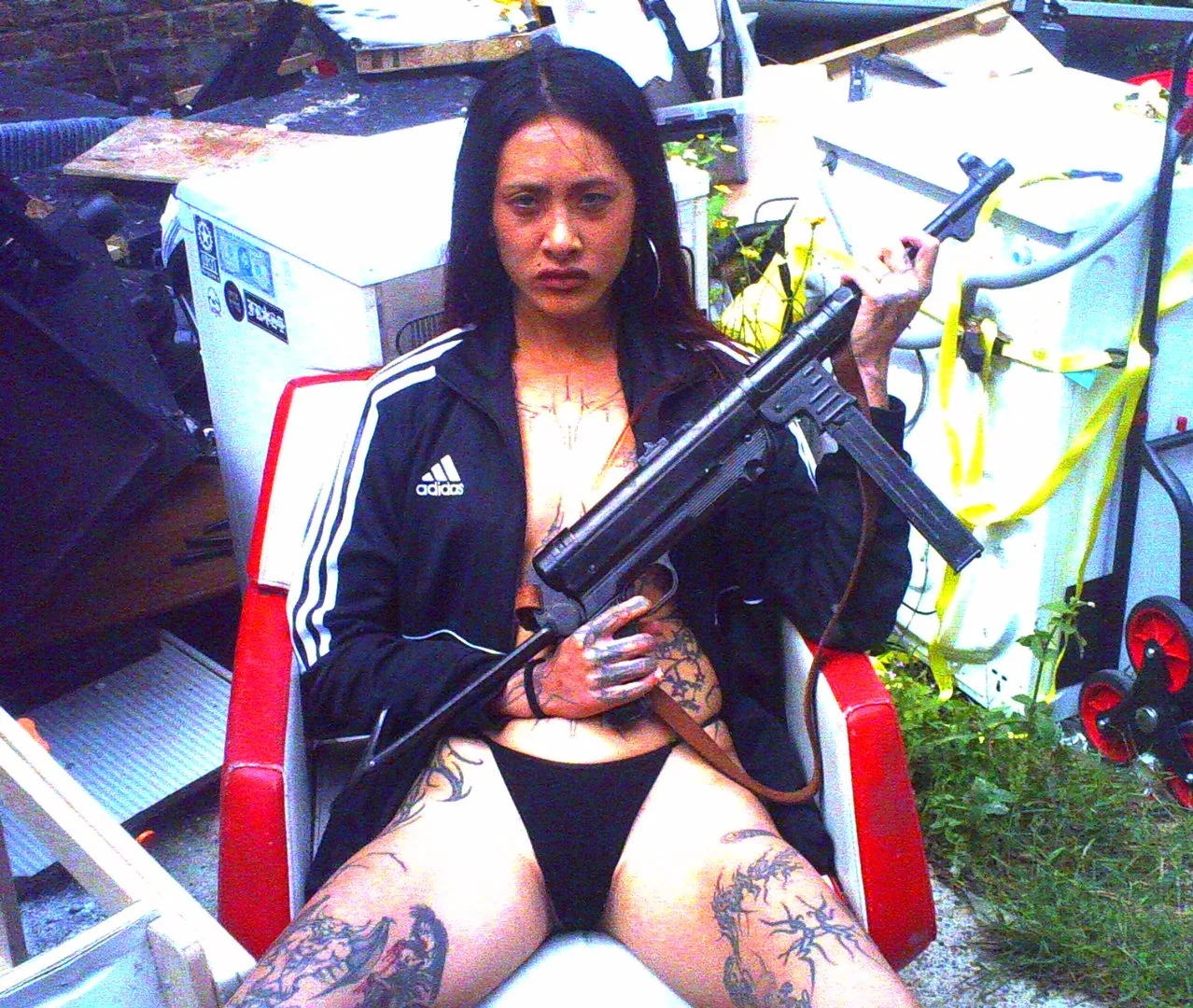
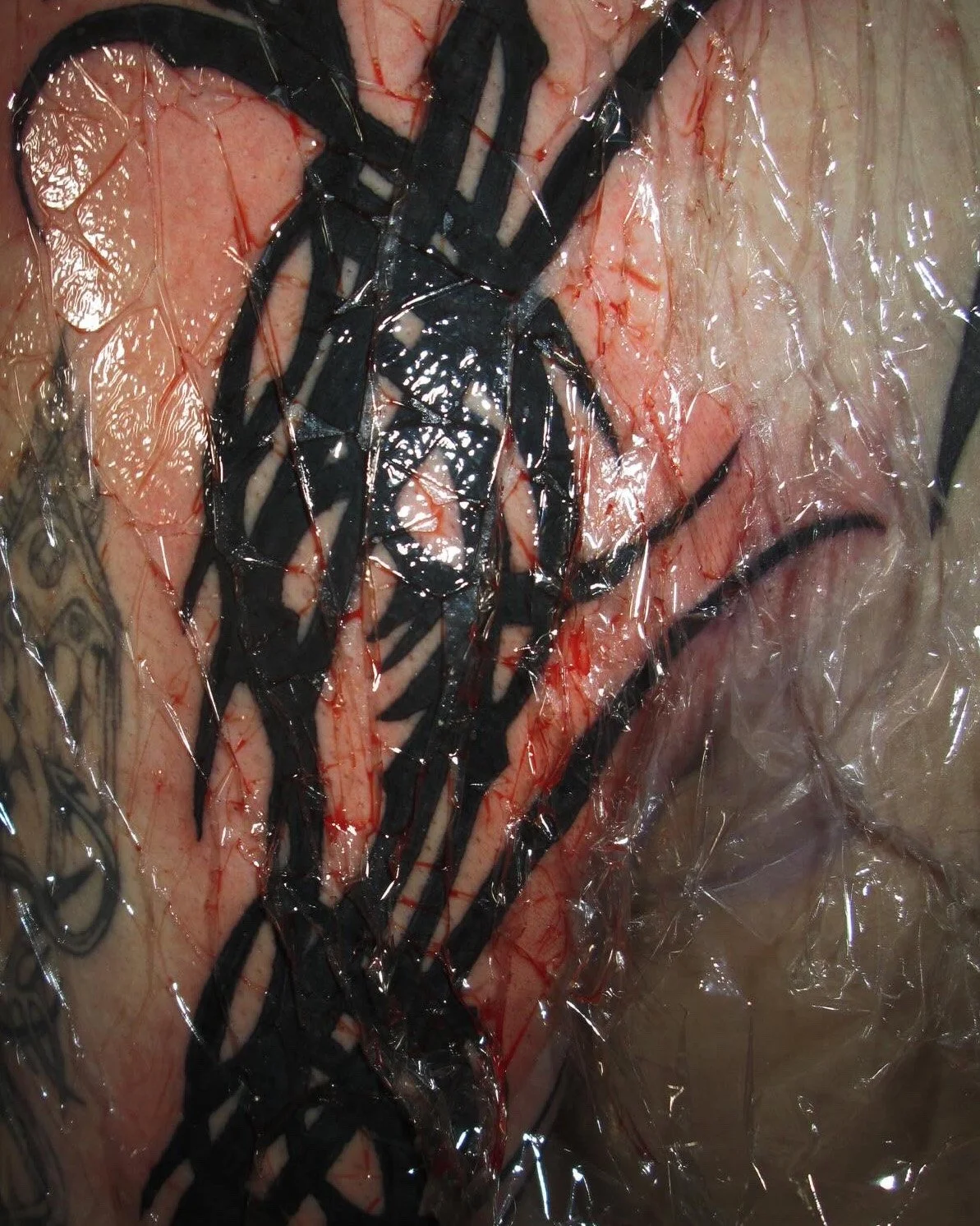
“The world is fucked, but behind brutality there’s tenderness and fragility,” says Vietnamese-Chinese multidisciplinary artist Inès Ting, born and raised between Australia and France and now based in London. Working under the moniker XENIX, the artist moves fluidly between tattooing, painting, sculpture, and clothing, each medium feeding into the next like arteries in the same body.
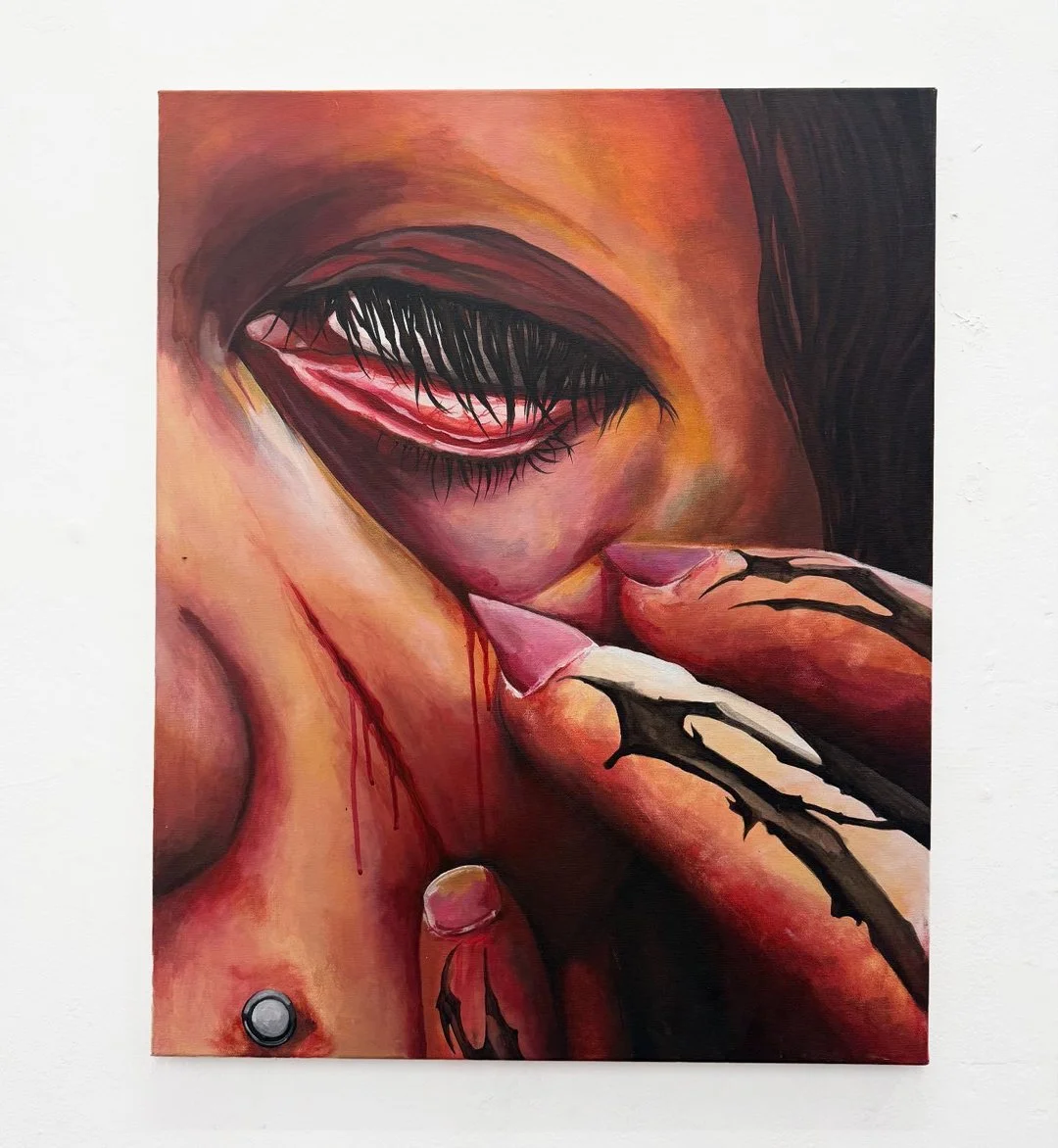
At the centre of it all is the body itself: sometimes her canvas, sometimes her subject, always her point of return. It mutates, mutilates, bleeds, decays; a living surface caught in the supersaturated hues of a world suspended on “a bridge between warmth and viciousness.”
Whether marking skin, moulding form, or layering pigment, Ting treats the body as a site of both intimacy and transformation, a living surface where emotion, memory, and matter collide. The result is a body of work that feels like a surreal glimpse into a private, chaotic terrain, where violence and vulnerability blur and breathe as one.
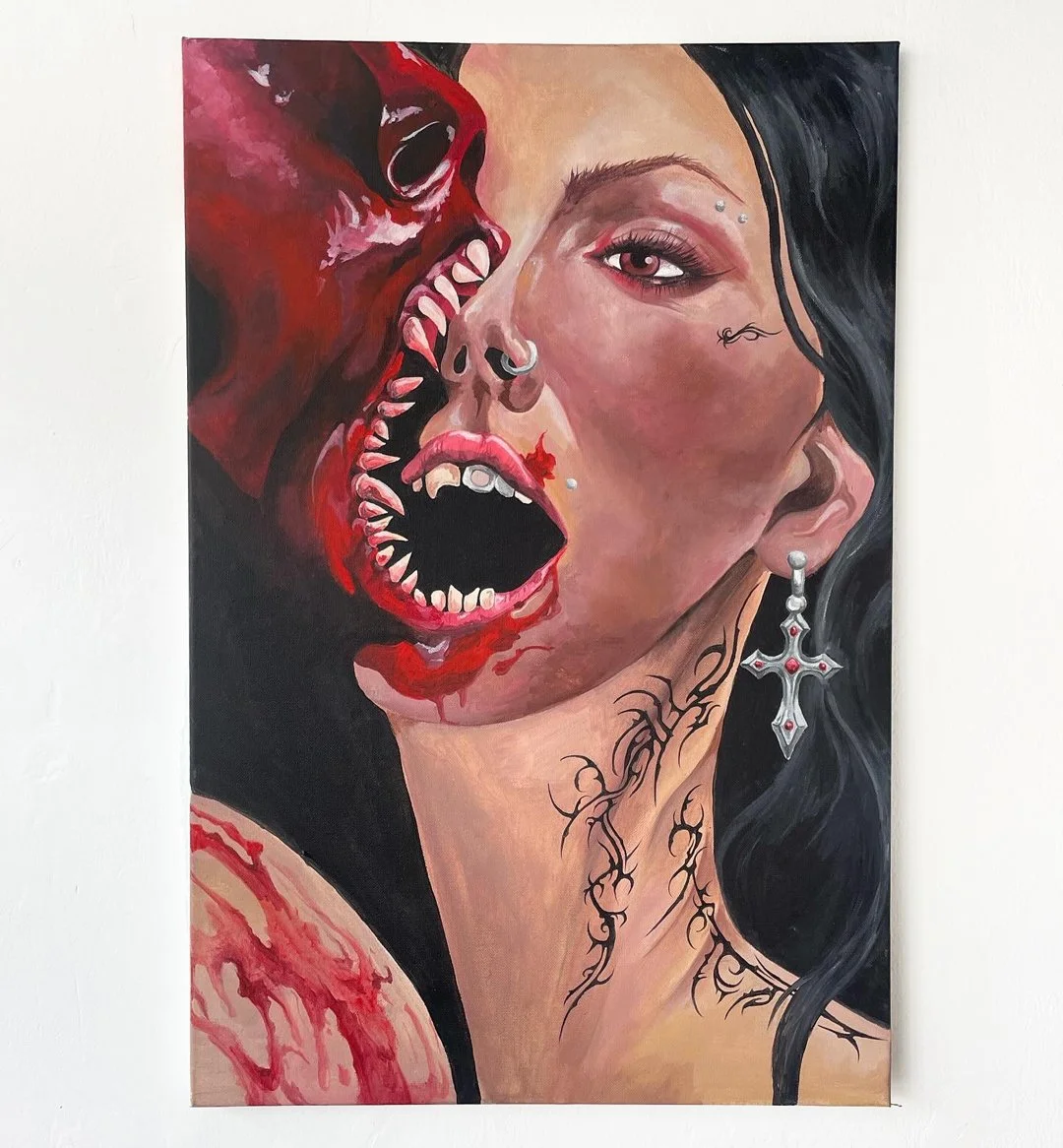
“Tattooing is quite invasive and intimate,” she says. “When painting or sculpting, I can be much more brutal and experimental; there is no other person at risk.” Flesh is taut, cut, marked: rendered in clay, dripping, uncontainable, leaking, seeping, blood-soaked.
“Blood’s material presence, richness of colour, and the substance's fluidity are what draw me to continuously apply it in my work. I love recreating blood in my work with paint. It is also a metaphor for life and death, pain and sacrifice, for merely being alive, but also for the suffering that living comes with. Blood is aggressive and shocking, at the same time mesmerising and sensual: feelings I hope to evoke in my work”
This tension carried through to BAD DREAM, the London exhibition Ting recently co-curated. A female-led show pulled viewers into a warped, beautifully decaying hallucination shaped by a group of women unafraid to make a mess.
As for what’s next, rumour has it a XENIX book is brewing, “basically a chaotic portfolio”, a thick, unruly artefact of drawings, paintings, poems, and “nonsense.” A printed world of her own: proof that in disorder there’s precision, and in pain, there’s always poetry.
GATA: When someone asks, "What do you do?" Where do you even begin? Do you see yourself more as a tattooist who paints, a painter who tattoos, a sculptor, or something entirely different?
Inès: To make it simpler, I initially will reply that I am a tattoo artist, as this is my primary source of income. Yet it'll naturally turn into a discussion of my other art practices. I spend more time drawing and painting than actually physically tattooing, but these practices all benefit one another, so the line is quite blurred as to what should be named first. I guess a multidisciplinary artist is the best way to go.
GATA: How does your creative process shift when you move from tattooing living skin to painting or sculpting an object that won't bleed or bruise?
Inès: Different degrees of conscientiousness are applied when changing between media. Tattooing is quite invasive and intimate for the client and the tattooist, so a trusting relationship needs to be made. This makes the creative process much more delicate. When painting or sculpting, I am alone, which means I can be much more brutal and experimental; there is no one else at risk of being affected.
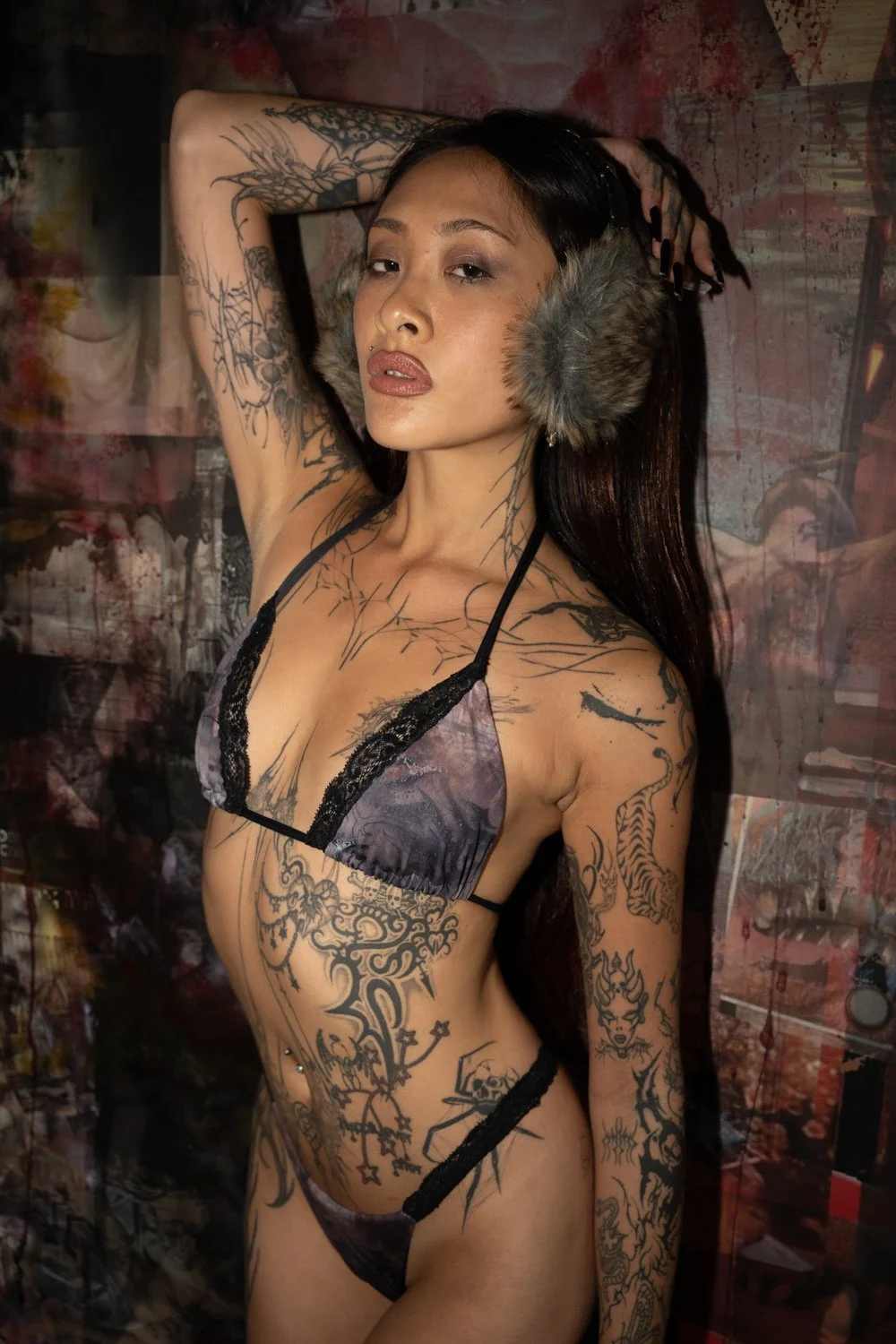
“The world is a fucked up place and is only getting worse, with brutality breathing in everything. I see the softness this pain and discomfort create.”
GATA: Is there an emotional difference for you between marking a person's body and marking a garment? Does one feel more permanent or intimate than the other?
Inès: Putting my art on a person's body feels much more permanent and intimate than marking a garment. Knowing people connect with and want to embody my work every day till the day they are buried (or cremated) is a truly special feeling. The human interaction of tattooing adds to the intimacy, as clients open up quickly and sometimes are getting tattooed for a specific reason, making it all the more emotional. When marking a garment, it's just me in my thoughts and ideas, which can be emotional, yet knowing the garment will be disregarded by the owner at some point makes it less permanent and more passing. Honestly, though, most of the time, whatever art I am doing, I sort of go on some autopilot mode and just subconsciously do it. I sometimes forget, while I'm tattooing, the permanence it holds, and when the tattoo is finished and the client expresses their excitement, the reality of the unique longevity of the mark on skin kicks in.
GATA: Despite the various media, there is a very clear throughline across all your work. How would you describe that throughline?
Inès: I'd say it is my surreal subconscious world that I bring to life through different media. A dark and unsettling yet romantic glimpse into my mind, one I am still learning to uncover. I like to mix aggressiveness and chaotic elegance at once in my work.

GATA: Do your tattoos ever start as paintings, or does a painting ever grow out of a tattoo idea? Which direction does the inspiration usually flow?
Inès: It flows both ways, but I think a painting idea usually grows out of a tattoo idea. My paintings began much more abstract and messy, and have become more figurative, taking ideas I've drawn as flash.
GATA: There is a particular colour palette to your work. Where does your palette sit emotionally for you?
Inès: My chosen palette evokes feelings of love, hate, passion, romance, destruction, danger, power and savagery. I purposely like using warmer colours to enhance intensity. This palette, despite seeming intense and aggressive, once put on its canvas, makes me feel calm.
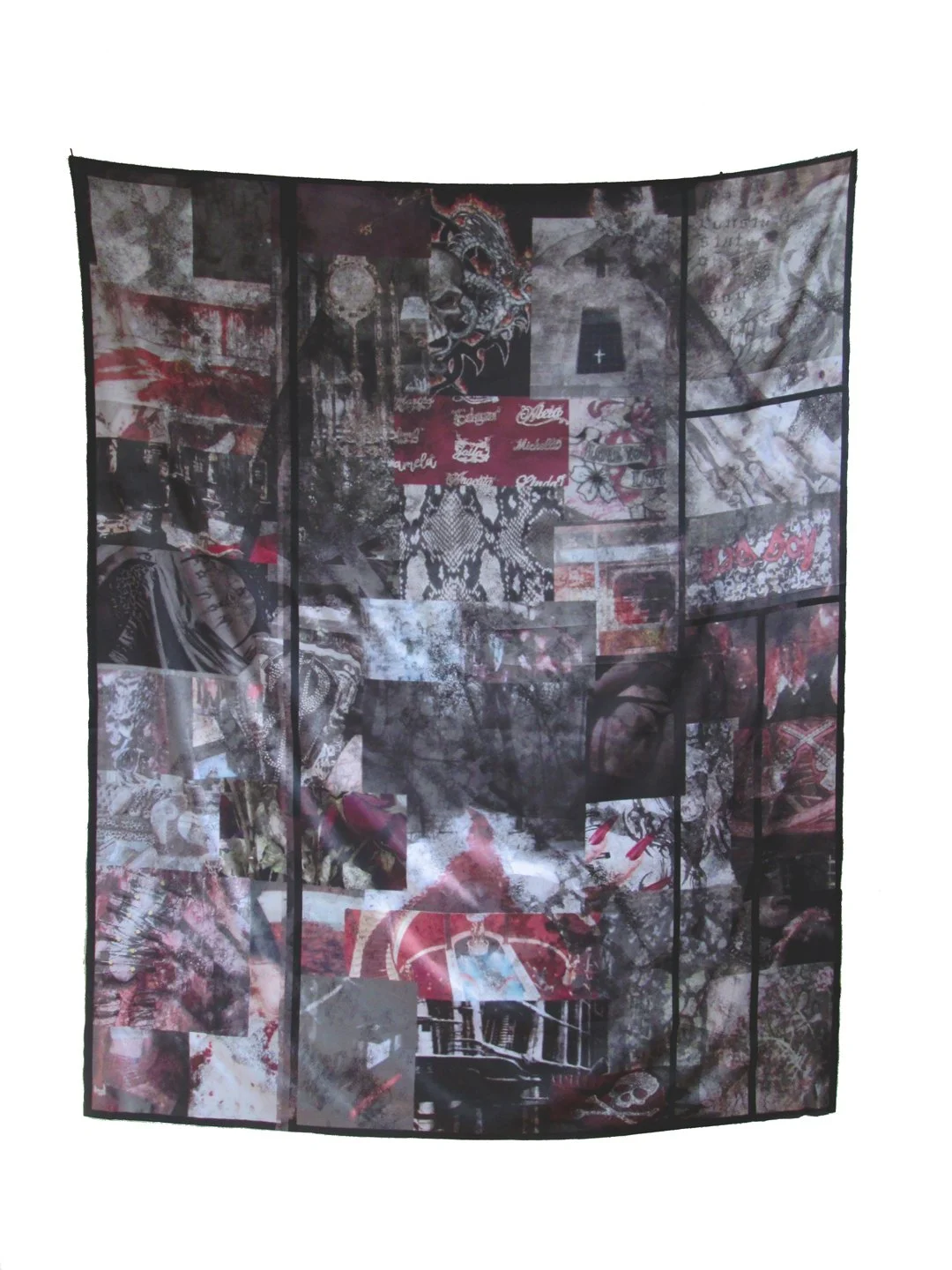
GATA: Your work feels like it lives somewhere between tenderness and brutality. What attracts you to that tension?
Inès: The world is a fucked up place and is only getting worse, with brutality breathing in everything. I see the softness this pain and discomfort create. They're opposing things, but to me, they come hand in hand. I find that they come together more than they are against one another, that behind brutality there is tenderness and fragility. I find the most brutal people are most fragile, or going down to the basics of listening to darker music calms me down, which illustrates what most would think is “morbid” imagery puts me at ease... There is a constant bridge between warmth and viciousness.
“Blood is also a metaphor for life and death, pain and sacrifice, for merely being alive, but also for the suffering that living comes with. Blood is aggressive and shocking, at the same time mesmerising and sensual, feelings I hope to evoke in my work.”
GATA: Tell us more about the recent exhibition you co-curated called BAD DREAM. How did you go about selecting the artists, and what emotional or aesthetic thread were you looking to pull through the show?
Inès: We chose artists whose work all comes from their individual dreamlike inner worlds. There is a similar juxtaposition of softness and harshness, whether through their chosen materials or motifs. We wanted to create a space where the viewer felt as if they had entered a freakish world. All artists were also only female bosses, so a group of baddies.
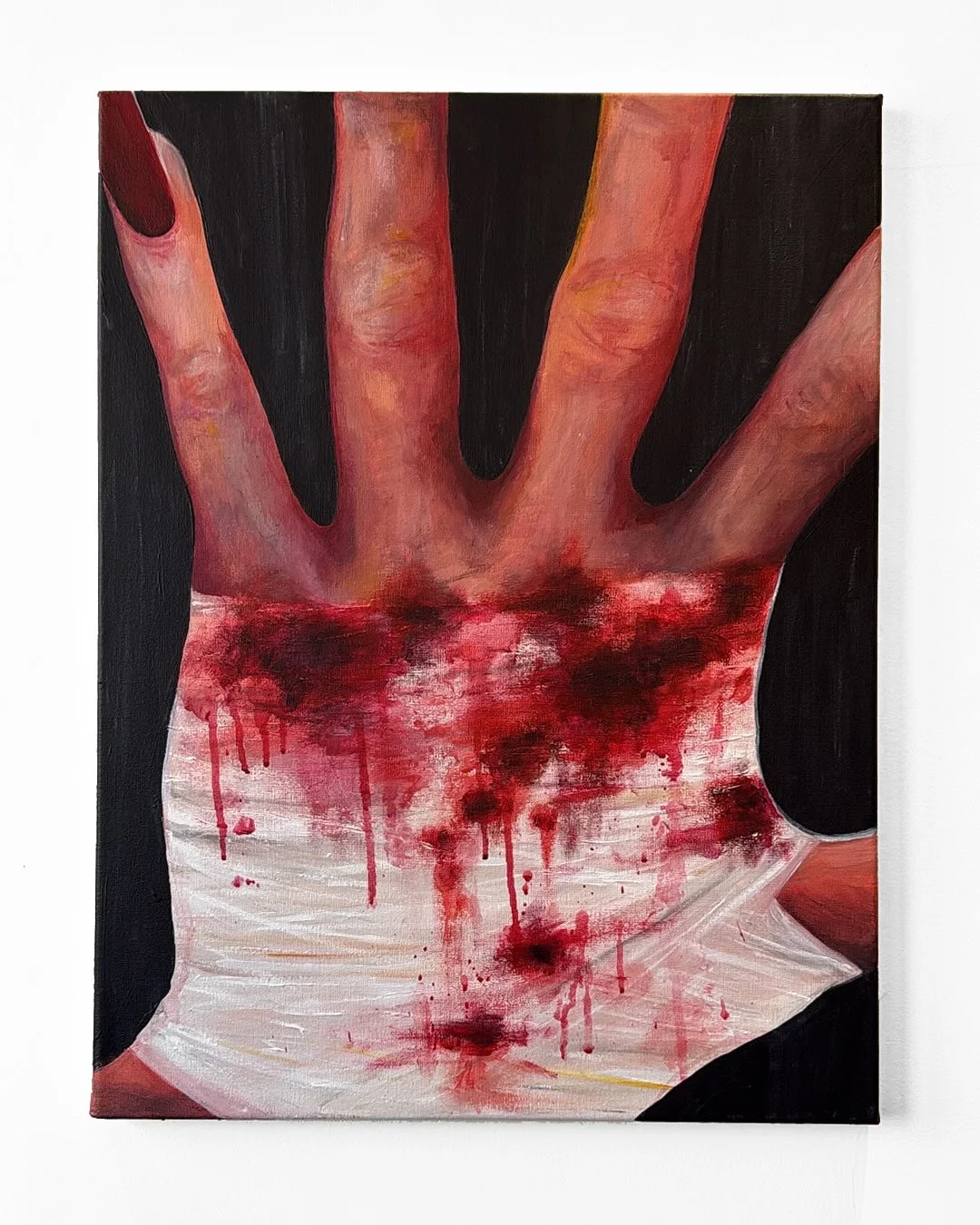
GATA: Is blood a metaphor in your work, or do you think of it more as a material presence, even if implied?
Inès: It is both. Its material presence, richness of colour, and the substance's fluidity are what draw me to continuously apply it in my work. I love recreating blood in my work with paint, typically splattering and smearing it chaotically onto the surface to finish a piece, or more thoughtfully incorporating it into work with precision. Blood is also a metaphor for life and death, pain and sacrifice, for merely being alive, but also for the suffering that living comes with. Blood is aggressive and shocking, at the same time mesmerising and sensual, feelings I hope to evoke in my work.
GATA: Do different materials trigger different alter-egos or versions of yourself as an artist?
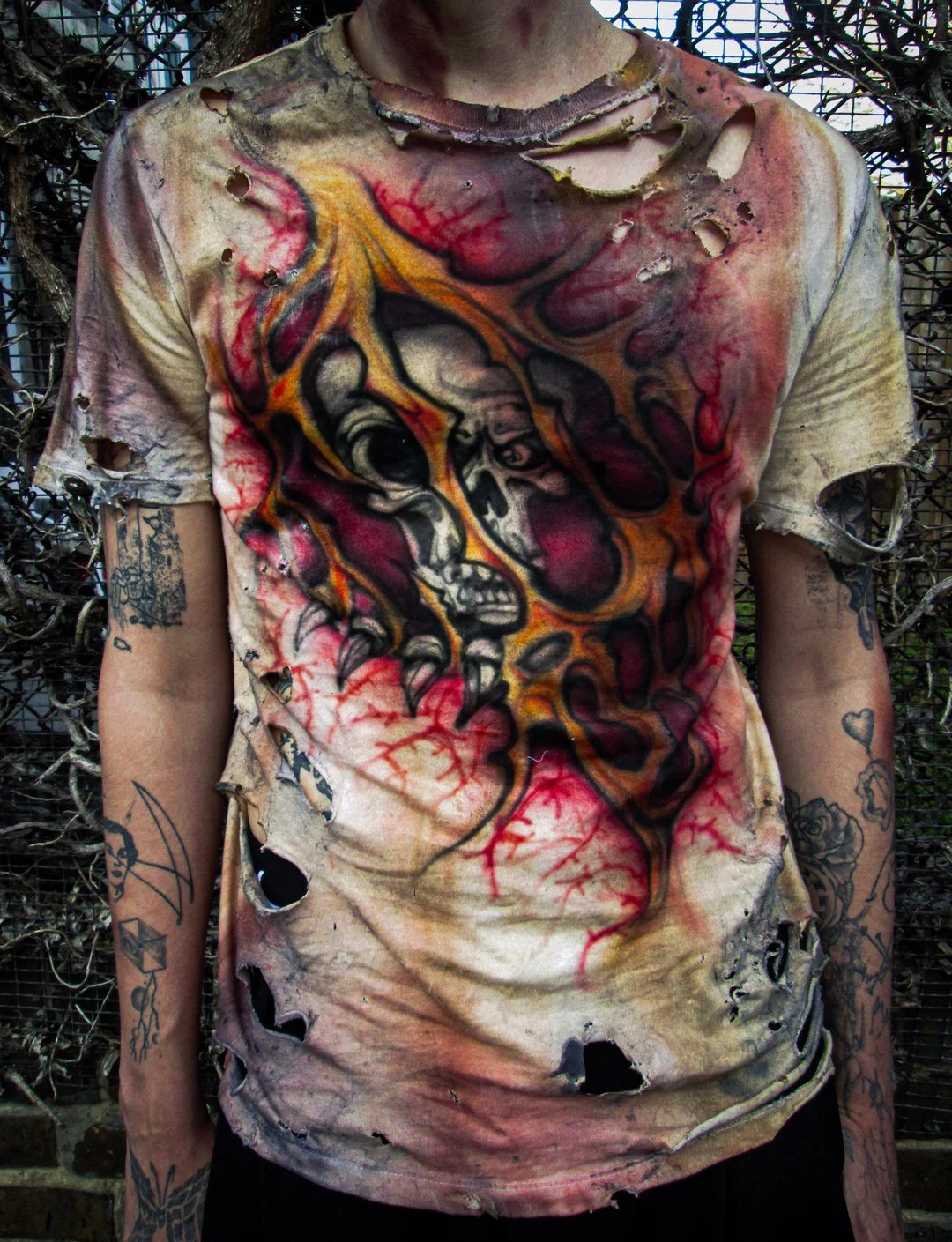
Inès: Painting and digital work allow me to delve into darker thoughts, as paint and digital work/collage are more flexible to create textures and layering to evoke stronger emotions. Since tattooing has to be cleaner, it doesn't feel as emotional to me personally. The outcome of an airbrushed piece feels more cartoon-like and innocent.
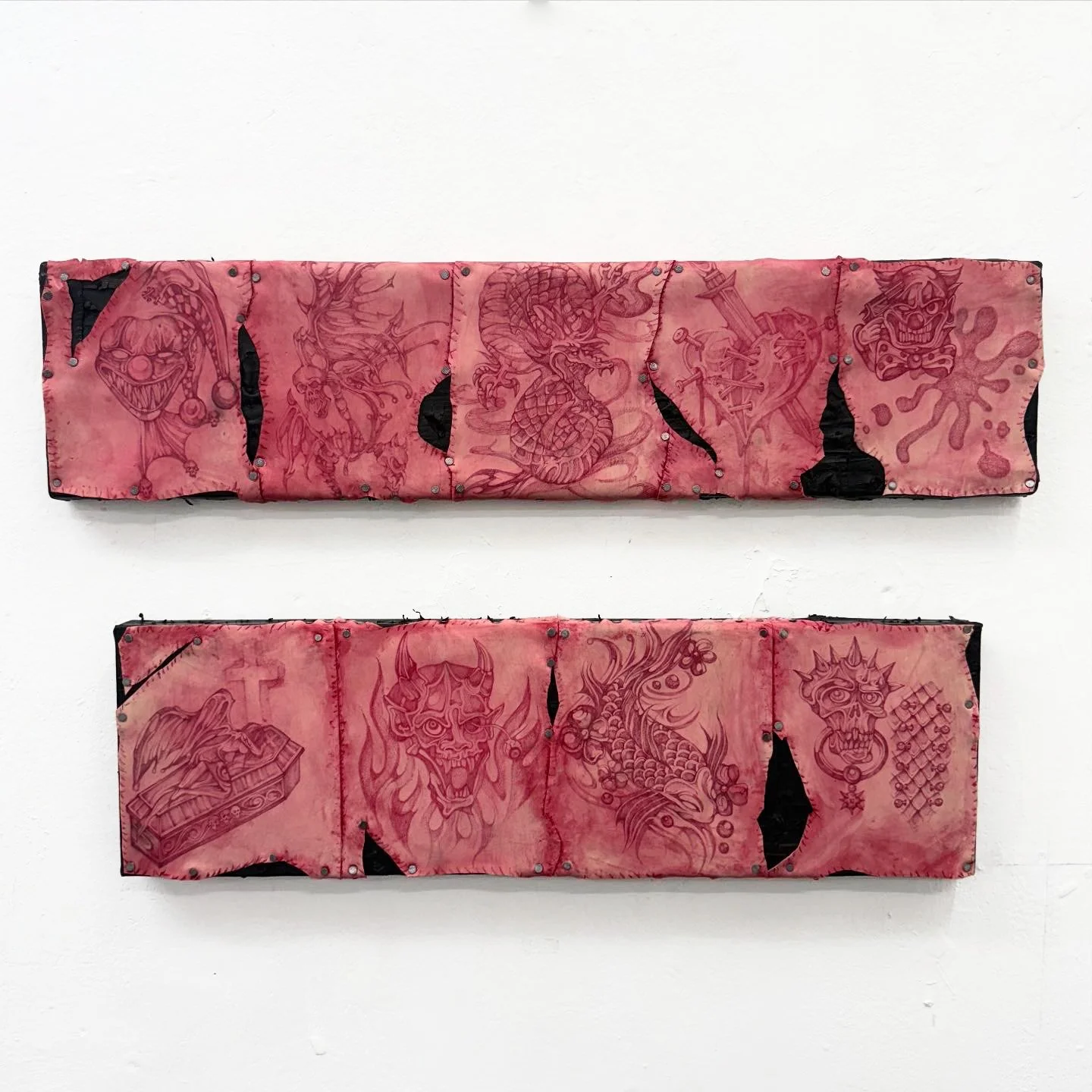
GATA: Tattooing involves a consensual, physical exchange. Does the pain involved in tattooing influence how you think about your other work, which doesn't require bodily sacrifice?
Inès: Not directly, but I think the pain that is felt when getting tattooed can be felt when looking at most of my work. You are in pain when getting tattooed, but the result of this “pain” is transformation and a different sense of identity. In the same way, my work explores the themes of suffering and brings to life my subconscious inner world.
GATA: Would you ever want to create a complete clothing collection, or does the one-off, customised nature of each piece feel essential to your practice?
Inès: I love the DIY nature of making clothing, how each piece is, in its own way, imperfect, as I cannot make them all identical. I love the manual techniques of screen printing, airbrushing, and upcycling by hand. It makes each piece unique. Makes them rawer and feels more authentic to me, as all my work visually is quite disorderly, mirroring my way of living, which doesn't follow conventional structure/lifestyle.
GATA: You've mentioned that you're considering compiling a book of your work. What can you share about that project at this stage?
Inès: Still in the works and a while to go, I want to make her thick! It will basically be a chaotic portfolio, mixing paintings, drawings, photographs and poems/ texts – attempting to accumulate and present a bunch of my nonsense in a cleaner manner.