
THE GATA GUIDE TO THE WORLD'S STRANGEST CHURCHES
The world of churches can be a strange one indeed. While each person may have their own conceived idea of what a typical church may look like, with an estimated 37 million churches scattered around the world, it’s no surprise that some of them have pushed the boundaries of what defines a place of worship, incorporating surrealistic and brutalist elements far removed from tradition. From the macabre skull chapels of Eastern Europe to minimalist-inspired structures of Japan, join GATA as we take a journey through some of the most bizarre and unique testaments to faith and worship.
Borgund Stave Church, Norway
With a style that feels like it was pulled straight from the Nordic-inspired video game Skyrim, the Borgund Stave Church is one of the few surviving examples of the Norwegian stave churches: innovative wooden structures built almost entirely without nails. Constructed in 1180, the church is filled to the brim with Viking-age motifs and dragon-esque imagery. A truly unique appearance that can’t be found anywhere else.
Skull Chapel, Poland
If you ever thought your collection of labubu dolls was excessive, then you need only look at the story of Father Wacław Tomaszek, who spent nearly two decades exhuming the graves of more than 20,000 people before carefully arranging the bones into a morbid masterpiece that feels more suited to the set of a serial killer movie than a place of worship. Equal parts eerie and fascinating, the Skull Chapel in Poland stands as one of the most bizarre reminders of our own mortality.
Wotruba Church, Austria
Looking more like a drunken game of Jenga gone rogue than a place of worship, the Wotruba Church in Vienna is a brutalist marvel made from 152 massive concrete blocks stacked into an abstract configuration. Built between 1974 and 1976 from the design of sculptor Fritz Wotruba, the church was deliberately built upon the site of a former Nazi barracks as a symbol of renewal. Inside, you can find that, despite its harsh exterior, shafts of light slip between the blocks to create an atmosphere that feels like an interesting blend between bunker and modernist sanctuary.
Liverpool Metropolitan Cathedral, UK
With the appearance of a giant concrete crown seemingly dropped onto the Liverpool skyline, the Metropolitan Cathedral of Christ the King is one of the most unusual Catholic churches in Europe. Opened in 1967 and designed by Sir Frederick Gibberd, it breaks with tradition by placing the altar at the very centre of its circular layout, so every seat feels like the front row. Often ridiculed for its “space age” aesthetics and even voted one of the world’s ugliest buildings, it has since been thought of as a mid-century masterpiece: now Grade I listed and celebrated for the kaleidoscope of stained-glass light that pours through its lantern roof.
Church of Seed, China
Tucked away in the Taoist heartland of Luofu Mountain, the Church of Seed by O Studio Architects looks less like a place of worship and more like a modernist’s fantasy brought to life. Built in 2011, this minimalist marvel takes the form of a concrete seed, symbolising themes of faith, growth and transformation. Designed as both a Christian chapel and community space for locals, it is a rare example of Western faith and Chinese landscapes.
The Church of the Light, Japan
Residing in the suburban city of Ibaraki just outside of Osaka, the Church of light is Japanese architect Tadao Ando’s tribute to minimalist mastery and an iconic example of modern churches in the region. Completed in 1989, the building is little more than bare exposed concrete, but its lasting power lies more in what is absent. A cross-shaped cut carved into the altar wall allows beams of natural light to illuminate the cold space, offering visitors an experience unlike most other churches. It’s a striking example of how carefully planned designs and architecture can transform an austere space into a symbolic representation of something much higher.
The Salt Cathedral of Zipaquira, Colombia
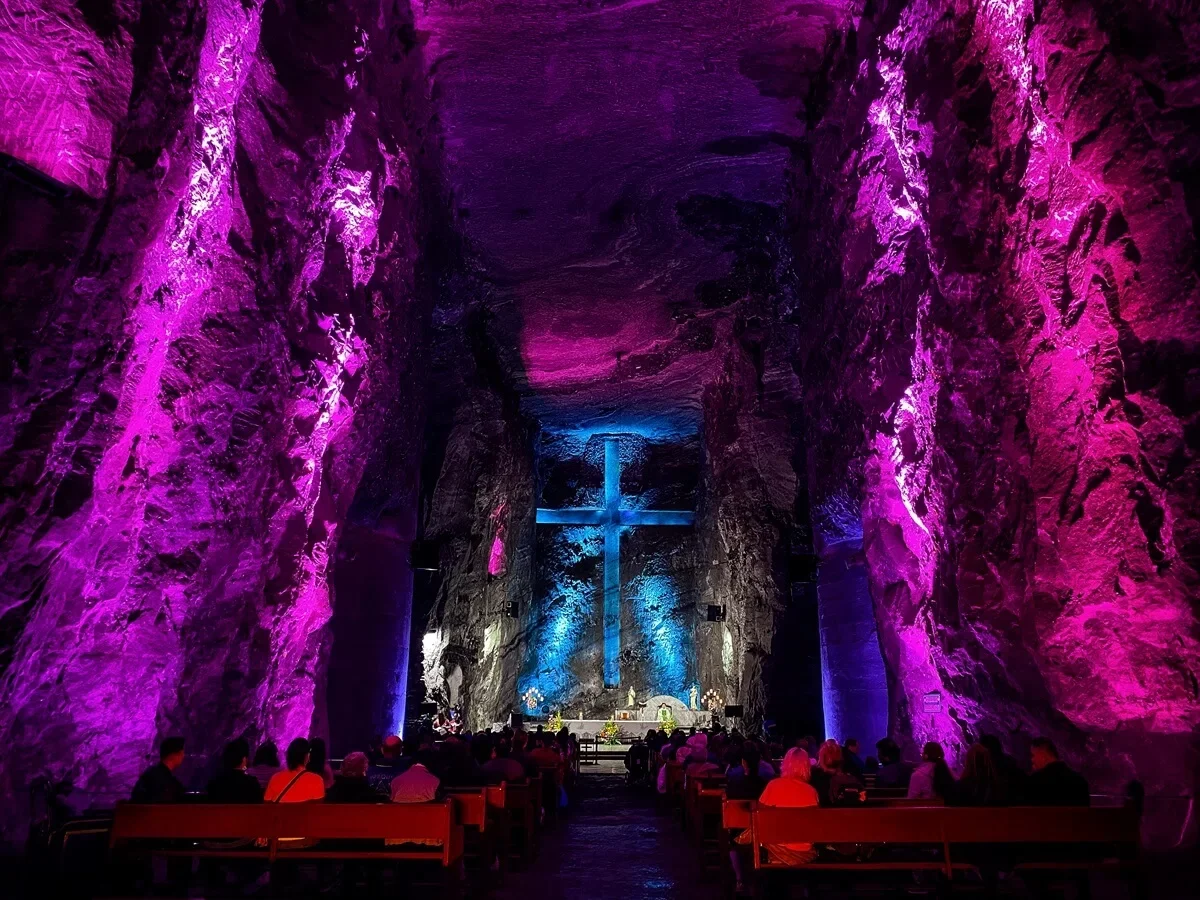
Hidden 200 metres beneath a mountain, the city of Zipaquirá, Columbia, the Salt Cathedral is a mesmerising subterranean structure hewn entirely from ancient salt deposits. The current structure, which was inaugurated in 1995, replaced an older miner’s chapel and today is home to vast, intricate caverns filled with domes and crosses carved directly into the rock. Instead of stained glass, visitors are met with glowing salt walls and mysterious, shadow-laden passages that mark the traditional Stations of the Cross. It is religious fervour fused with underground geology: a mystical palace that feels more Indiana Jones set design than a real place of worship.
Churchtanks, USA
Two worlds that we never thought we would utter in the same sentence: “religion” and the “arms industry”. For his art project Churchtanks, American sculptor Kris Kuksi spent years taking features of Baroque-style cathedrals and strapping them onto tanks, transporting these religious symbols into rolling instruments of war. Kuksi didn’t do it for shock value alone, hoping instead to show the sometimes overlooked cosy relationship between faith and violence throughout history. Each sculpture is a meticulously detailed mash-up of devotion and destruction, proof that the pulpit and the battlefield have more in common than we would like to admit.
Train Churches, Russia
Whoever said that a church had to be in a fixed location? This is the thinking bending the Russian Orthodox Church, which has managed to transform ordinary railcars into full-functioning mobile places of worship. Designed to act as a “church on wheels”, the railroad car would often serve as living quarters for a pastor and come fully equipped with an altar, pew and in some cases even stained glass windows. The phenomenon dates back to the late 19th century and was intended to bring religious services to towns that were too remote to have a permanent church.
Temppeliaukio Church, Finland
Continuing on with the subterranean theme, Temppeliaukio Church in Finland seems to have more in common with a 1960s Bond villain lair than a place of worship. Designed by architect brothers Timo and Tumo Suomalainen in 1969, its circular copper dome floods its interior with light from over 180 skylights, and features signature acoustics created to enhance its enormous church organ of over 3000 pipes.
The Church of Saint George, Ethiopia
Hewn from a single block of volcanic rock in the shape of a Greek cross, the Church of Saint George stands as a testament to Ethiopia’s medieval architectural prowess. The church was commissioned by King George Meskel Lalibela of the Zagwe dynasty after he had a vision in which one of God’s angels told him of plans to make a building which could bring heaven down to earth. According to legend, upon its completion, these same angels upon the completion of the rock-hewn church visited the site and blessed all those who were present.
Wooden Chapel, Germany
Nestled on the edge of a Bavarian Forest near the village of Unterliezheim, the Wooden Chapel is British architect John Pawson’s meditation on simplicity and spiritual calm. Completed in 2018, interestingly, the project was designed predominantly for cyclists along the Danube cycle path, rather than a specific parish community. Composed of 61 Douglas fir logs, the logs were left unprocessed, designed to age naturally with sun, rain and moss, blending slowly with the surrounding forest over time.
Iglesia El Rosario, El Salvador
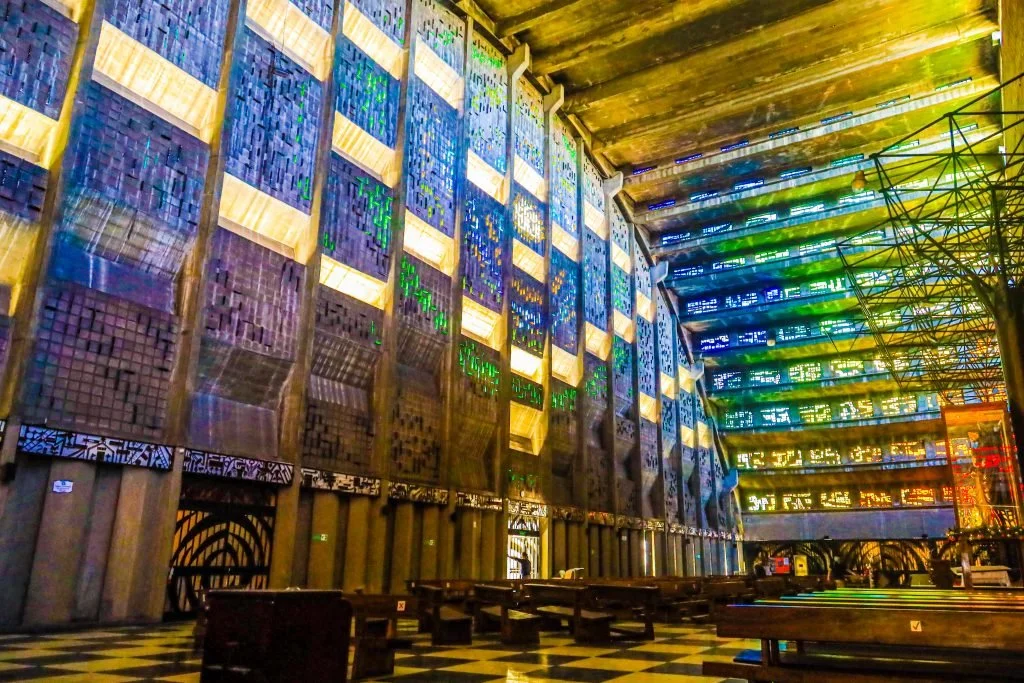
Next on our list is a church that is often mistaken for a military bunker by people passing by, with its brutalist facade masking a rather luminous interior. Tucked away in San Salvador’s historic centre, Iglesia El Rosario is a radical departure from the city’s traditional colonial churches. Stepping inside, you are greeted with an avalanche of multicoloured light emanating from its kaleidoscopic stained glass windows, truly living up to its nickname from locals as the “rainbow church”.
Capuchin Crypts, Italy
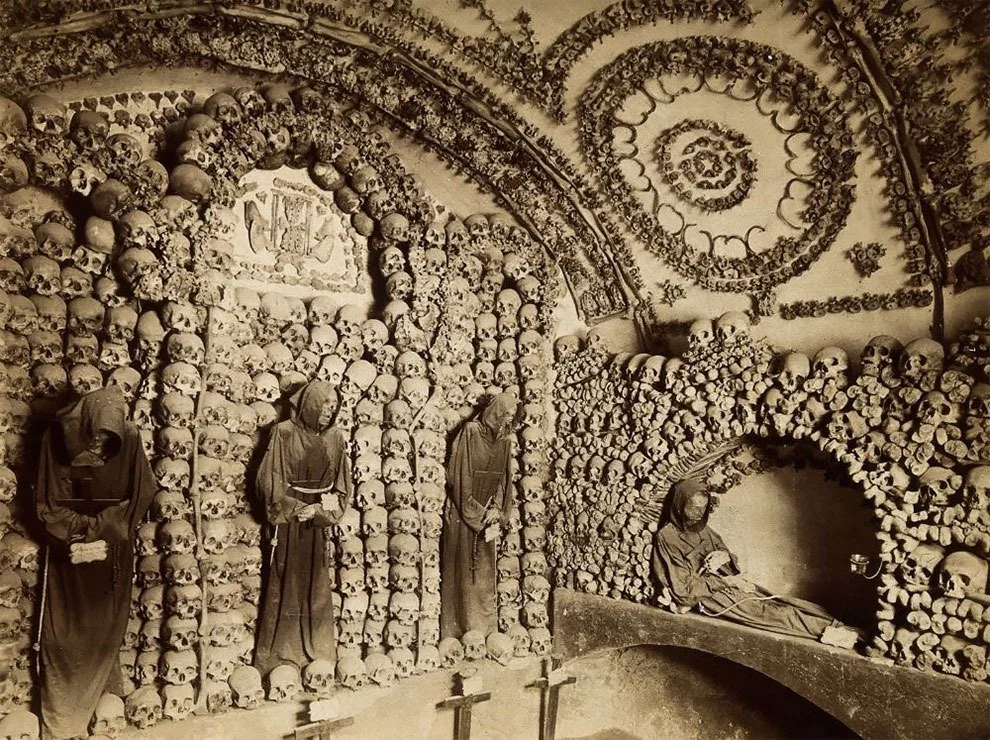
Hidden beneath the streets of Rome, the Capuchin Crypts are an eerie and contemplative creation courtesy of the Capuchin friars, a morbid meditation on mortality and a chilling reminder that we all eventually end up six feet under. Decorated with the bones of over 3000 dead friars, the bones were intricately arranged into arches, chandeliers and altars, an overly macabre project with famous fans of the building, including Mark Twain and the Marquis de Sade.
Maria, Königin des Friedens, Germany
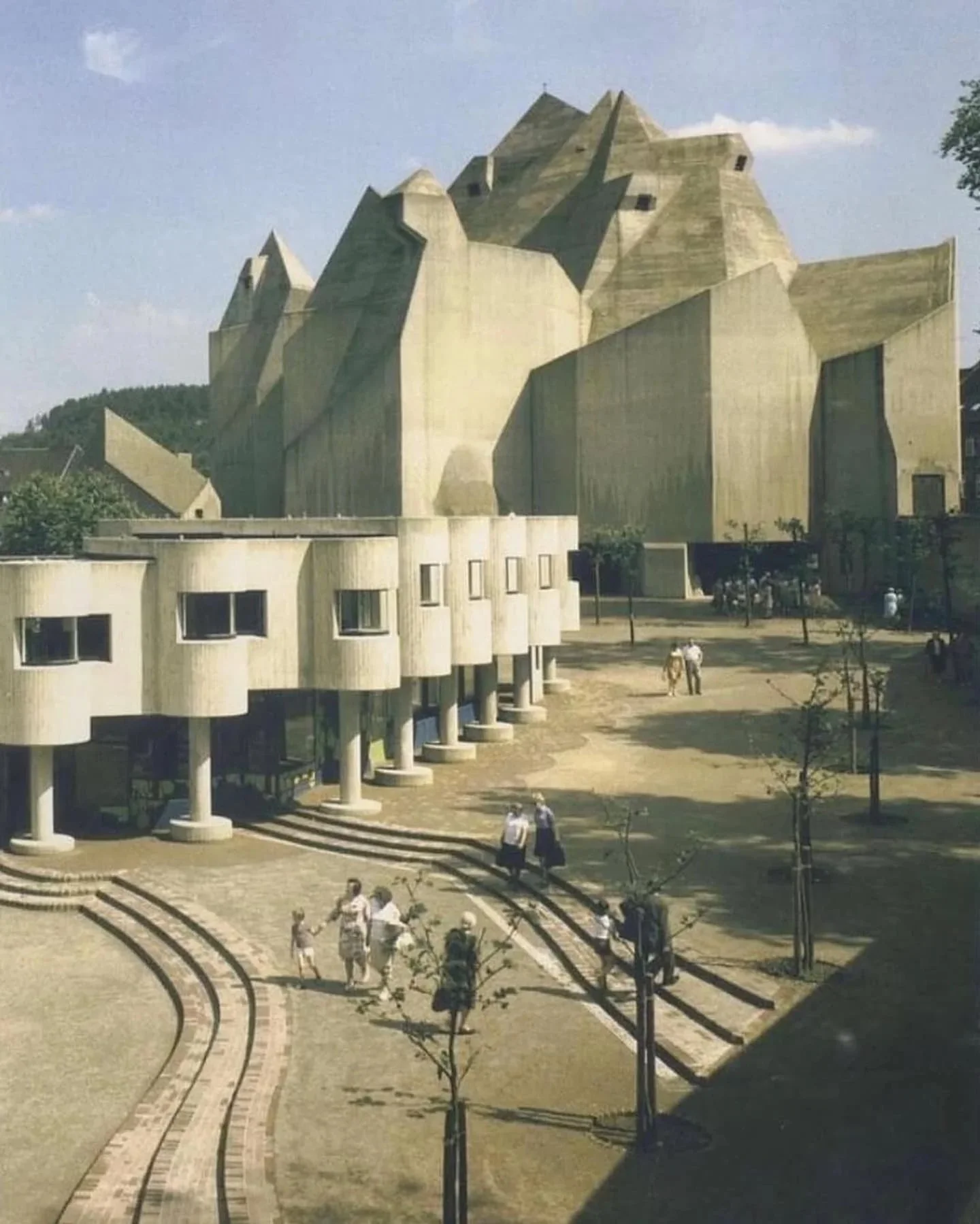
Another brutalist masterpiece, the Pilgrimage Church of Maria, Königin des Friedens, is German architect Gottfried Böhm’s exploration of austere spirituality. With its rugged and jagged contract structure, the design was crafted with the intention of mirroring the liturgical reforms of the Second Vatican Council, which emphasised community participation and openness. Considered as one of the masterpieces of Böhm’s career, the church was one of the key contributing factors towards Böhm being awarded the Pritzker Architecture prize in 1986.
Madonna delle Lacrime, Italy
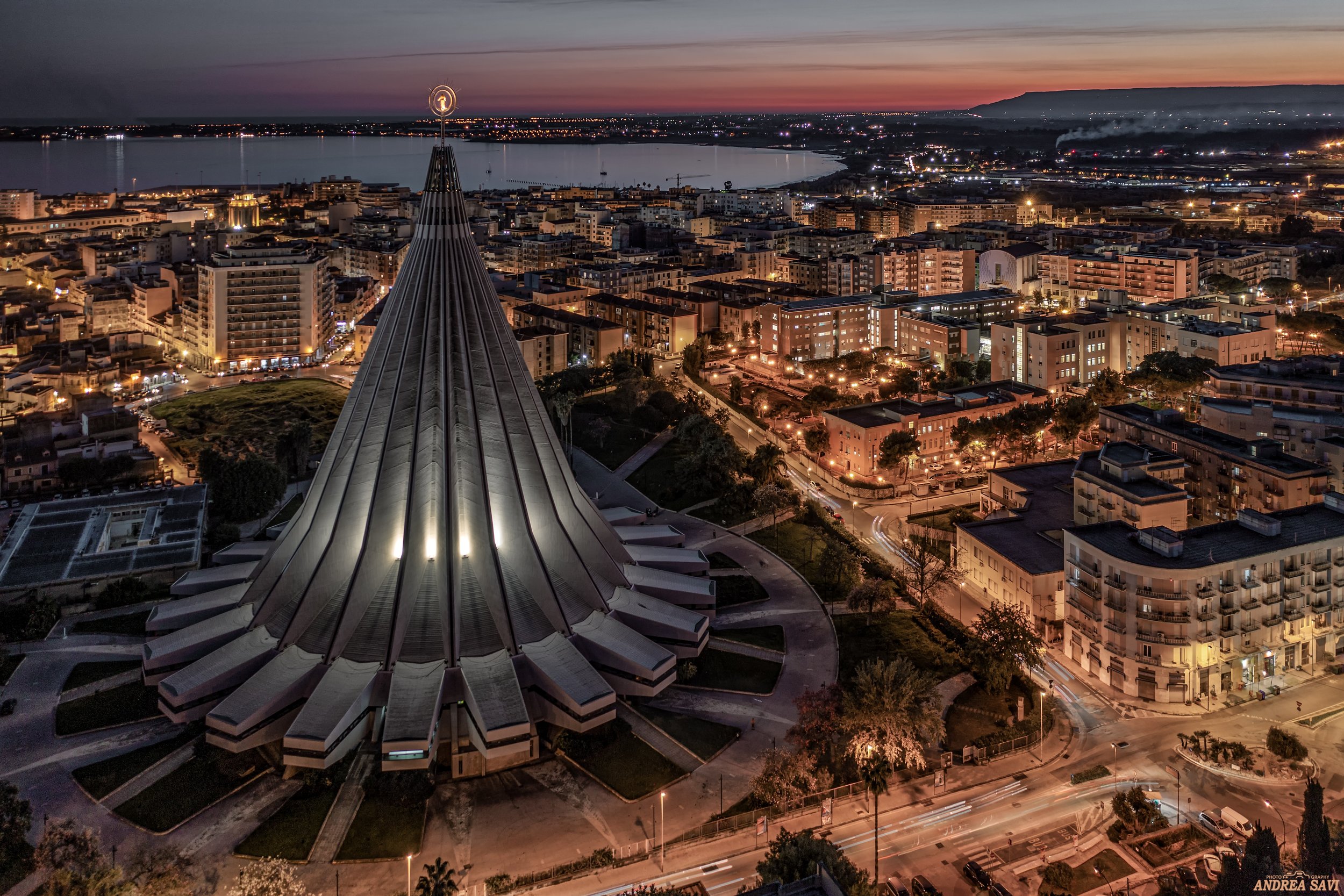
Rising dramatically on the outskirts of the Syracuse region, the Basilica Santuario Madonna delle Lacrime commemorates a miraculous event in 1953, when a plaster effigy of the Madonna reportedly shed tears for several days. Designed by architects Michel Andrault and Pierre Parat, the church mirrors the shape of a soaring teardrop, perhaps signifying themes of grief with a golden bronze Madonna sitting atop its dome to pay homage to the church’s origin story.
The Church of Hallgrímur, Iceland
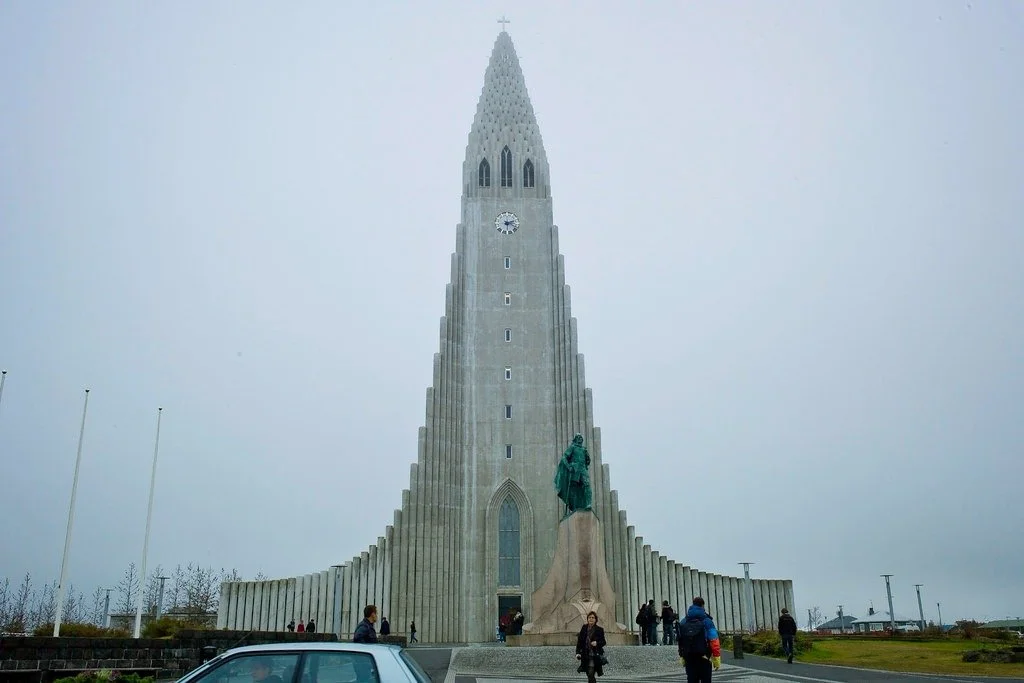
At 74.5m, Hallgrímskirkja remains one of the tallest structures in Iceland, a towering monument designed to mimic the basalt lava flows of the country. With its futuristic fortress aesthetic construction of the building spanned over a period of four decades, before finally being consecrated in 1986. Inside the church is equipped with a monumental pipe organ comprised of over 5,000 pipes, making it one of Iceland’s largest instruments. It is said that on special occasions, the sound of the organ can be heard reverberating throughout the entire city.
Capstone Cathedral, USA
The Capstone Cathedral, also known as “The Pyramid” or the “UFO” church, is a famous landmark in Phoenix, Arizona, constructed by evangelist Neal Frisby. Designed to seat approximately 4,000 people, the building has sparked intrigue and interest among the locals, with many of the city's residents offering various interpretations as to its real purpose. Over the years, the building itself has undergone a variety of changes in ownership and from 2021, according to official reports now serves as the venue for the Arizona Kings volleyball club.
Chapel in the Rock, USA
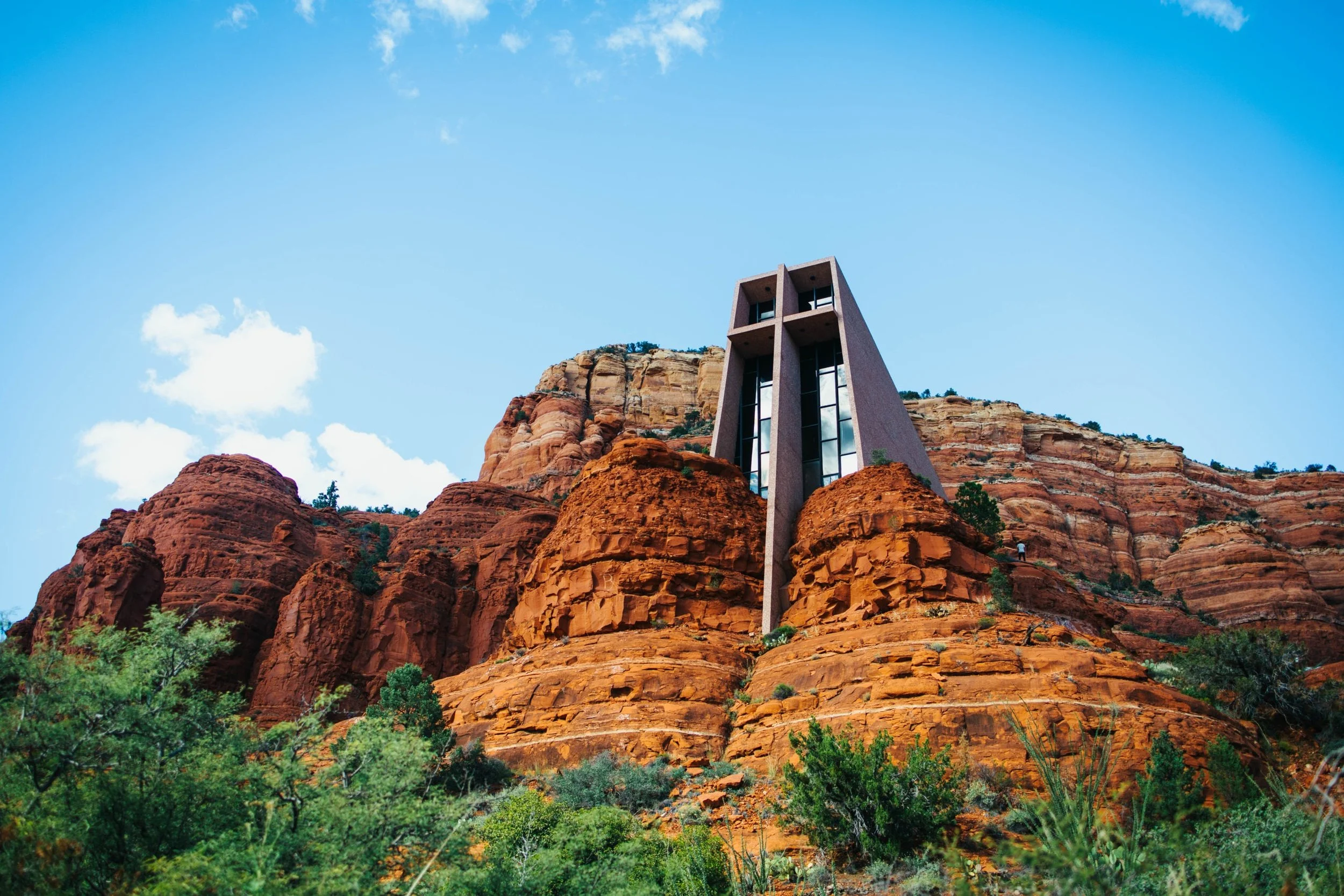
The Chapel of the Holy Cross is a modernist marvel conceived by local sculptor Marguerite Brunswick Staude and designed by architect Richard Hein. The structure, unlike most churches, finds itself perched with the iconic red rock formations of Sedona and features a sleek structure reminiscent of the Empire State Building. With its unique and futuristic design, the church is reported to attract over 1 million visitors a year.
Cadet Chapel, USA
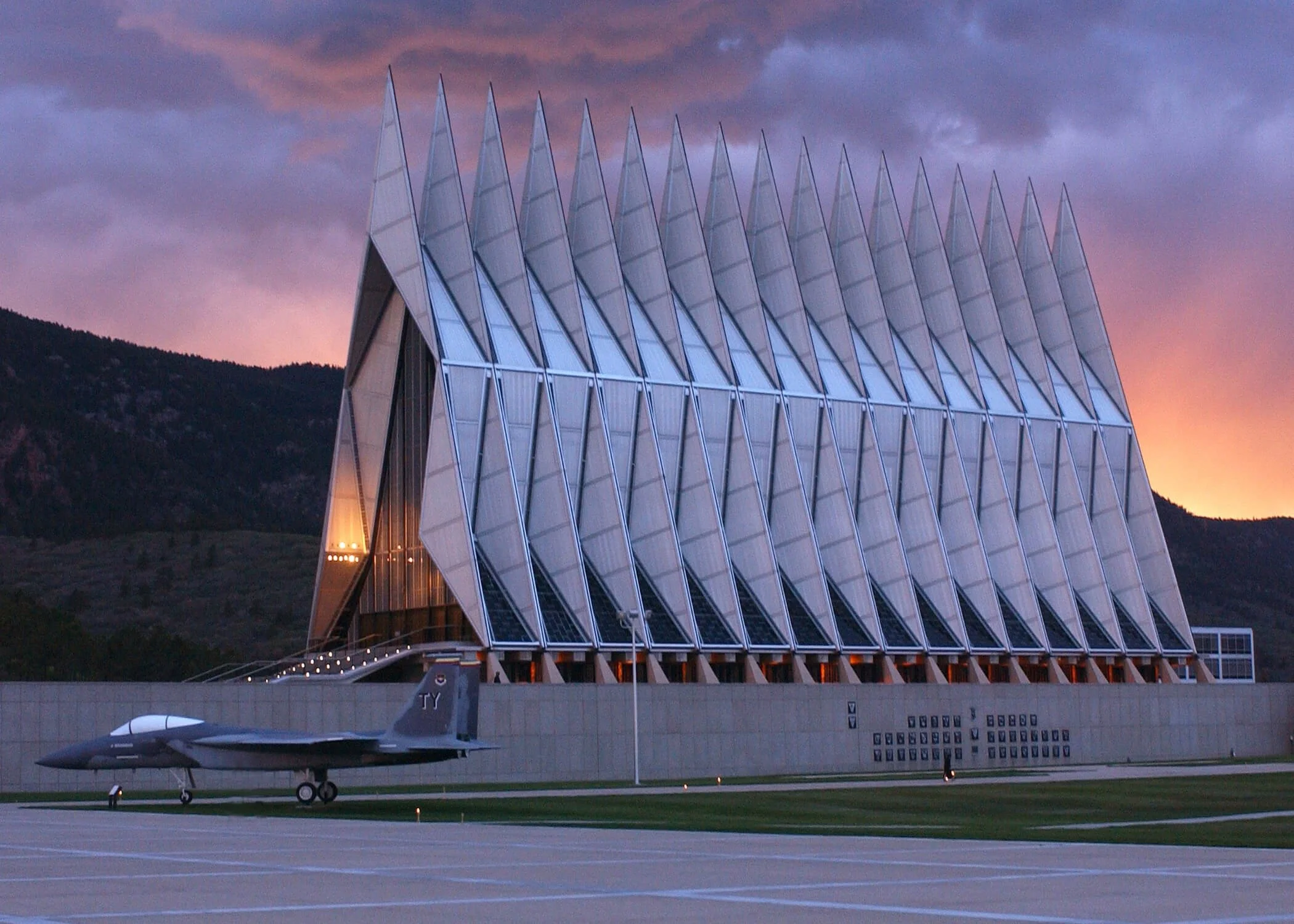
Similar to the previously mentioned Churchtanks, but this time much more wholesome, the Cadet Chapel in Colorado Springs sees an interesting collision of worlds with military and faith. Designed by architect Walter Netsch, the chapel comprises 100 identical steel tetrahedra, each clad in aluminium and separated by coloured glass that gives the structure a striking geometric silhouette. Interestingly, the building was designed to accommodate multiple faiths with spaces to worship for followers of the Protestant, Catholic, Jewish, Buddhist faiths and even an All-faith room devoid of religious symbolism.
Cathedral of Brasilia, Brazil
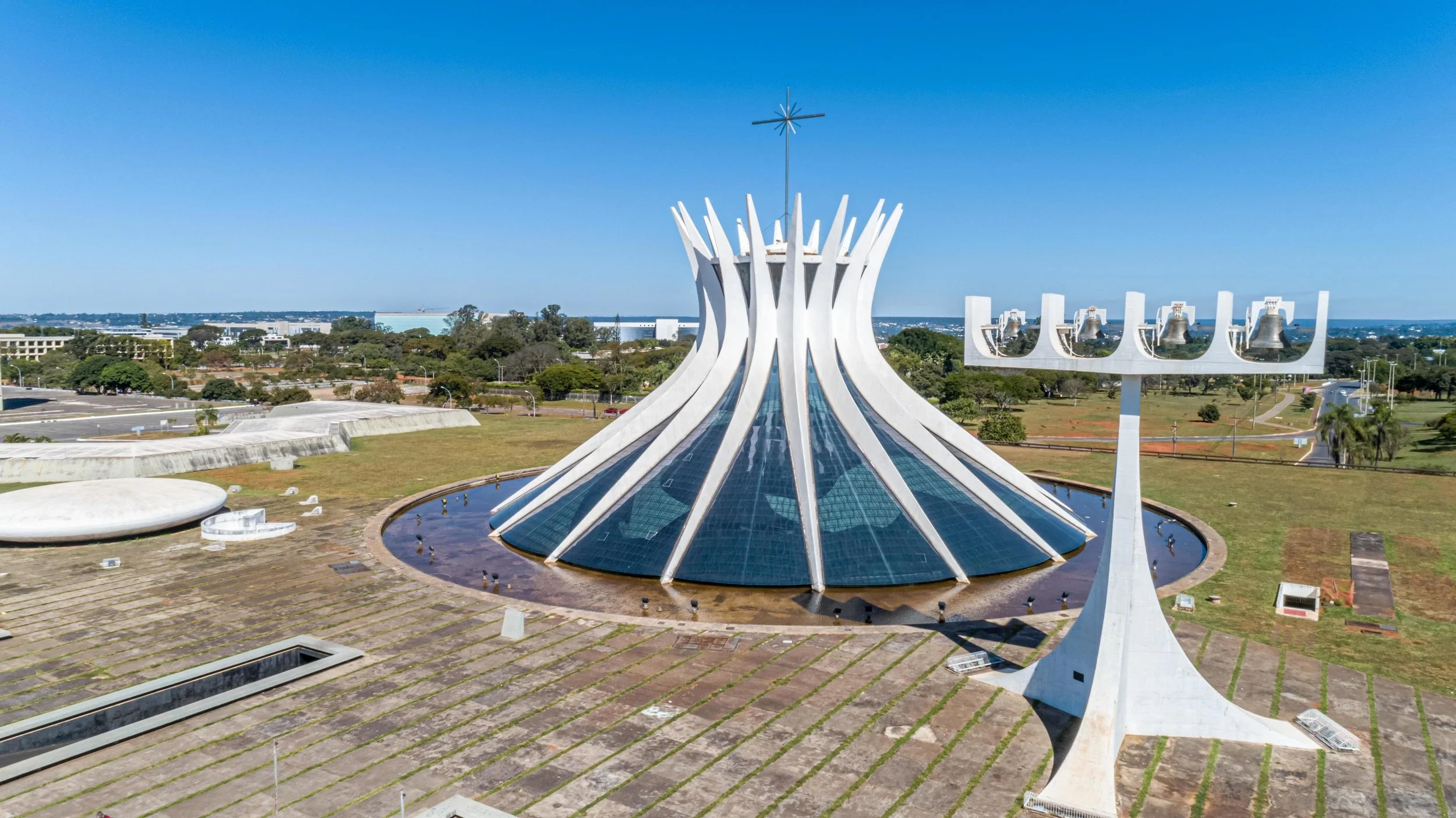
Featuring a hyperboloid silhouette that rises above the heart of Brazil’s capital, the Cathedral of Brasilia is architect Oscar Niemeyer’s daring interpretation of Christ’s crown of thorns. With 16 curved columns stretching towards the sky, the cathedral's other-world and alien-like appearance has also been interpreted as resembling “hands reaching out to heaven in prayer”. Initially met with equal amounts of awe and bemusement, it has since become an iconic symbol of Brasília, celebrated for its dramatic interplay of stained glass and angel sculptures that seem to float above its central structure.
Sedlec Ossuary, Czech Republic
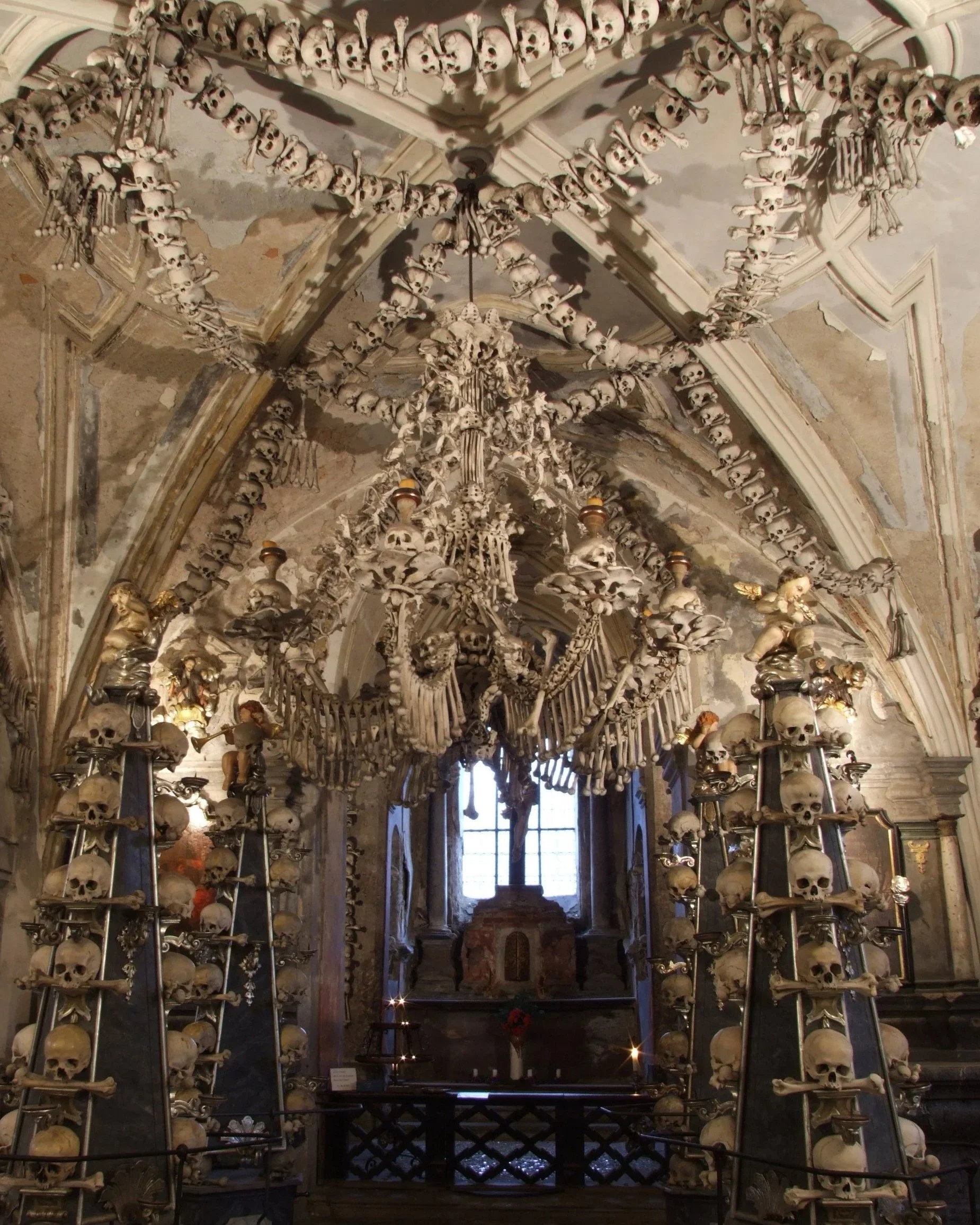
Looking at this list, we can’t help but feel like some people had a little bit too much time on their hands back in the day. Like a macabre art installation, the Sedlec Ossuary in Kutná Hora is a Gothic-Baroque marvel adorned with the bones of an estimated 40,000 to 70,000 people. Decorated in the late 19th century by a woodcarver by the name of František Rint, the chapel features morbid objects such a grim chandeliers, grotesque pyramids and even a coat of arms made entirely of human skeletons. Despite its grim interior design, many visitors to the church have taken to see the funny side of it, often posing alongside skeletons in an attempt to blend into the ossuary-related decorations.
Underwater Church, Germany
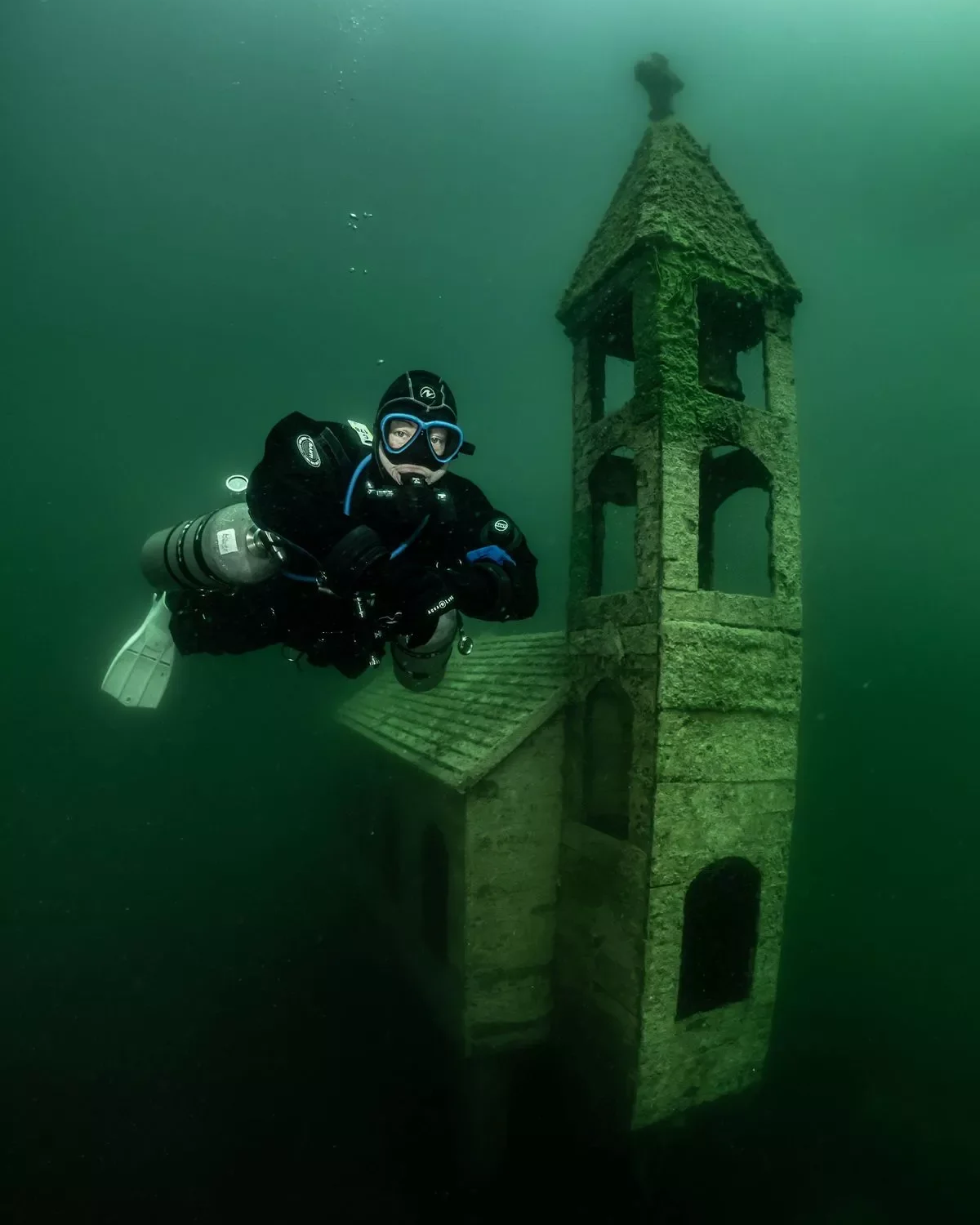
Located 15 meters below the surface of the Ilsesee lake in Augsburg, Bavaria, this is most likely the least accessible church on our list so far. The origin of this church’s location lies in the construction of Ilsesee, a man-made lake, where some of the older buildings and industrial structures were intentionally submerged when the area was filled with water. Today, these underwater structures can still be seen by divers, giving the impression of a lost sunken city of a bygone era.
The Submerged Church, Brazil
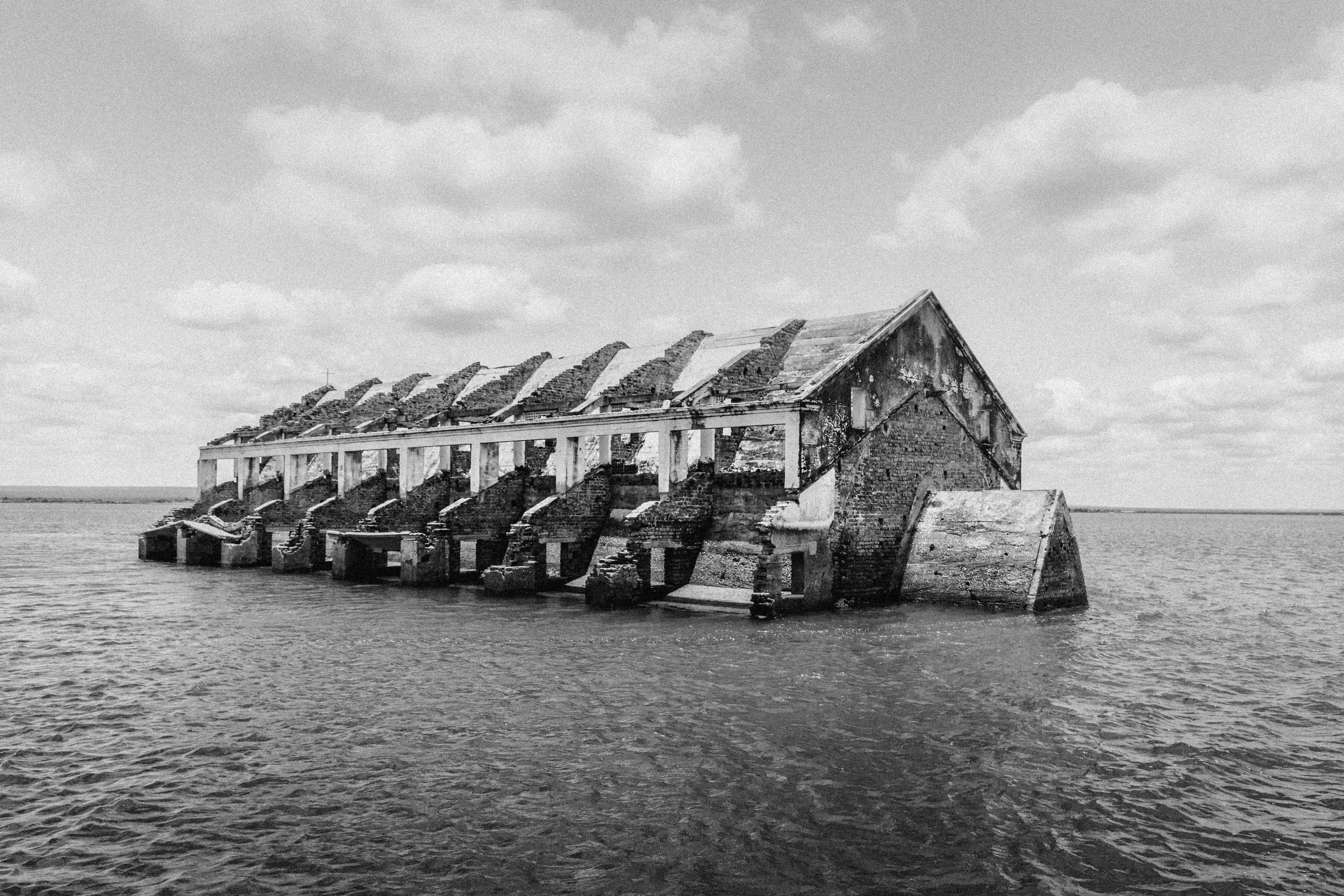
Rising like a ghostly detritus from the waters of the Itaparica Reservoir in Pernambuco, Brazil, the Old Petrolandia Church is a Gothic-style relic of a town that was deliberately flooded in 1987. Once the heart of the community, its brick facade and arched dome now emerge partially above the water, only fully revealed during periods of drought. The church stands as a hauntingly beautiful reminder of Petrolândia’s past, a solitary monument to the town’s history floating on water.