
SECOND SKIN: GATA MEETS GINZI
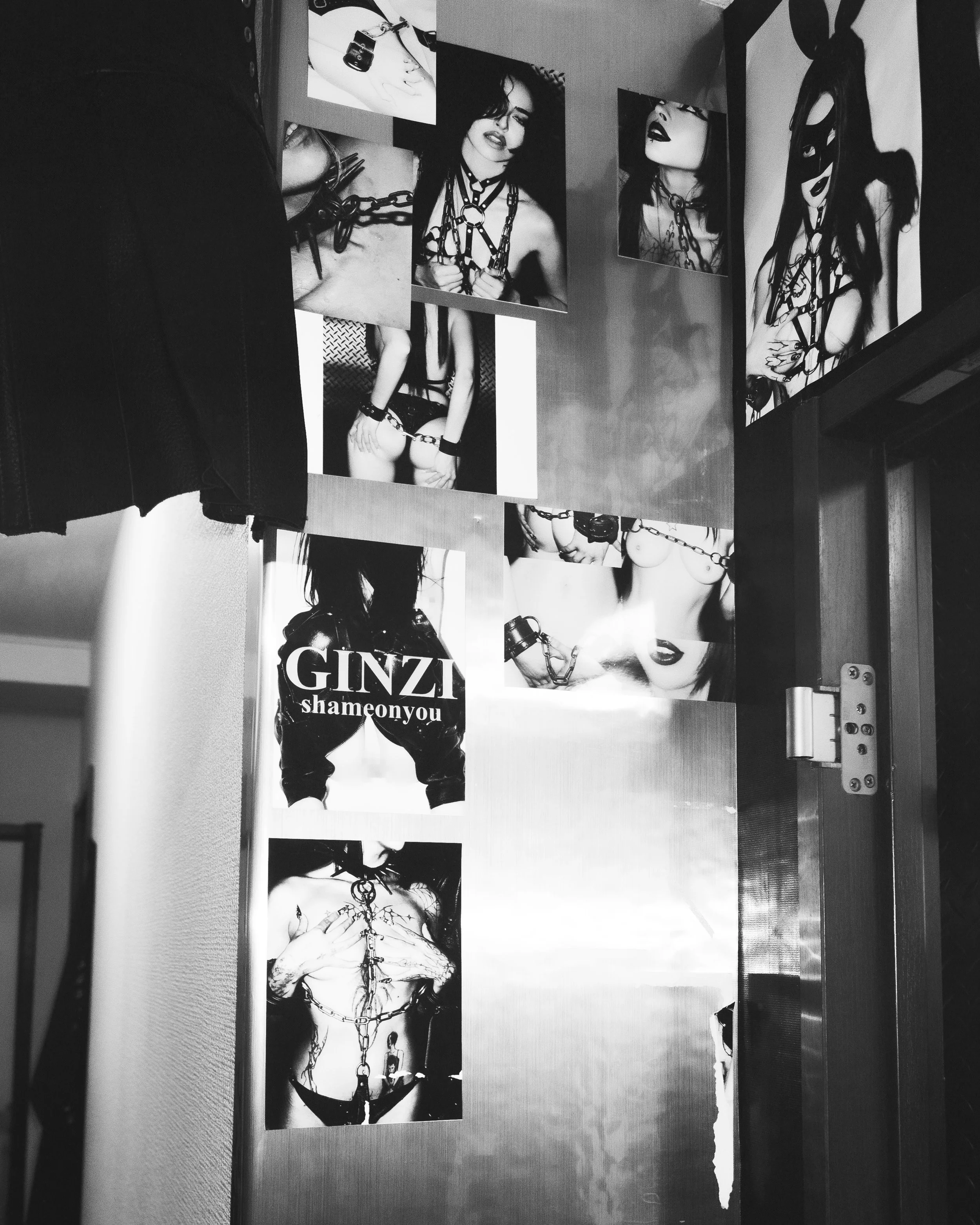
In a small atelier tucked away in Tokyo, GATA sat down with Ginji Osada, a leather mastermind and craftsman of GINZI, around his crafting table. Looking into the atelier, one can see where Ginji’s fingers, completely black stained from crafting leather hide, shape second skins. Not only a designer in the conventional sense, Ginji is a sculptor of leather material, an observer of the lines of human form, and a quiet provocateur in a society that prizes restraint.
To Ginji, his path to leathercraft was gradual. “There wasn’t really a decisive moment,” he admits. He had always created, experimenting with materials, but leather fascinated him in its process; the gluing, hammering, skiving. He realized his visions by founding GINZI, his brand of handmade leather items.
Ginji is fascinated by feminine silhouettes (lines his own body lacks), finding joy in accentuating curves through leather. “If the pieces I make now bring joy to the people they suit, then that is enough for me at this stage.”
Leather naturally intersects with kink, but Ginji insists it is incidental. He does not chase taboos nor measure against social opinion; he simply pursues the craft. “I basically just do my work,” he says, observing society from the quiet of his atelier.
The beauty and cruelty of leather coexist. Ginji loves animals and respects the hides he works with, repurposing factory rejects into art. “Using leather without waste and with respect for the animal is a beautiful act,” he explains.
In the world of GINZI, leather is a medium through which beauty, thought, and devotion find tangible form. A place where one can find freedom in restraints, wearing a second skin.
GATA: Could you please introduce yourself to the GATA readers?
GINJI: My name is Osada Ginji. I’m 23 years old. After dropping out of fashion school, I continued learning at a leather repair company while starting my own brand. Now I focus solely on running two brands: GINZI and Engrave the Cross. GINZI is the brand where I mainly create handmade leather items.
GATA: Was there a decisive moment that led you to choose leather as your medium of expression?
GINJI: I had always been creating with different materials, and one time when I started working with leather, I was drawn to the processes involved. It wasn’t just about painting and finishing. It included gluing and hammering after painting, or thinning the leather with a skiving machine. I became fascinated with those steps, and that’s what pulled me into leatherwork, which I’ve continued ever since.
GATA: What motivated you to launch GINZI?
GINJI: To continue from what I mentioned earlier, I’ve always loved creating, and that’s why I started the brand. But once I began making things with leather, I realized the difficulty of the processes and handling the material. I couldn’t quite create what I had envisioned. As I studied more in order to better express my ideas and give shape to them, it naturally evolved into what became a brand.
“ For me, design isn’t something I pursue for its own sake. I believe design only comes after the foundation of craftsmanship is in place. ”
GATA: From the perspectives of cut, silhouette, and corporeality, what kind of impact do you want your work to have on those who wear it or those who see it?
GINJI: Up until recently, I wanted people who wore GINZI items to be deeply moved. That’s why I made many different sizes, so people of various body types could find something that fits them. But at some point, I realized that in trying to appeal to everyone, the message of my work was becoming diluted. So now I focus on essentially one size. Within the limits of my current skills, I try to create the best possible expression. If the pieces I make now bring joy to the people they suit, then that is enough for me at this stage.
GATA: Which parts of the body do you want to constrict, compress, expose, or emphasize?
GINJI: I’m strongly drawn to feminine silhouettes, something I don’t have myself. Since my own body doesn’t have those lines, I find joy in highlighting the bust, waist, and all those feminine curves, and making them look even more beautiful through leather.
GATA: What do you design for?
GINJI: For me, design isn’t something I pursue for its own sake. I believe design only comes after the foundation of craftsmanship is in place. First and foremost, I focus on making. Then, I add design elements afterward, in a way that enhances and presents our craft in the best light.
GATA: Do you feel drawn to Japan’s kink/BDSM/leatherman scene? Or is your work rooted more in aesthetics than in sensuality?
GINJI: Well, my very first leather project was making a notebook for myself, but yes, I do like it. But at this stage, I’d say it’s more like I’ve been unconsciously drawn toward it. As I mentioned earlier, I enjoy making feminine lines more beautiful, and since the material I use is leather, it naturally gravitates toward that community. Still, right now, I don’t have a conscious desire to strongly express BDSM or anything like that. It just happens naturally through my process.
“Most of the leather I use comes from large factories or brands: rejected because of scratches or slight irregularities in quality. I buy and repurpose those pieces into items. In that sense, something that might otherwise go to waste is reborn into a product in my hands. ”
GATA: Have you ever felt resistance, taboos, or difficulties in gaining acceptance when engaging with kink culture in Japanese society?
GINJI: Honestly, I don’t really know much about public opinion. I don’t go out in Tokyo or Shibuya to hang out. I basically just do my work, so I don’t spend much time thinking about social taboos or how others might see it. I’ve simply pursued the kind of work that I love. So, no, I’ve never really felt it was difficult.
GATA: What do you think are the “beautiful aspects” and the “cruel aspects” within leather craftsmanship?
GINJI: First of all, I love animals. All animals, including the cows that I mainly use. From one perspective, it may look cruel. Skinning an animal and cutting its hide can appear cruel. But I believe that if you use it without waste and with love, it isn’t cruel. It’s something that’s reborn as beautiful. Most of the leather I use comes from large factories or brands, rejected because of scratches or slight irregularities in quality. I buy and repurpose those pieces into items. In that sense, something that might otherwise go to waste is reborn into a product in my hands. To me, using leather without waste and with respect for the animal is a beautiful act.