
The Prophet’s Voice: Enter the Cult of NISHIMOTO IS THE MOUTH
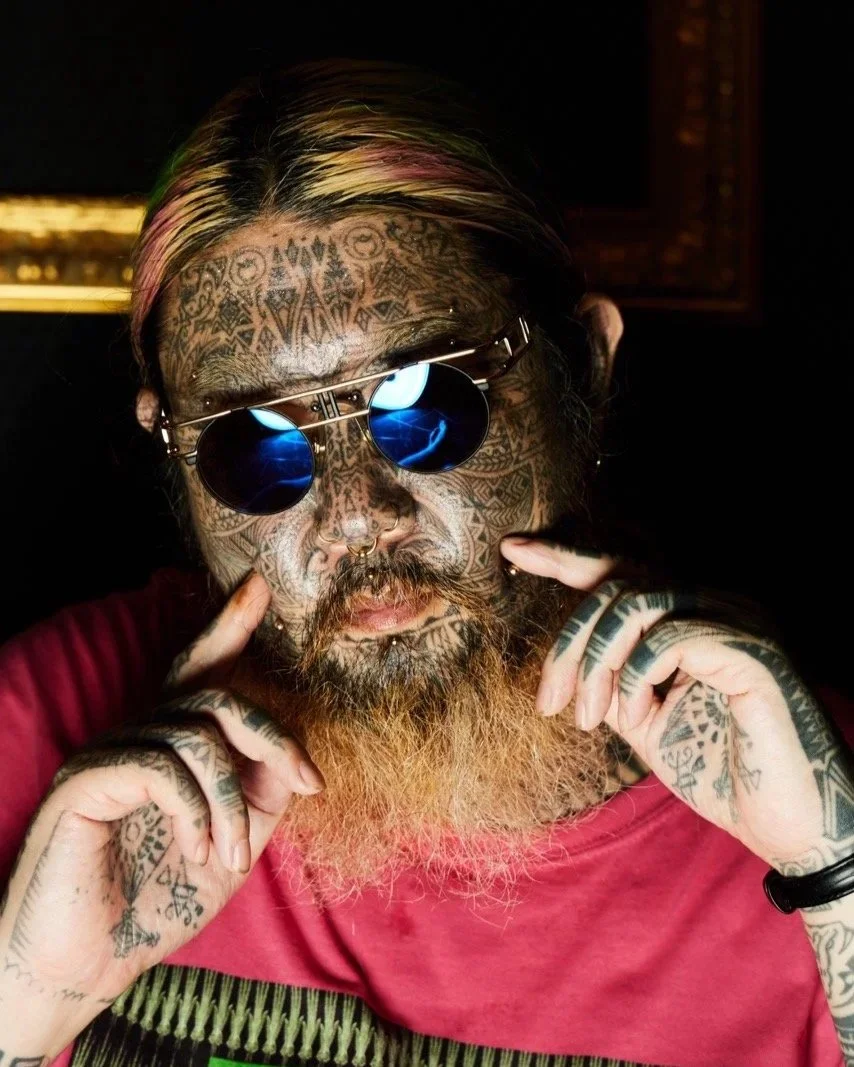
Some brands are built; others are born from myth.
NISHIMOTO IS THE MOUTH belongs to the latter. Launched in 2017 by Nishimoto, artist, director, and self-described “mouth of the baby god,” the brand grew from a surreal blend of underground culture, personal philosophy, and instinctive creation. It began with T-shirts handed out freely, drifting into the hands of global icons like Drake and Virgil Abloh, and gradually formed into a world of cult-like imagery, tribal energy, and emotionally charged design.
Today, NISHIMOTO IS THE MOUTH continues to expand its universe through small-batch collections, visual storytelling, and Nishimoto’s unmistakable presence: a living artwork in motion. GATA sat down with NISHIMOTO to explore his philosophies and prophecies.
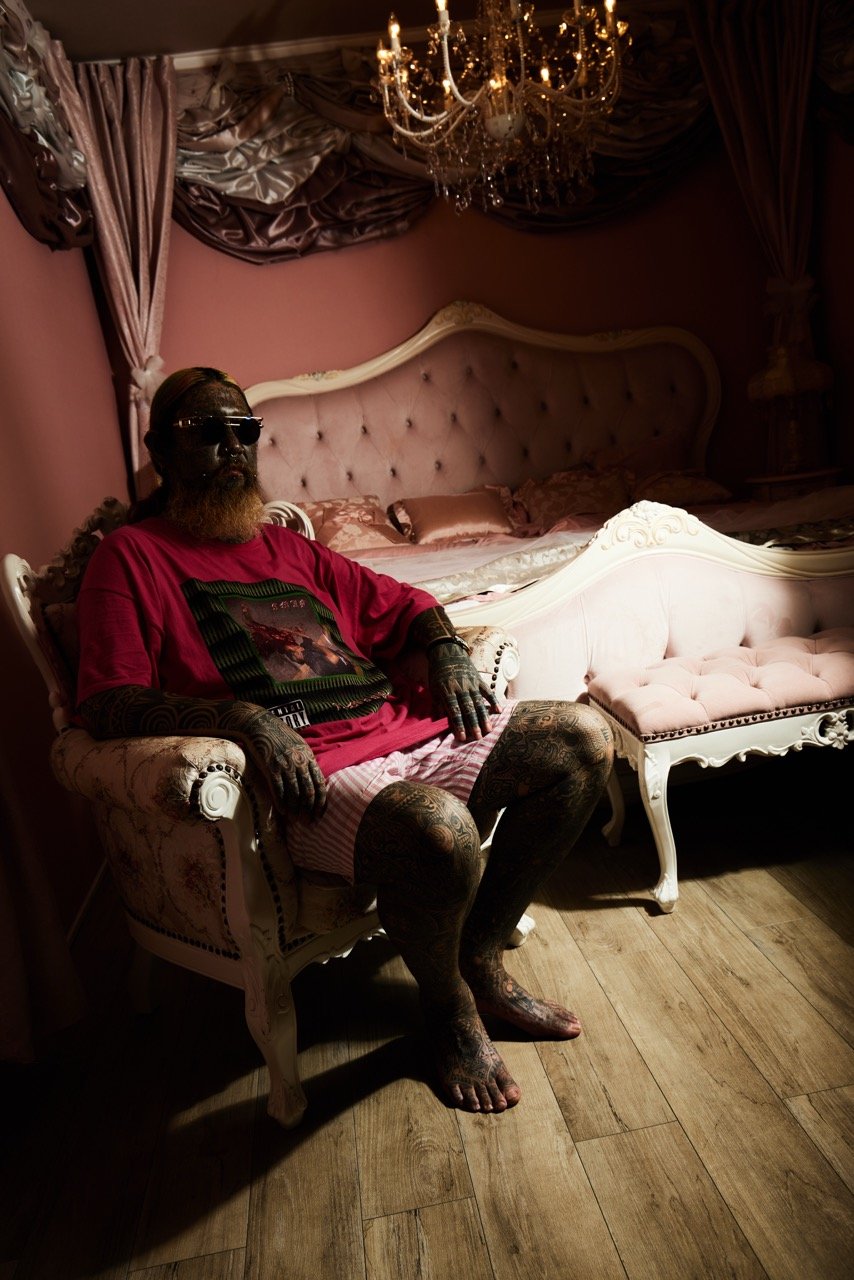
GATA: Hello Nishimoto! For those who don’t know you, can you shortly introduce yourself and tell us how NISHIMOTO IS THE MOUTH began?
NISHIMOTO: I’m Nishimoto of NISHIMOTO IS THE MOUTH, the director behind the brand. The brand started in 2017 with myself, an artist named George Nakamura, who is a painter, and another friend, Jared from Nike. The three of us started the brand together. At first, we didn’t sell anything; we would bring a huge number of T-shirts we had made from America to Japan and hand them out. Because of that, people like Drake, Virgil Abloh, and Tom Sachs came to us. Handing them out for free really worked in our favor, and that helped bring in a lot of people as well. It turned into a good promotion. At that time, I was working at a brand called Visvim. But because the company didn’t allow employees to work on outside projects, and my work with the brand became too visible, I ended up leaving Visvim.
In 2020, I started running NISHIMOTO IS THE MOUTH on my own. Now, the company Commonbase supports us, and we’re in our fifth year. We put out collections for spring, summer, fall, and winter. They’re small collections, but we create clothing for shops in Tokyo and for overseas dealers. I handle production and direction. As for design, it’s me and one other person; the two of us handle that part together.
“Life only happens once; that’s the theme behind my current tattoos.”
GATA: Can you tell me about your early life and what shaped you growing up?
NISHIMOTO: Well, I was born into an ordinary family, but my mother was quite an interesting person. She actually passed away when I was around twenty. Back then, at home, she would often play things like splatter movies, films like Guinea Pig and Death File, a nonfiction VHS series that showed real corpses. That was the kind of household I grew up in. When I was about fourteen, I got my first tattoo. I also had my first sex at fourteen and experienced drugs at that age. Fourteen was really a turning point for me. From around then, I started to really like subculture, fashion, and music. That’s how my childhood interests began.
GATA: You are quite famous for your countless tattoos. What was the significance of your first one, and what drew you to tattoos at such a young age?
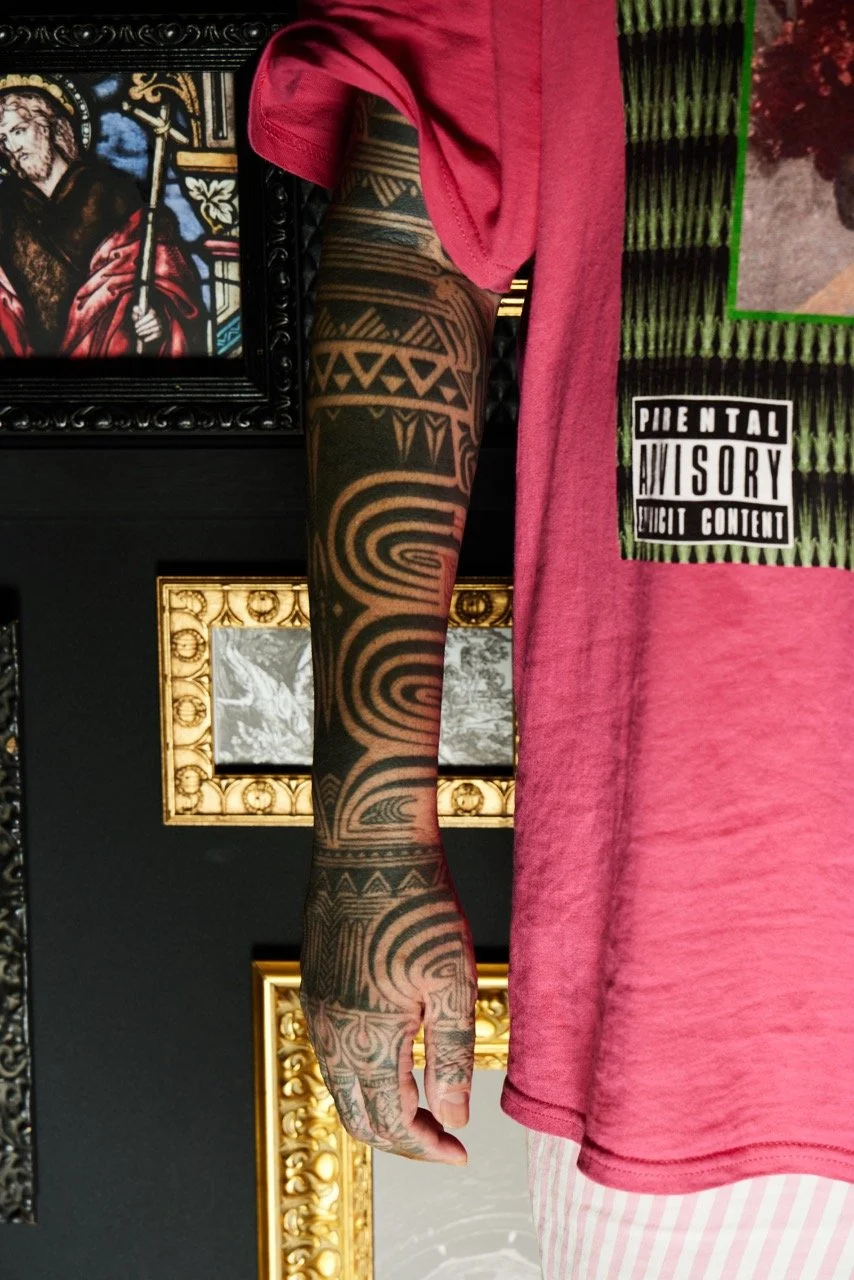
NISHIMOTO: When I first got a tattoo at fourteen, I was reading a subculture magazine called Burst. I was curious about how painful it would be, so I got one on my wrist. I didn’t have much money at the time. I chose a Ganesha figure from a ¥15,000 file at a famous shop on Takeshita Street called Scratch Addiction. That was my first tattoo. I also have a philosophy about tattoos; there’s not really any special meaning. The tattoos I have are not the kind you get for someone who has passed or for symbolic reasons. Tattoos are just part of my everyday life.
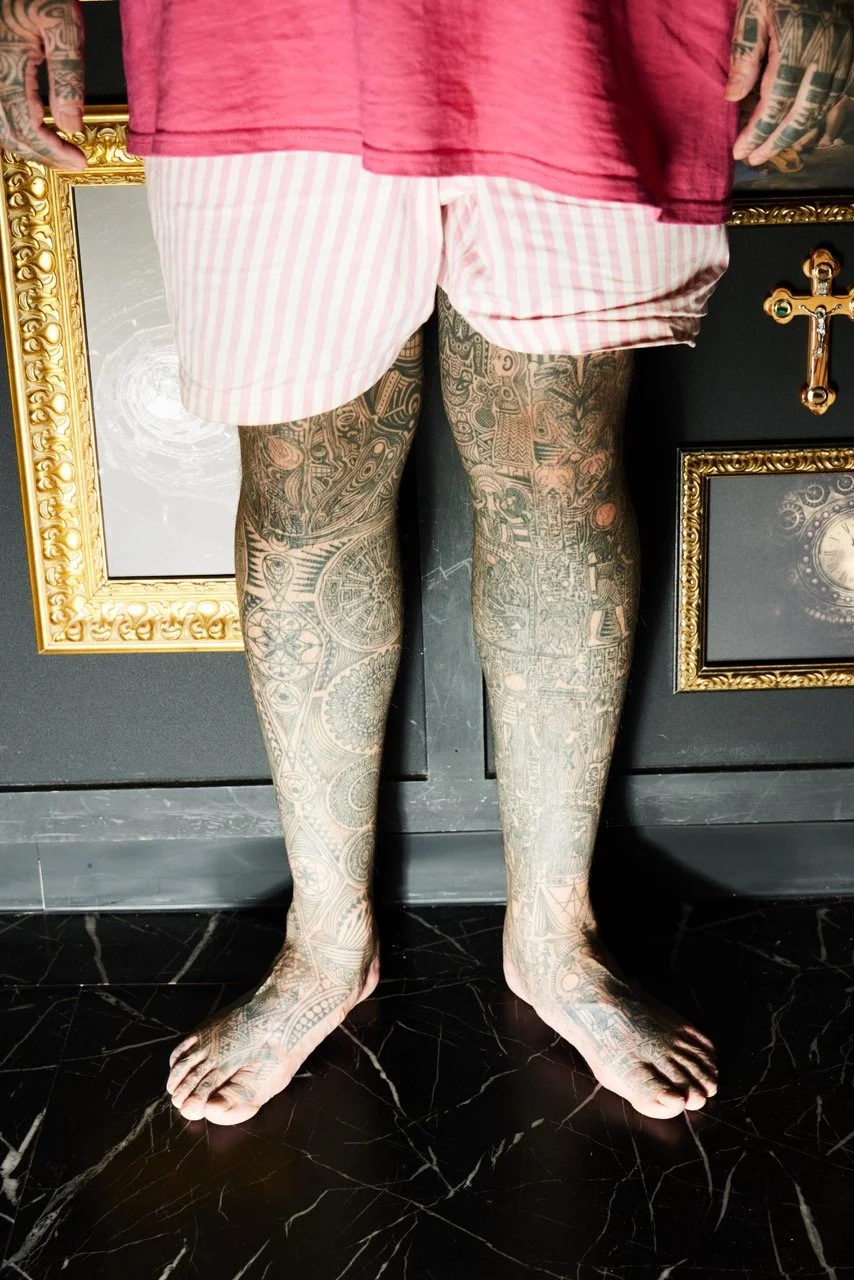
When I got one on my face, the tattoo artist tried to stop me two or three times, but I went in like I was going to a convenience store and got it done. So for me, tattoos aren’t heavy themes. They’re truly a part of life, like eating a meal. Some tattoos do have partial meaning. For example, on my legs, I have designs inspired by the universe or Indian pyramid murals: abstract images like that. But it’s not about deeply researching something I love and putting it on. It’s more about instinct and passion. If I feel like I want to get it, I just get it immediately.
GATA: Does it become a part of your fashion?
NISHIMOTO: No, I try not to connect the tattoos I want with fashion. I’ve always liked tribes, and I like the old traditions of those tribes. That’s why I have tribal tattoos. In that sense, it might seem like there’s some meaning, but I’m not interested in other styles like circular designs, American-style tattoos, or classic tattoos. I’m only interested in tribal tattoos. There are some very famous artists who do tribal tattoos, but the artist I go to, Yasu from Sendai, has been working with me for about twenty-five years. He can do the work perfectly without me saying anything. The total cost has been roughly enough to buy a lower-end Mercedes, but I really have no regrets. It was definitely worth it.
GATA: Now, after being fully tatted, what does your appearance mean to you personally?
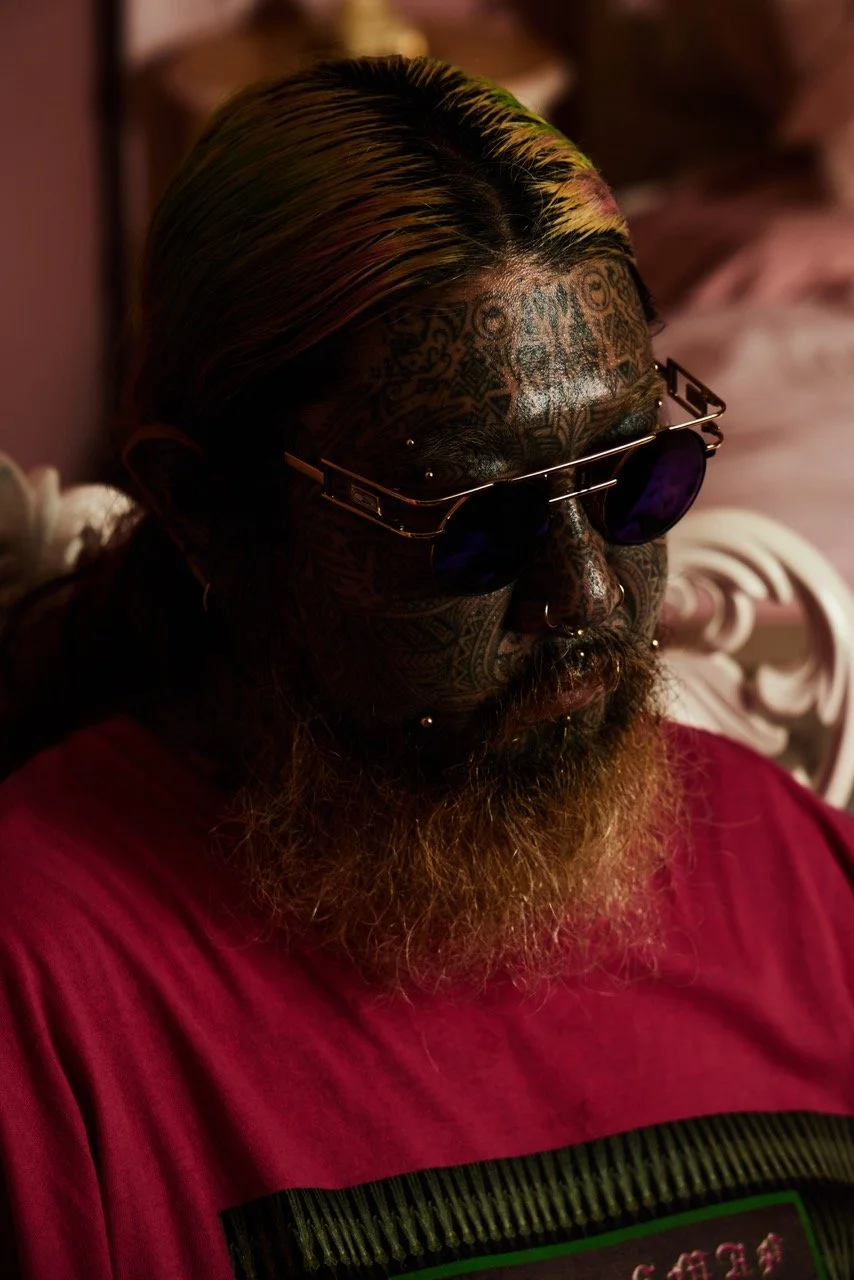
NISHIMOTO: At first, I had my own definition of tattoos. I really disliked the idea of getting them on my wrist, neck, or ankle in a way that could be hidden while working. That didn’t fit my tattoo philosophy. I wanted to get tattoos in a way that fully expresses my philosophy. People might notice, and it might limit job opportunities, but I wanted to do what I wanted. Life only happens once; that’s the theme behind my current tattoos. With the tattoos I have now, it’s very convenient because people remember me. I don’t even need business cards; there are many cases where I forget someone, but they remember me. Also, I’m living through this character I’ve created for myself. I did struggle with it at first. In Japan, on trains, people would often stare at me silently, so it was a bit difficult. It even made me somewhat depressed. But now, I feel this really represents me. It’s not something anyone else could imitate, so I feel glad I did it.
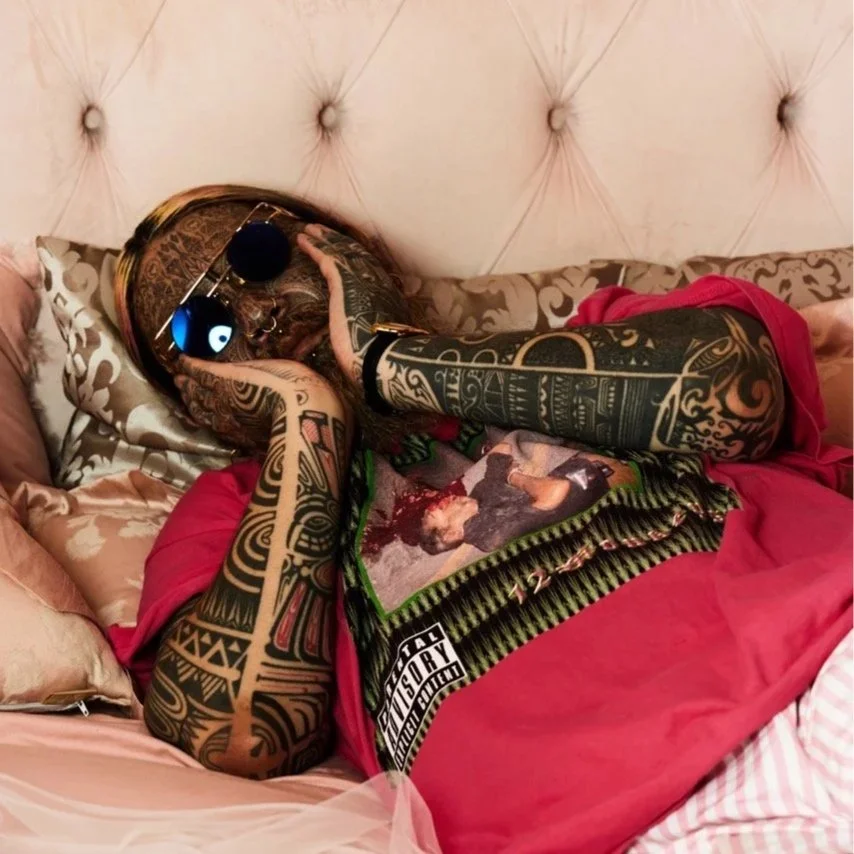
GATA: NISHIMOTO IS THE MOUTH is known to be founded around a fictional cult club theme. What artistic or emotional motivations inspired that concept?
NISHIMOTO: Originally, the three of us started in Nakameguro. Jared, the Nike designer, was pretty wild, and he was the one who initially led the project. I reluctantly joined, but he had noticed me and wanted to take my photo. The photos we took in Nakameguro became T-shirts within a month, and he sent them in bulk, telling me to give them to various people. He was originally the leader, but when the second phase of the brand started, I took over.
I think there aren’t many other people doing a cult-religion-themed brand, so that concept was genuinely interesting. My previous job was at Visvim, a very serious company often called the “Hermès of Japan.” I saw former staff leave and try similar things that failed, so I decided to do the exact opposite of Visvim. I thought that might lead to success, which is part of why the cult-religion concept came about. Now, I do things that are a bit removed from the cult-religion theme, but at the core, I still think that incorporating slightly religious-like elements is one of the brand’s strong points.
GATA: What does the brand name mean to you?
NISHIMOTO: It comes from the idea of a baby as a god, and I am the one who can hear the baby’s voice. I take on the role of a prophet, conveying the words of the baby god to the public. Until a few years ago, I was creating stories around this concept. I even went to Portland, where Jared lives, traveling between Los Angeles and Portland for shoots and making various movies. Now, that original theme is on hold, and I focus on connecting interesting things within the current base of the brand. But at some point, I want to compile the themes from that early brand period into a book, which is still one of my dreams.
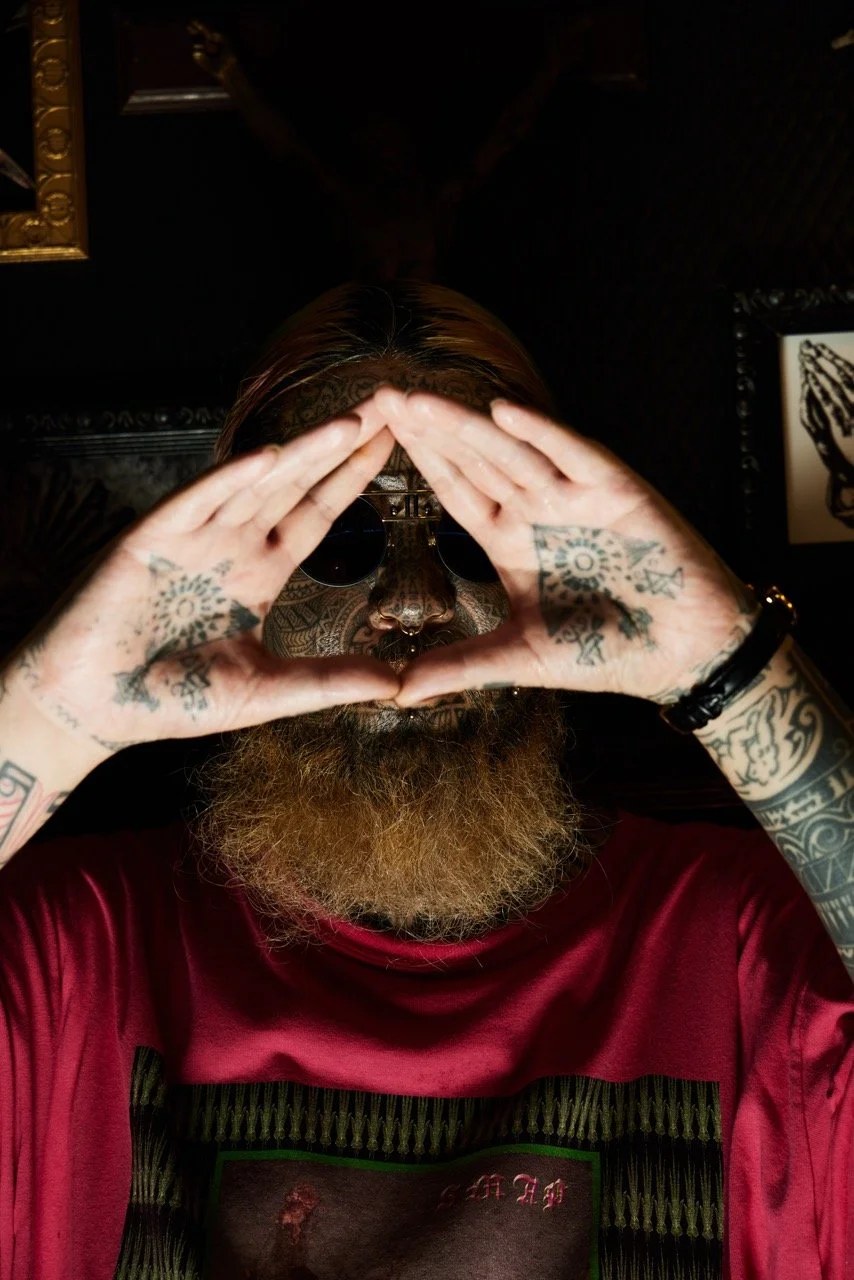
GATA: How do you embody the “prophet” persona? How does this persona influence your creative process and public reception?
NISHIMOTO: From around 2020 to 2023, as the “prophet,” it wasn’t really that I was the prophet myself. Since my photos were being used, people thought of me as the top figure of the religion. The role of the prophet was something that couldn’t be understood without explanation. Gradually, as I appeared in various media and answered questions, more people began to understand; still not fully, but slowly, the system behind Nishimoto became known.
I’ve always loved subculture and music, so I go to live shows and clubs, which naturally connects with that audience. Going a bit off-topic, my goal is to communicate the appeal of the brand and its design to the general public, using media. I can’t appear in traditional media because I’m quite strict about compliance, but I want to use my YouTube and Instagram to share it. Looking ahead, I also have overseas travel in mind. I’m thinking of appearing at Paris Fashion Week suddenly and various other things.
GATA: From films to fashion, what elements from subcultures have most influenced your aesthetic?
NISHIMOTO: I really loved music and fashion, but from there I also came to feel that movies and music are deeply linked. I also think art is linked as well. I went through various phases and arrived where I am now. In terms of films, I was influenced by directors like Alejandro Jodorowsky and Gaspar Noé. That whole genre of films that don’t give you clear answers really influenced me. I also liked David Lynch and similar directors.
As for music, I started with techno, but in the end, I was always more drawn to genres that not many people were listening to: things like noise, speedcore, gabber, industrial, schranz, and even trance from the 2000s. When I went to raves, there were always stylish people, and seeing what they wore also influenced and inspired me. Also, rather than punk, I come from the grunge generation, so I was influenced by that too. Even now, when I listen to Smashing Pumpkins or Nirvana, it feels emotional. I really believe fashion is closely tied to music, movies, and art, and I love that. But if I had to choose, I think music is what I love the most.
GATA: Ok now, besides insipiration, any favorite movies/music recently?
NISHIMOTO: I really like movies like The Holy Mountain and Requiem for a Dream, especially drug-related films. I enjoy those myself. I also like Japanese films, especially ones from the 70s and 80s. Recently, I haven’t been watching much. I mostly listen to music, which I also love, but I should watch more films. Right now, I’m collecting various subculture books. I’m also collecting erotic books, probably fetish-related ones. I think I really like fetish stuff. I’m also interested in fetish parties, not just club parties. For example, there’s one at the Princess Building on September 20th that I went to. I’ve liked fetish culture for a long time.
For music, there’s a noise genre called harsh noise. I also mix a lot of Japanese enka songs in my DJ sets. Besides that, I like hard techno because I fundamentally like to dance. So I enjoy hard techno and deep techno. I also still love gabber and speedcore, genres that many people tend to dislike.
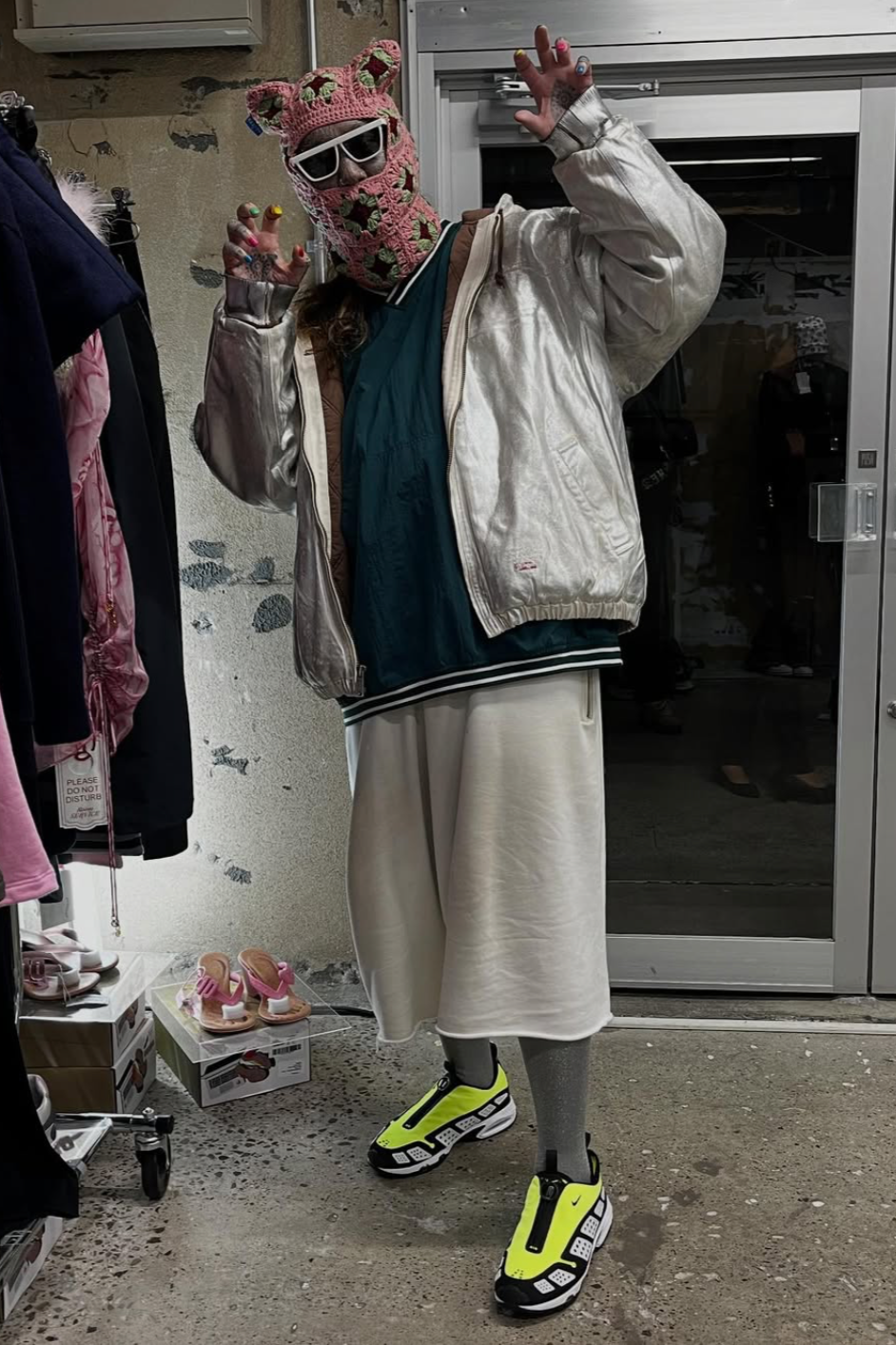
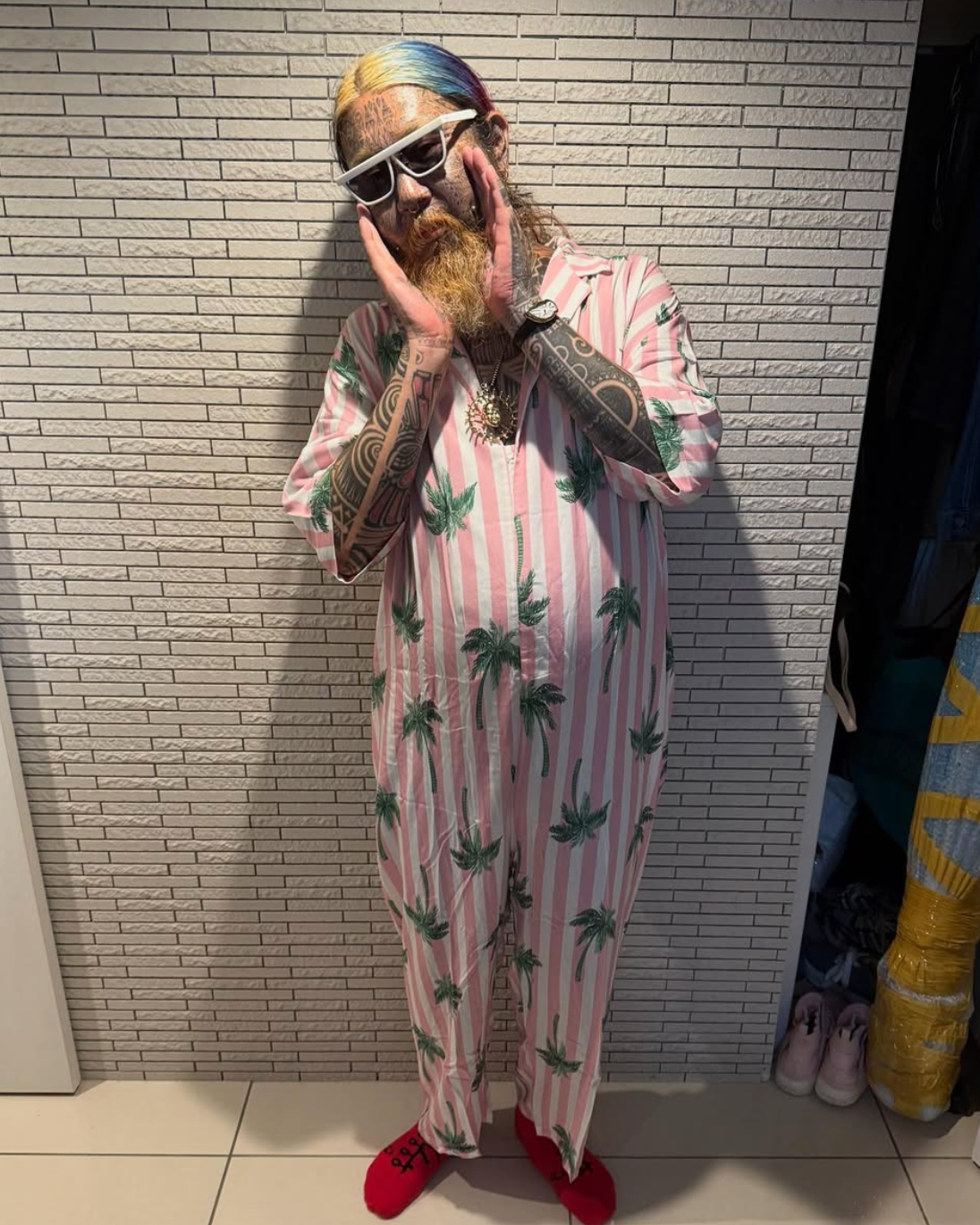
GATA: Speaking of fashion, I heard you have a wild collection of sneakers. What is your daily fashion like?
NISHIMOTO: Normally, I wear flashy clothes. From 2020 to around 2022–2023, I wore all white. Since the brand direction was based on a cult-religion theme, I dressed in a slightly religious style. But around 2023, I got into vintage clothing. Since then, I became obsessed with unique, one-of-a-kind, flashy clothes that only I could wear, and that continues now. My coordination is really all about intuition. I trust my instinct, picking items from the piles of clothes at home and combining them. I also try to balance cute and grotesque elements.
In terms of color, I’m currently into pastels: light pink, emerald green, light blue, and silver. I also like pink, especially shocking pink. Fashion is often the first thing people notice when they meet you: your clothes, hairstyle, piercings, or tattoos. I think fashion is the most obvious way to express that. I see fashion as part of my identity, so showing my identity through clothing has become very important to me. Recently, I’ve started loving fashion again. There was a period when I hated fashion (during the time I worked at Visvim), but once I started working with clothes myself, I began loving fashion again. That’s all.
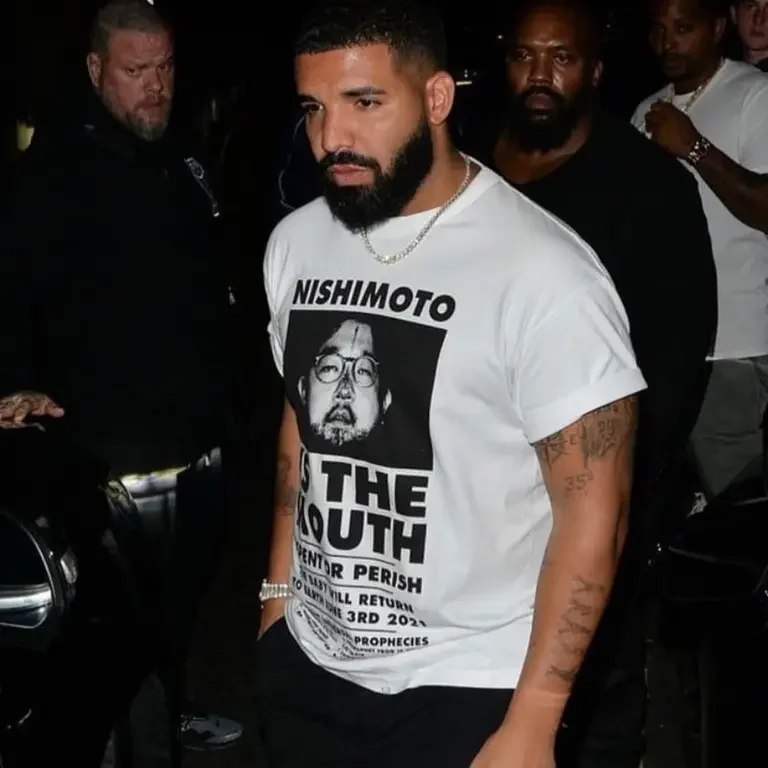
GATA: When Drake, Virgil Abloh, or Tom Sachs wore your shirts, it boosted your visibility exponentially. What did that feel like, and did it change how you approached the brand?
NISHIMOTO: One morning, I woke up and saw Drake wearing it, and I had a bunch of DMs from friends. But honestly, I wasn’t that into Drake to begin with. Tom Sachs and Virgil were connected through Jared, the Nike designer I knew back then, so I immediately knew he must have given them the shirts. At that time, I did think, “I should have sold these,” but even now, there are images of Drake wearing my T-shirts getting posted.
Surprisingly, after I started running the brand alone for about a year, there was a period when I didn’t even want to see those photos. I didn’t want to make the same T-shirts again. Now, my brand focuses more on cut-and-sew pieces rather than outerwear, though I brought some outerwear today. I’m trying to play to the strengths of the brand and challenge myself within that. Also, the lookbooks, which come out twice a year, are the most important thing for me, and I really enjoy planning their content.
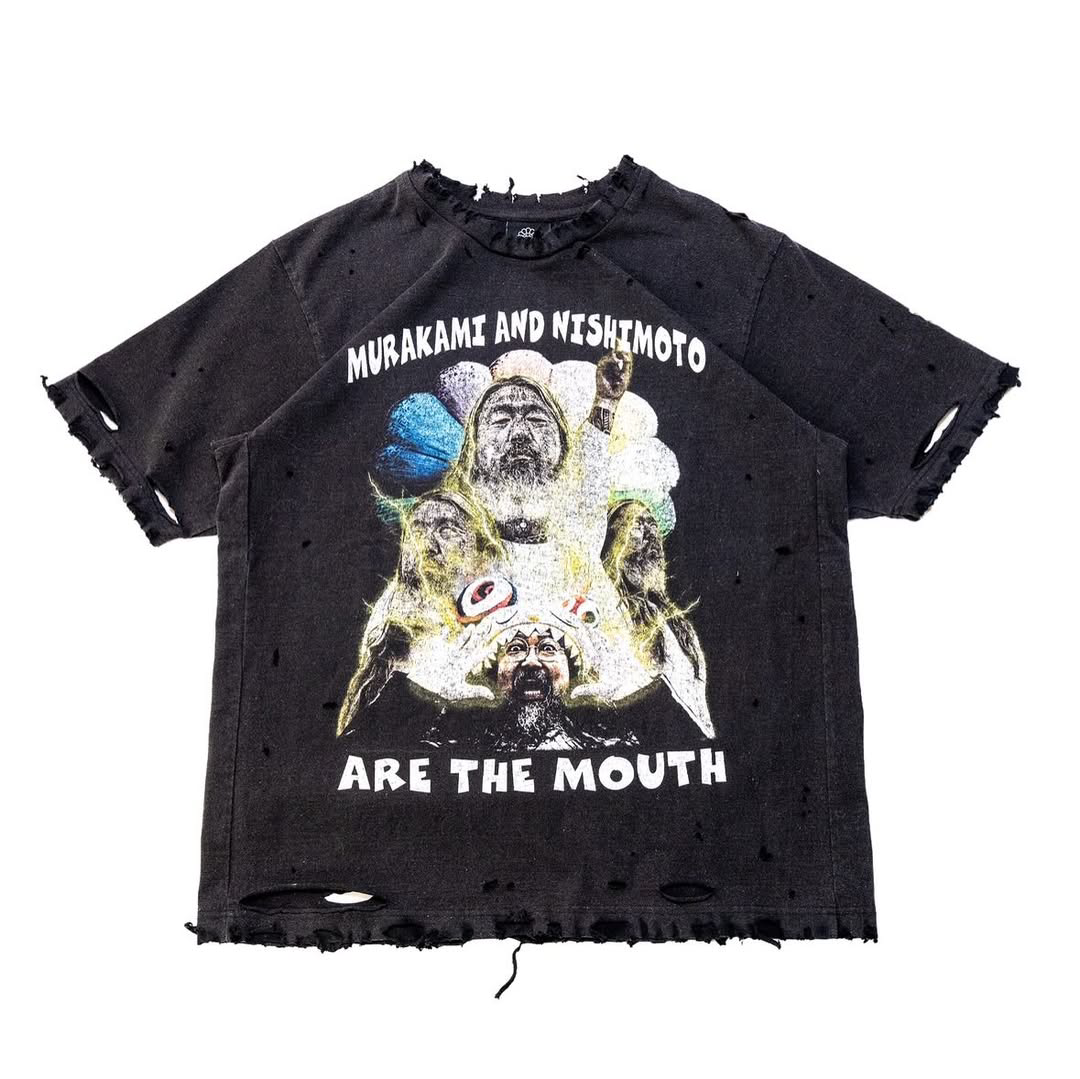
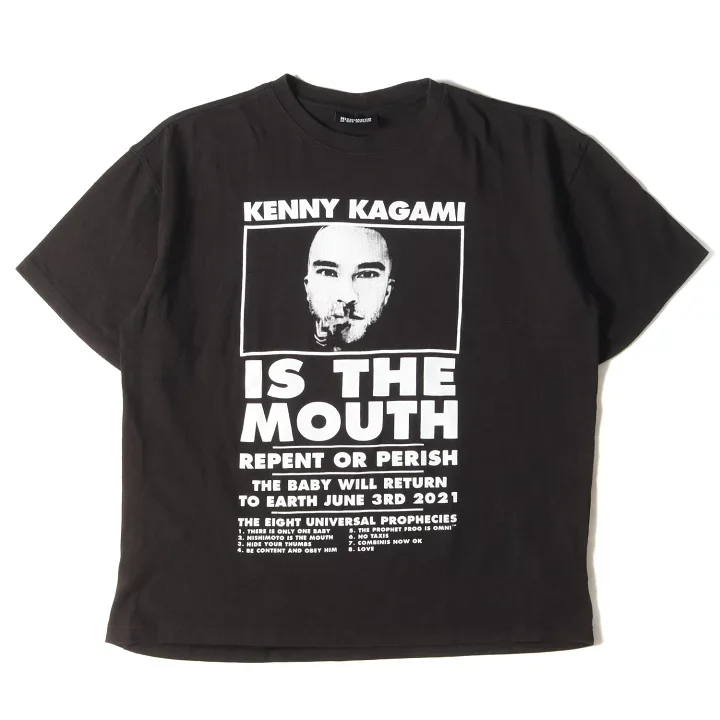
GATA: You have worked with many artists like Takashi Murakami, Kenny Kagami, and more. What is the creative process like behind those works?
NISHIMOTO: It was pretty much inevitable with Murakami. When I did a noise DJ set at Murakami’s trading card trade show, all the customers disappeared. Murakami saw that and found it interesting. I thought most people asking him for a collaboration probably went to him, but I definitely didn’t want to go. The next day, Murakami DM’d me asking for my LINE, and that’s how the collaboration started. My noise DJ set seemed to have impressed him, which was a factor in the collaboration.
I had known Kagami for a long time. There’s a concept called “Kenny Kagami,” a cooler version of his face, rather than just Ken Kagami. I wanted to collaborate with Kenny Kagami. I told Kagami, and apparently, there were other people who wanted to do it too, but I was the first to make it happen. Usually, the people I collaborate with are those I’ve already been close with.
GATA: If you were able to collaborate with anyone, dead or alive, who would it be, and why?
NISHIMOTO: There are people I’d like to collaborate with. But in terms of Japanese people, rather than a collaboration, I’d say I like Takeshi Kitano the most. I’d love to have him wear my clothes and shoot some model looks. And overseas, of course, I’ve been influenced by Demna. I really liked Demna’s work during the Balenciaga era, so even though a collaboration would definitely never happen, I’d love to do it.
Also, I like people from the subculture scene quite a bit. This one almost happened, but didn’t—photographer Kiyotaka Tsurisaki, who takes on subject photography. That was actually a project I seriously wanted to do, but in the end it didn’t happen. So, it’s people like that. And then for video, for filming my looks in a movie format, I’d definitely want someone like Gaspar Noé or Paul Thomas Anderson, people with a bit of a comical side, or on the other end, really dark film directors. I’d like to be shot by people like that.
GATA: Lastly, what is something you want to express more of through your work this year? Do you have a vision for upcoming creative directions? (If you disappeared tomorrow, what trace would you want to leave behind?)
NISHIMOTO: Yeah, that’s intense. The reality is that I could be arrested tomorrow, so honestly, I’m a bit nervous and negative inside. A lot happened yesterday. The most important thing is not to cause trouble for others. I’m not doing this alone. I’m able to continue because of the people around me, and many people are involved in my creations. I don’t want to make them sad. So, despite some incidents yesterday, I think things will probably resolve well.
I used to be extremely negative, but now I’ve developed the ability to turn negativity into positivity. I had a fortune teller look at the brand’s future, and they said that for the next two years, sales might go up and down, but when I turn 50, the brand will explode in success. So right now, it’s a period of patience in production and business. My concept now is to just do interesting things, to make people laugh, especially in this era. More than the “cult religion” aspect, I’m focusing on using my character to create fun and engaging things. I want people to see what I’m doing and enjoy it. I plan to retire around 50 and live more slowly afterward, but for the next five years, I want to keep making progress.