
WAR FOR FREEDOM: A DIVE INTO THE BIZARRE WORLD OF POST-WWII POLISH CINEMA
Possession (1981)
With the end of World War II, cultural and artistic life started to unfold in Poland, slowed down by the beginning of censorship and the communist regime. Meanwhile, in Łódź, an industrial city in central Poland, a progressive film school was opened, which gathered around creative and liberated minds, ready to fight the system. The school followed trends in European avant-garde, was influenced by deep psychological analysis of great minds in contemporary literature and was one of a few places in the country which housed screenings of foreign films, European classics and the newest works of Italian neorealism. Still, the young directors faced a lot of obstacles, with many films being banned by the Polish authorities due to political reasons, but that didn’t stop their freedom of expression. In fact, many of them were so determined and true to their vision they ended up emigrating to France in order to continue their careers with more latitude.
The people of Poland are often considered tough, sometimes cold, often melancholic and not interested in superficiality. All those traits are translated into the country’s cinema, which is often dark, and heavy. Oftentimes taking on a pessimistic and dystopian turn, especially in those films envisaging the future. The reason we love Polish cinema at GATA is the finesse with which the country’s directors smuggle heavier topics and pack them into a beautiful visual feast filled with surreal set designs and storytelling, grotesque acting, bizarre plot lines, and the national doomed vibe. The directors often tap into Slavic pagan occultism, existentialism, and the country’s stormy history while at the same time critiquing national traditions and values.
At GATA, we love celebrating everything that’s unappreciated or overlooked, so we prepared a list of five Polish directors, from influential masters known worldwide to more niche names, who are all an absolute must-see for any film enthusiast. In order to make diving into this pocket of Eastern European cinema even easier for our readers, we share our favourite movie picks from each of the director’s filmographies.
ROMAN POLANSKI
Probably one of the most recognized but also most controversial Poles in the film industry. The only one who made his mark on Hollywood, to the point his tragic story became an inspiration for Tarantino’s Once Upon a Time in Hollywood (2019), based on the 1969 event of the Manson Family murdering Polański’s pregnant wife— the beautiful Sharon Tate. Before his American dream turned into a nightmare, he had already directed some impressive titles, and that was just the beginning.
REPULSION (1965)
Repulsion (1965)
His second feature and first English-speaking film, starring the iconic French actress Catherine Deneuve. As far back as his early works it’s apparent that psychological depth and profound character analysis would become the main object of his cinematic expression. The story of this psychological horror follows Carol, a disturbed young woman who fears interactions with men, as they cause her vivid, nightmarish hallucinations.
ROSEMARY’S BABY(1968)
Rosemary’s Baby (1968)
His first Hollywood film, Rosemary’s Baby (1968) became an absolute classic of occult psychological horror. With a captivating performance from Mia Farrow in the role of the young wife, Rosemary, who, after moving into an apartment building on Central Park West, grows increasingly suspicious of her husband and their seemingly sweet elderly neighbours. The paranoid soon-to-be mother is convinced they’re plotting a devilish scheme against her and her baby. Little does she know who the father of this monstrous child is…
BITTER MOON (1992)
Fast forwarding to the 90s, we have an erotic thriller Bitter Moon (1992), echoing his first feature, Knife in the Water. A story of love, lust, betrayal, dependency and revenge, which effortlessly balances on the verge of romance and sexual perversion. A passenger on a cruise runs into a beautiful Mimi, whose ageing and disabled husband forcibly tells him the disturbing story of their marriage. The passenger grows increasingly curious as the story in which their pure love turns into a dangerous obsession unfolds.
DEATH AND THE MAIDEN (1994)
Death and the Maiden (1994)
This mystery drama is based on the 1990’s play of the same name. In this almost paranoiac, claustrophobic story, the female protagonist is convinced that the guest brought home by her husband is a man from her past, who kidnapped, tortured and raped her. The tension grows as the roles reverse and she becomes the aggressor. She holds him captive, demanding the confessions of his crimes which he repeatedly denies.
2. ANDRZEJ ŻUŁAWSKI
Another master and the director of the iconic Possession (1981). Like a lot of his fellow countrymen, he lived and worked in France for a large chunk of his career. He emigrated following his controversial feature Devil (1972), set during the Prussian invasion, getting banned in Poland by the communist government. His style is defined by dynamic camera movements, wide-angle shots mixed with handheld shots of the character’s POV and surrealist storytelling. He was known for his authoritarian directing style, manifesting in cruelty aimed at his actors, which some believe produced such authentic performances in his films. His work is said to have largely influenced the “New French Extremity” movement.
POSSESSION (1981)
Possession (1981)
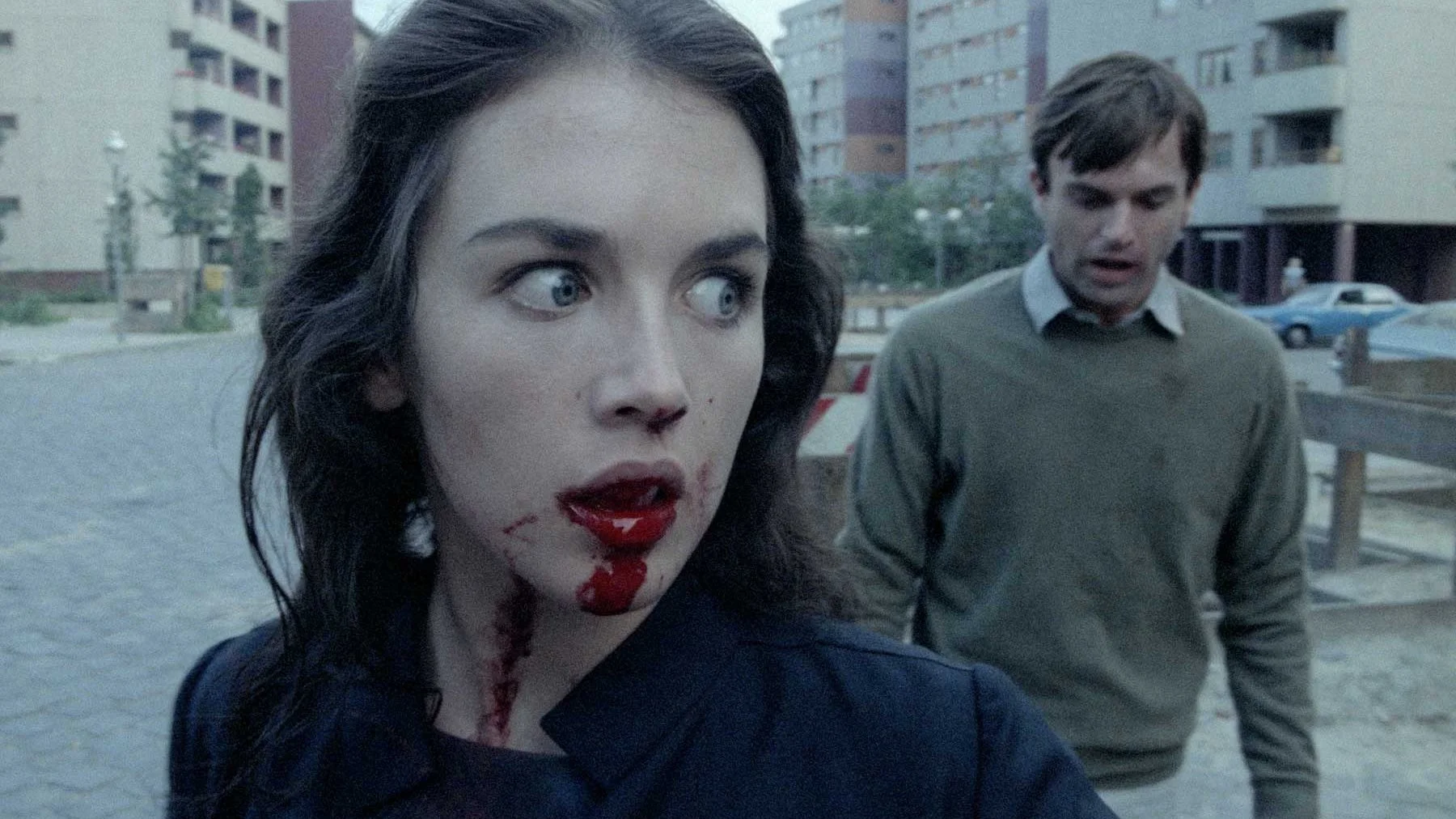
An art-house psychological horror, featuring disturbing sexual imagery, gore and violence wrapped in Żuławski’s usual bizarre and surrealistic visual style. This unsettling story of a woman experiencing increasingly worrisome behaviour after seeking a divorce became a cult classic. The screenplay was written while Żuławski was going through his own divorce and is said to be an allegory to the horror manifested in the viciousness of the separating parties and the pain of isolation from our once loved ones.
ON THE SILVER GLOBE (1988)
On the Silver Globe (1988)
On the Silver Globe (1988)
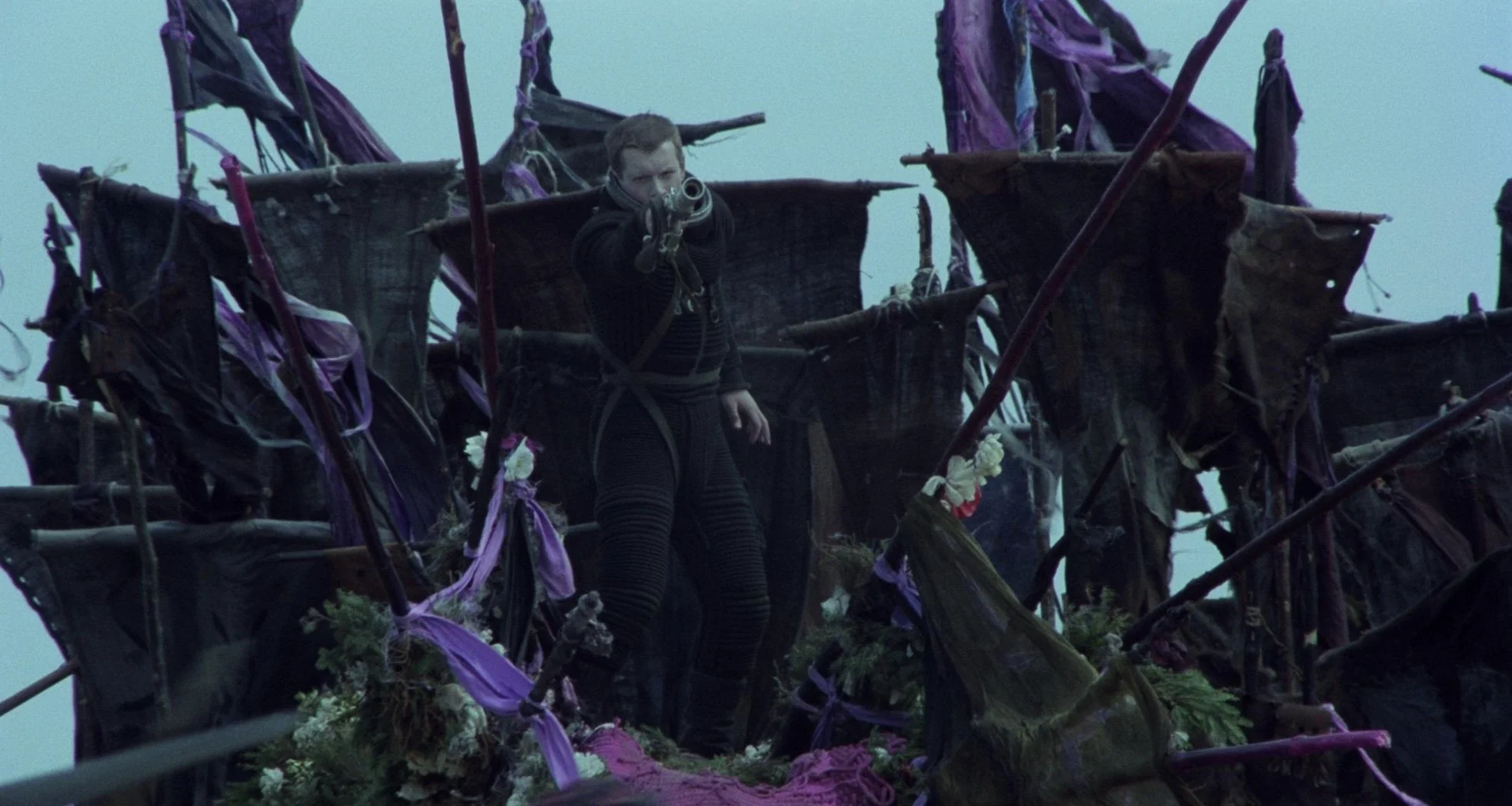
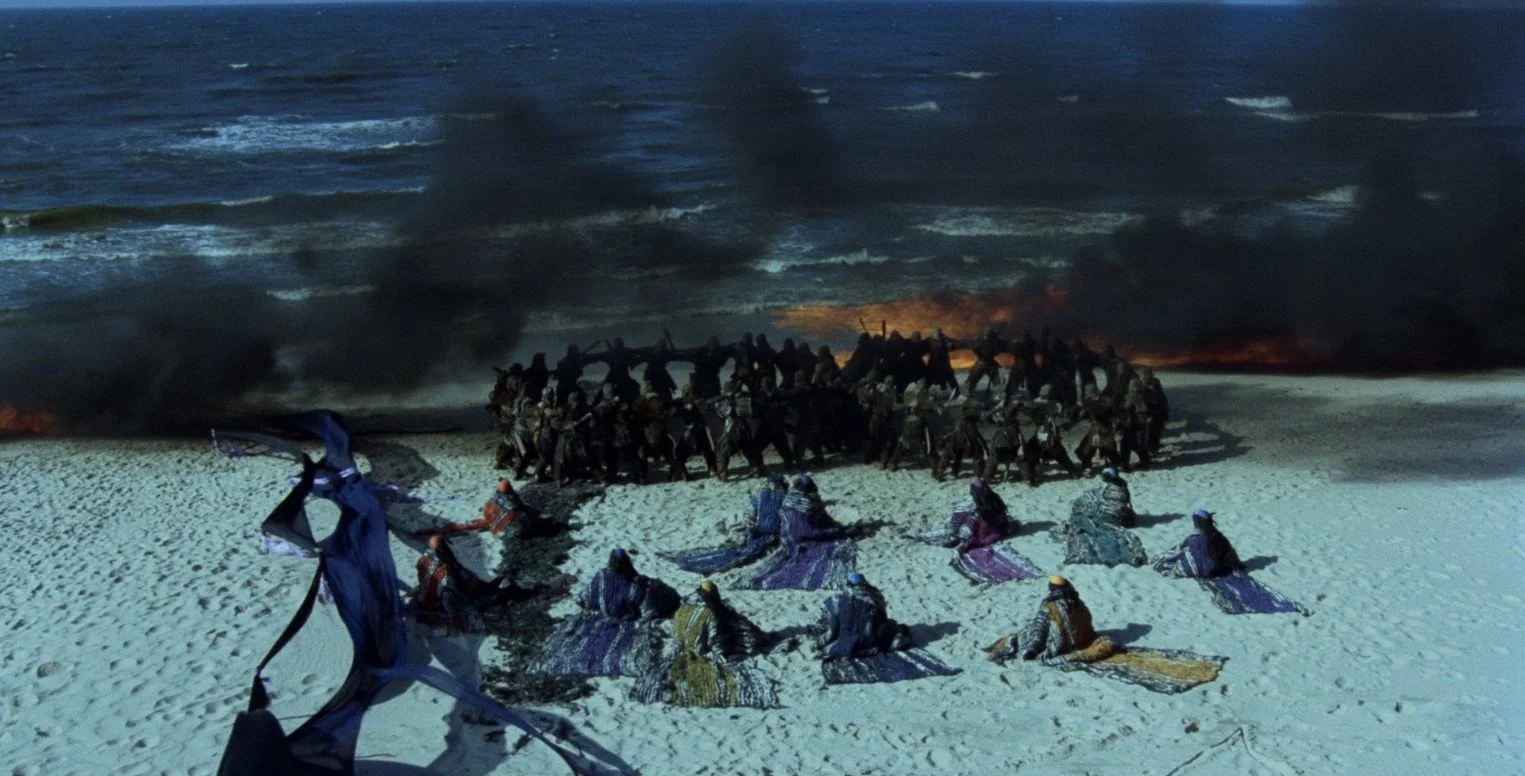
A legendary surrealist tale straight from a dystopian future. The production of this sci-fi masterpiece was stopped by the Polish authorities in 1977, which ordered all materials destroyed. It wasn’t until 1988 that the film saw the light of day thanks to the reconstruction of the original tapes preserved by the film studio alongside some costumes and props. The missing scenes were narrated over poetic shots of contemporary cityscapes, which work surprisingly well with the rest of the footage and append an even more surreal quality to the project. Although it wasn’t in the form that Żuławski imagined, this still remains one of the most epic sci-fi spectacles in the history of cinema.
3. WALERIAN BOROWCZYK
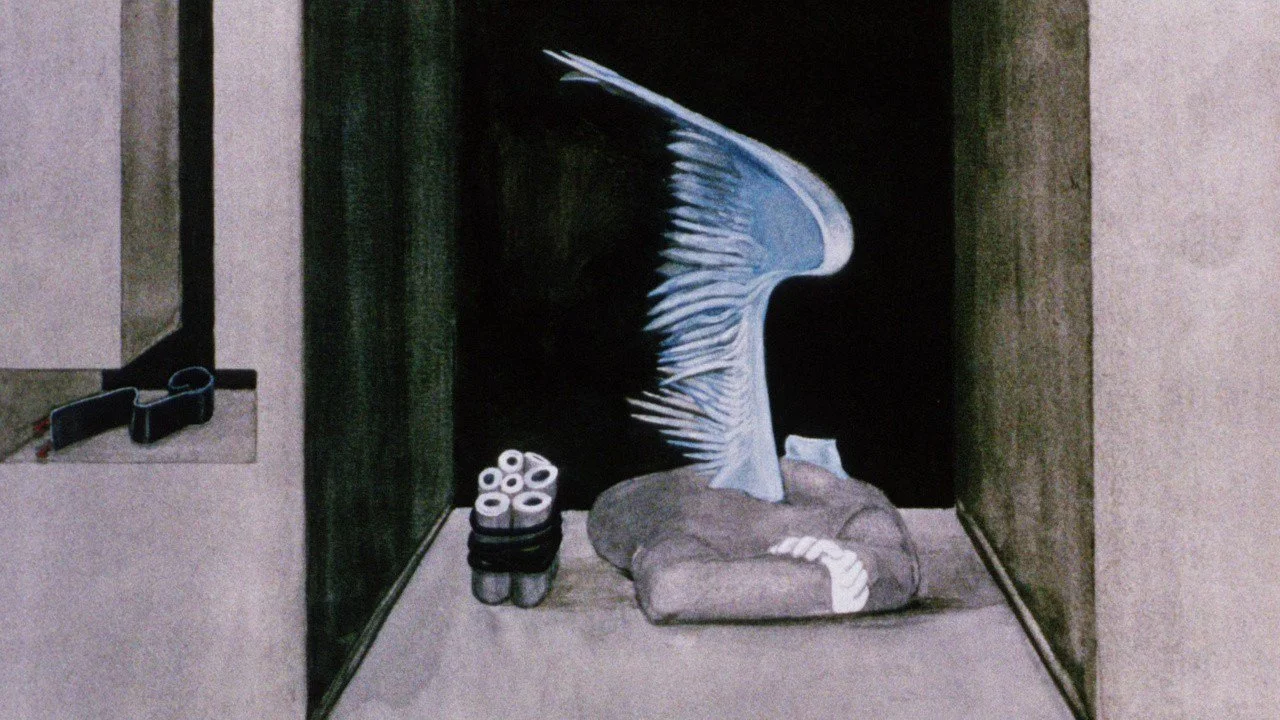
The national degenerate. With his background in painting, his movie career instinctively started with animation, which alone, would be enough to grant him a place in the history of cinema. His short les jeux des anges (The Game of Angels) is a disturbing collage of his paintings depicting angels being processed in a nightmarish factory.
The Game of Angels (1964)
After a romance with animation, his career’s trajectory shifted toward life action films. In those, the screen time seems to be equally divided between inanimate objects, animals and human characters, which may have roots in his animated work. The camera tends to draw viewers' attention to totemic objects with cryptic symbolism. Seeing that one of the definitions of fetishism is a fascination with things, these obsessive depictions are bordering on sexual fixation.
BLANCHE (1971)
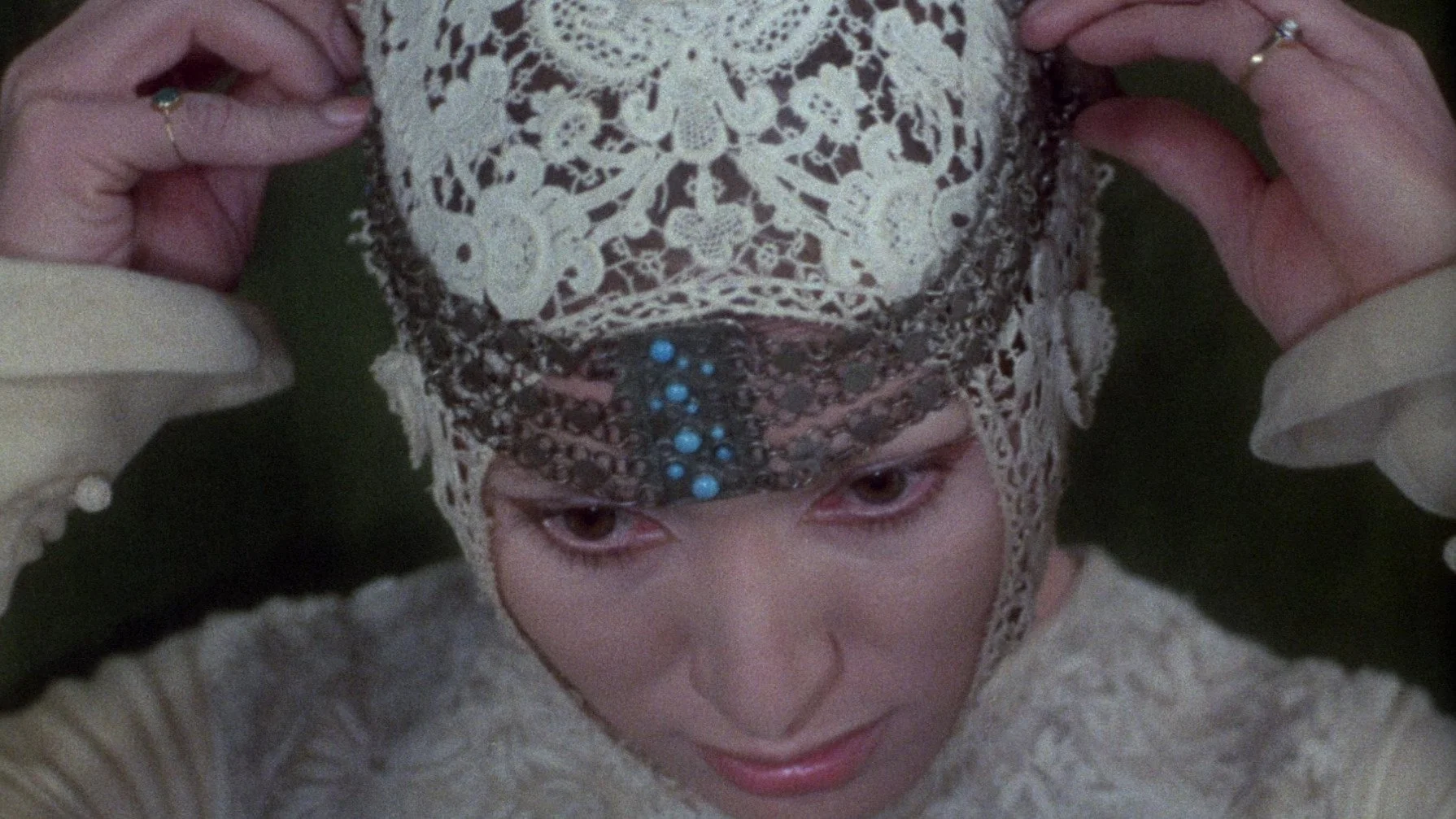
Blanche (1971)
The story of titular Blanche, performed by Borowczyk’s beautiful wife Ligia, transposes Juliusz Słowacki’s romantic drama Mazepa from XVIII century Poland to XIII century France. A beautiful, pure young wife of an aging baron, whose charm captivates the king and his page, is torn between the unwanted attention from multiple men. The soundtrack is composed using only instruments from the period, adding a layer of mysticism to the spectacle.
LA BETE (1975)
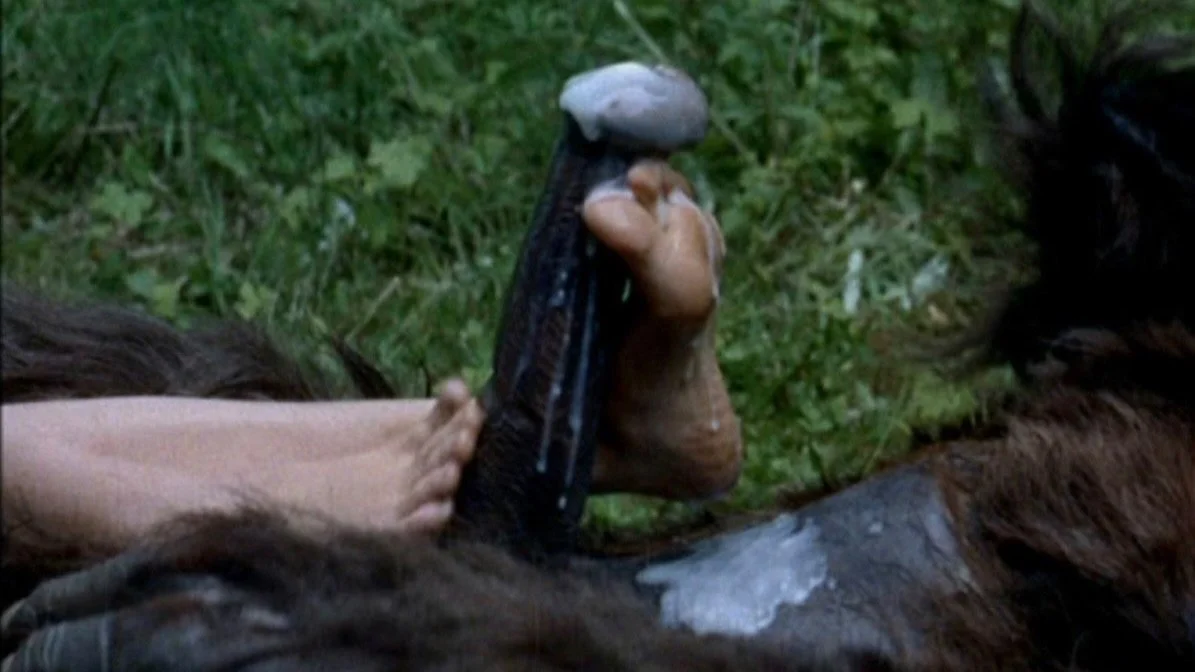
La Bete (1975)
La Bete (1975)
4. PIOTR SZULKIN
Polish directors are well known for their connections to French cinema, but they’re rarely acknowledged for their contribution to the sci-fi legacy. Investigating sci-fi, one can’t forget about the genius of Szulkin. The only filmmaker from our list that hasn’t emigrated from his motherland. His cinematic world paints a post apocalyptic picture filled with doomed visions of humanity. The characters of his films are often grotesque and oversaturated, which balances the pessimistic renditions of his imagined future.
GOLEM (1980)
Golem (1980)
In Jewish folklore, a golem is a being ritualistically brought to life from an inanimate matter, such as clay or dust. Though this soulless, artificial entities’ purpose is to be the companion of their human creators, their potential to escape human control often poses a danger to their master. The film’s story takes place in a 21st century dystopian world devastated by an atomic war. It’s ruled by a caste of doctors trying to perfect the world by transforming degenerate individuals into valuable members of society. The titular Golem is reimagined as a genetic clone of the protagonist, who, striving to discover his original identity, starts to rebel against the system.
O-BI, O-BA - THE END OF CIVILIZATION (1985)
O-Bi, O-Ba: The End of Civilization (1985)
Another sci-fi tale in a post apocalyptic setting. The story of society sheltering under a dome from the uninhabitable outside world. The only ray of hope in their decaying refuge, is a mystical arc, supposedly coming to save humanity. As they await rescue, the inhabitants’ dreams and hopes start deteriorating in direct proportion to the community’s decreasing population.
5. Krzysztof Kieślowski
The ultimate hopeless romantic. The mellowest director on our list when it comes to visual transgression, he challenges the viewer with existentialism in his work. His atmospheric films, with strong French influences, focus on portraying the emotional sphere of the human psyche. He started out as a documentary director, which is apparent in the stripped style of his films, where nothing feels unnecessary.
Representative of the cinema of moral anxiety movement, some of his films were banned by the socialist government. His pessimistic depictions focus on unraveling heavier subjects of love, death, sense of belonging, loss and human connections. We mostly appreciate him for his later features.
THE DOUBLE LIFE OF VERONIQUE (1991)
The Double LIfe of Veronique (1991)
Titular Veronique discovers she shares a name, birthday and physical attributes with a girl she saw on the street. Meanwhile, her doppelgänger, Weronika, has a strange feeling she’s not alone in the world. After the sudden death of the latter, a strange feeling of loneliness is borne in Veronique and she takes on a poetic journey of self discovery.
THE THREE COLOR TRILOGY (1993-1994)
Intended to be viewed as one work, each part of this trilogy is a standalone and complete film on its own. Themed on the French Revolutionary ideals, the three colors are meant to represent the colors of the French flag: bleu, blanc, rouge. Emotionally captivating and beautiful to the eye, this visual poem will leave you feeling hollow.
THREE COLOURS: BLUE (1993)
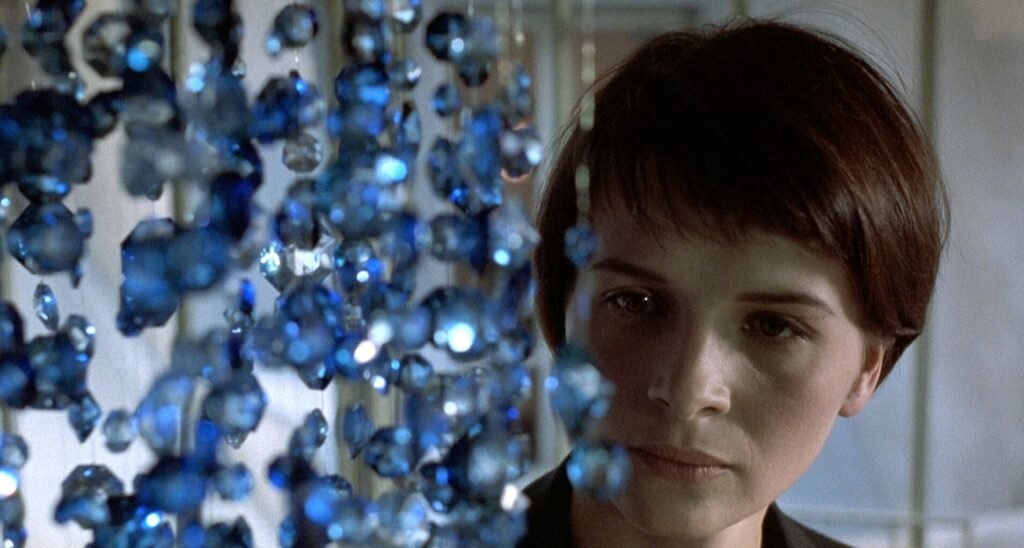
Three Colours: Blue (1993)
The first film of the trilogy takes upon the theme of liberty, though not in the literal sense. The predominant colour of blue, emphasizes the sadness and loneliness of Julie, a woman who lost her husband and daughter in a car accident. We accompany her in her grief, isolation, seclusion and realisation that she can’t escape human connections as she slowly reaches emotional liberty.
THREE COLOURS: WHITE (1994)
Three Colours: White (1994)
In this tragic story, a Polish immigrant loses everything to his newly married wife, who leaves him, as they encounter issues with the consummation of their love. We follow his steps after becoming homeless to finally getting back to his motherland and rebuilding his life from smithereens.
THREE COLOURS: RED (1994)
Three Colours: Red (1994)
The final film of the three, red, is ruled by the ideal of fraternity. Color coded in bloody red, It shows interconnected lives of unrelated people with seemingly nothing in common. They mutually grow more important to one another due to a series of accidental events which drew them together.