
The Romance of Ruin: 10 films on self-destruction, alienation and the beauty of human downfall
Stories of rebellion, nihilism and substance abuse often reveal just how deep the human abyss can be. Things that are generally rejected by society suddenly become romanticized. But what happens within us when the suffering of others becomes aestheticized, or even something desirable?
Shaky handheld cameras, overexposed images, emotional rawness and run-down settings. All of these elements convey imperfection. The protagonists are not perfectly styled, and their actions are often condemned by society. Yet this is precisely what makes them so relatable. While aestheticization is often associated with carefully constructed, polished imagery, these films capture something far more raw, perhaps bringing them closer to the reality of young people than any ideal ever could.
Perhaps it is the fascination with losing control, whether consciously or not. We live in a society where productivity, self-optimization and stability are considered almost fundamental conditions of life. Stories in which young people give little thought to tomorrow and their actions exist somewhere between a moral compass, inner collapse and escapism, create a sense of identification with their protagonists, despite their lives representing almost the exact opposite of conventional ways of living.
Many of these stories revolve around people who do not know where they belong in the world. They search for identity, a sense of belonging, intensity and a way out of their own reality. There is something romantic about the idea of risking everything, making no plans and losing yourself in the moment. Yet misery is rarely the whole story. More often than not, it is precisely these darker depths that reveal a much stronger contrast: solidarity, community and hope feel more genuine, more intense, when they manage to survive the hardest of times.
Maybe we do not love these stories because we take voyeuristic pleasure in the suffering of others, but rather because they offer a form of catharsis. They bring to the surface everything that is usually pushed out of everyday life: the imperfect, the irrational, the ugly and, above all, the uncontrollable. And perhaps these are precisely the qualities that have made certain characters so iconic to us. They are not necessarily people we would want to trade places with, but they embody a kind of radical nonconformity that remains fascinating from a safe distance.
At GATA, we're interested in the things that exist on the fringes: the ugly, the uncomfortable, the chaotic and the beautifully fucked up. Here are 10 films that embrace the darker side of being human.
The Basketball Diaries
Scott Kalvert (1995)
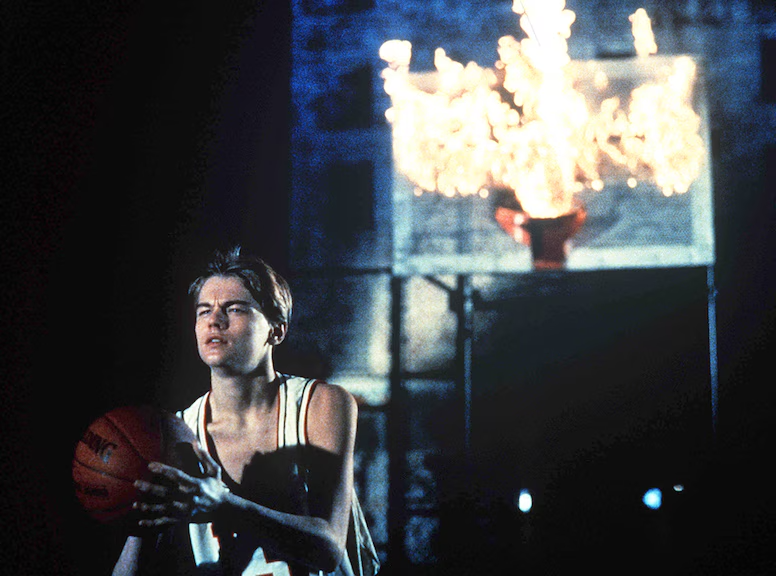
Drawn from the actual teenage diaries of writer and poet Jim Carroll, The Basketball Diaries offers an unfiltered glimpse into the darker corners of 1960’s New York by following a group of teenage boys navigating adolescence in it’s gritty streets. At it’s centre is Jim, a promising basketball player and aspiring writer, whose life gradually spirals into heroin addiction through moments of euphoria, rebellion, but also personal tragedies and violence. What begins as a coming-of-age story about basketball, friendship and youthful rebellion gradually descends into a world of heroin addiction, petty crime and self-destruction. Through Carroll’s eyes, the city becomes a playground of excess, where innocence and corruption exist side by side. Both intimate and unsettling, the film captures the fragile transition from adolescent freedom to a life spiralling beyond control.
Christiane F. – We Children from Bahnhof Zoo
Uli Edel (1981)
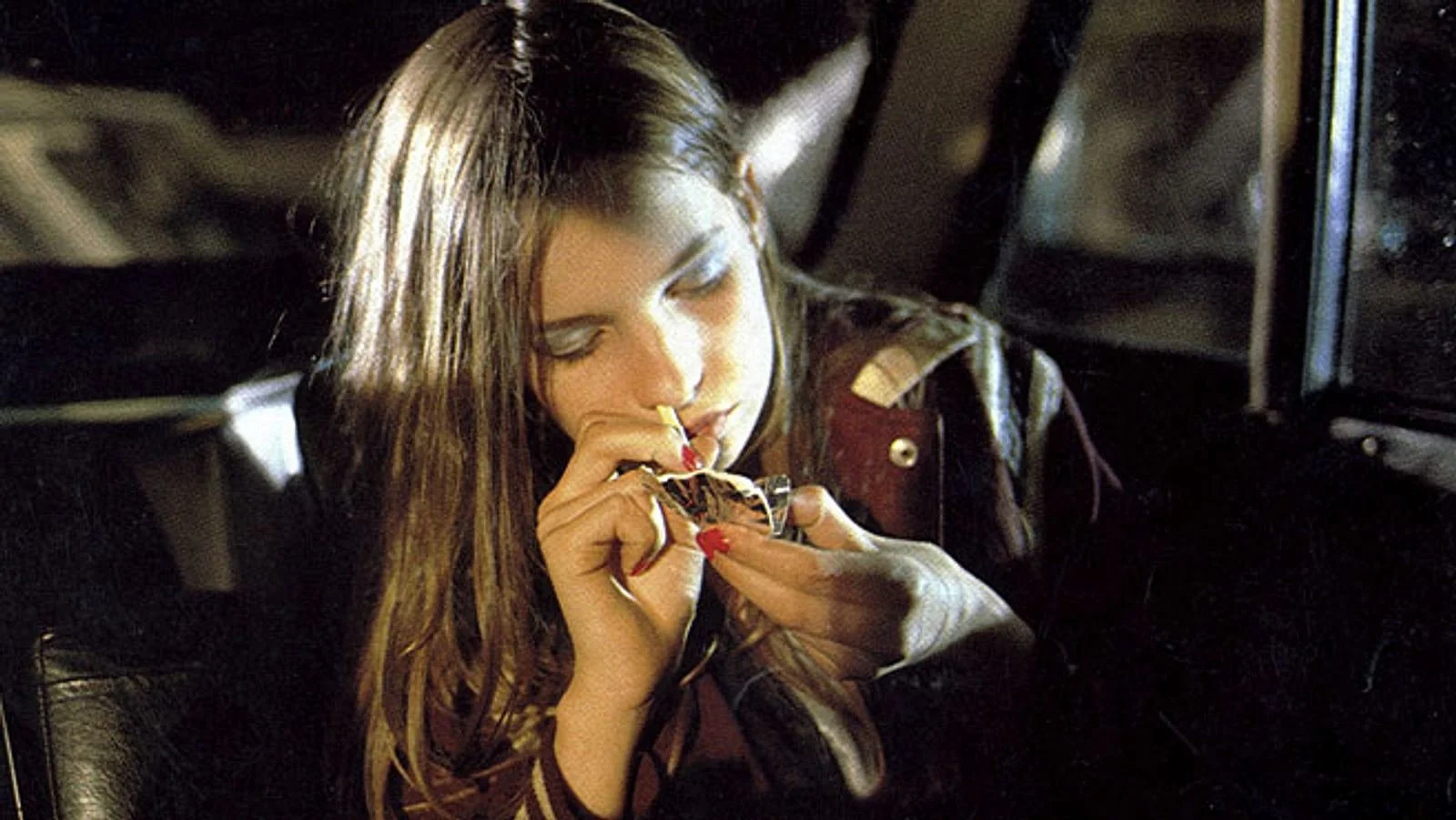
Based on the true story of Christiane Felscherinow, Christiane F. – We Children from Bahnhof Zoo offers a bleak portrait of teenage life on the margins of 1970s West Berlin. Growing up in a troubled family environment, thirteen-year-old Christiane seeks escape in the city's underground scene, drawn to its nightlife, music and promise of belonging. Through her new circle of friends and her growing relationship with Detlev, she is gradually introduced to drugs. What begins as a search for freedom and connection soon descends into addiction, prostitution and self-destruction. Beyond Christiane's personal story, the film exposes an entire subculture of young heroin addicts, sparking international media attention and public shock, not least because its protagonist was only thirteen years old.
Withnail & I
Bruce Robinson (1987)
Withnail & I follows two unemployed actors sharing a run-down London apartment in the late 1960’s. With little money, no work opportunities and seemingly no prospects, the two decide to escape the monotony of their existence on a disastrous trip to the English countryside revealing issues regarding the dynamic of their friendship. Unlike many films about addiction and self-destruction, drug use here is never framed as a dramatic turning point or moral downfall. It simply exists as part of everyday life, woven into the characters’ routines alongside poverty, unemployment and existential aimlessness. Beneath its dark humor lies a portrait of two young men slowly running out of ways to escape themselves.
Gummo
Harmony Korine (1997)
A village ravaged by a tornado, plagued by poverty, violence, and incest, somewhere in Ohio. The film follows two teenagers trying to escape the monotony of their daily lives. From petty crime to drug use and acts of cruelty that seem almost casual: their world lacks any sense of stability or meaning. Rejecting conventional storytelling, Harmony Korine creates a grotesque yet strangely intimate portrait of American decay, where innocence and depravity coexist and the boundaries of what is considered normal seem to have all but disappeared.
Sid and Nancy
Alex Cox (1986)
Born out of the wreckage of the Sex Pistols, one of punk’s most notorious bands, Sid and Nancy tells the story of a movement’s darker aftermath. Alex Cox’s 1986 film centres on bassist Sid Vicious and his relationship with American groupie Nancy Spungen, whose names would eventually become inseparable from the mythology of late-70s punk. There is something almost romantic about watching two people destroy each other in slow motion. Here, love is less a refuge than a shared descent into oblivion. Fuelled by heroin, dependency and a peculiar kind of devotion that leaves little room for anything beyond themselves, Sid and Nancy drift between stages, hotel rooms and drug-induced stupors.
Christine
Alan Clarke (1987)
Shot almost entirely in long, uninterrupted takes, Alan Clarke’s Christine offers a disturbingly detached glimpse into the everyday mechanics of heroin addiction. With a white plastic bag in hand, Christine repeatedly wanders through the bleak British housing estate, supplying her neighbours with heroin. Trapped in an endless loop of deliveries, stock checks and the next fix, her existence becomes a monotonous cycle with seemingly no way out. There is no dramatic build-up, no moral awakening and barely any sense of escape. Instead, Clarke captures the monotonous rhythm of dependency, stripping addiction of its usual cinematic spectacle and reducing it to an almost bureaucratic routine.
The Living End
Gregg Araki (1992)
Gregg Araki’s The Living End is a nihilistic portrait of two men brought together by circumstance, anger and a shared HIV diagnosis. Refusing to accept the future society has mapped out for them, Luke and Jon embark on a reckless journey across California, turning their backs on convention, morality and any notion of self-preservation. Beneath its rough, low-budget aesthetic and bursts of violence lies something unexpectedly intimate: a raw human drama about two people confronting their mortality in radically different ways. Part punk manifesto, part doomed romance, The Living End captures the defiant impulse to give society the finger when you feel you have nothing left to lose.
Trainspotting
Danny Boyle (1996)
Edinburgh in the 1990’s, following a group of young heroin addicts trying to navigate life caught somewhere between boredom, desperation and fleeting euphoria. Based on Irvine Welsh’s book series, at Trainspotting’s centre is Mark Renton, a self-aware yet deeply unreliable narrator who oscillates between wanting to escape his addiction and being pulled back into it. He despises the circumstances he finds himself in, yet simultaneously finds a certain comfort in the familiarity of his addiction. Driven by frantic editing, surreal imagery and dark humor, the film transforms the bleak reality of heroin addiction into a chaotic portrait of a generation with seemingly nowhere to go.
Naked
Mike Leigh (1993)
Mike Leigh’s Naked is a bleak portrait of alienation and existential despair, following Johnny, a bitter drifter wandering the streets of London after fleeing Manchester. Driven by his cynicism and contempt for the world around him, he drifts between strangers, engaging in increasingly hostile encounters and delivering paranoid, nihilistic monologues. Beneath his intellectual arrogance lies a profound sense of emptiness, making the film an unsettling study of a man at war with both himself and the world around him.
Bleeder
Nicolas Winding Refn (1999)
A portrait of toxic masculinity, told through the eyes of a group of young men whose lives are marked by frustration, insecurity, and violence. When Leo’s girlfriend tells him she’s pregnant, his fear of responsibility comes to the surface. Instead of facing his fear, he channels it into frustration, which he takes out on his pregnant partner. Violence becomes a tool of control. The film draws a disturbing connection between this behavior and the action movies Leo and his friends watch, where masculinity is defined by power, aggression, and emotional detachment. While his friend Lenny escapes into the world of movies, Leo attempts to embody the violent male figures he admires, with devastating consequences.