KLOUD: TECHNO ANONYMITY AND DECODING THE SOCIAL MEDIA GAME
Why would any artist remain anonymous on social media in 2026? That was the question that arose before interviewing techno DJ and producer KLOUD. A mainstay of the techno scene over the past two decades, the unknown artist has separated themselves from peers through a decision to strictly perform all sets while wearing a mask. While anonymity isn’t something new in the electronic music scene, with acts such as Daft Punk, Burial and SBTRKT all choosing to either wear masks or hide their identity from the media, KLOUD’s decision seems to be one rooted in the very philosophy of their creative expression. A choice founded on the principle of bringing the focus back to the music and away from the human that creates it.
In an age when our very identity is fragmented, split, caught between digital and biological “selves”, the notion of curating an image is something that has become almost a necessity while navigating online spaces. Most of us are victims to this trend, slicing up highlight reels of our lives: sharing only that which aligns with our own personal branding. KLOUD is no stranger to this concept, yet rather than be another passive participant to this social phenomena, the producer has decided to decode the very matrix of this social performance and utilise in advantageous ways.
GATA recently connected with the elusive and enigmatic artist to discuss the origins of the mask and their feelings on the world’s increasing tendency towards data extraction, AI pumping and forced algorithms.
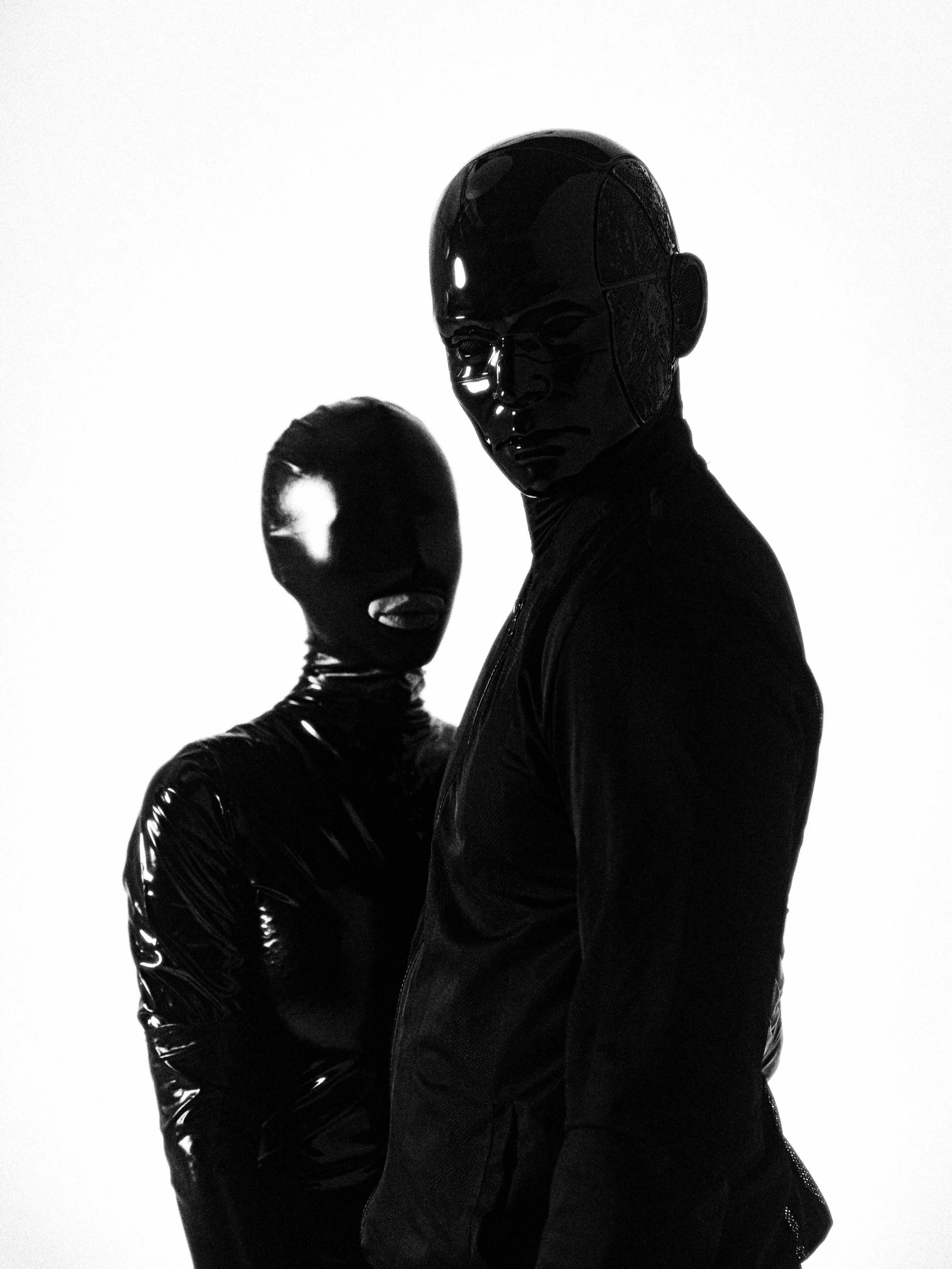
GATA: Hi KLOUD nice to meet you. To get things started could you please tell us: who is KLOUD and why the mask?
KLOUD: KLOUD started as a project in 2017 as an alias to make whatever style of music I felt, with no boundaries. It evolved from an electronica act, to a techno act in 2020, when I felt the harshness of the COVID lockdowns and it felt natural to me to progress into techno.
The mask was a way for me to create music and attach it to an identity that isn’t “human”. I felt that with current social media, people were and are getting too attached to the human behind the music, seeking information on what they are eating, what they are doing, and to me… it doesn’t align with my ethos as an artist.
Beyond this, the story of KLOUD is that all data in the world is uploaded into “The KLOUD”, and KLOUD is a piece of everyone, including you.
My fans can identify with this character, and the music that comes from it.
GATA: In an age when digital identity feels very performative and akin to marketing and branding, putting on a mask can be perceived in a number of ways. A form of rebellion, a social statement, or even a smart marketing tool itself. What does anonymity mean to you personally as an artist?
KLOUD: For me, it’s important to have a balance between my musical career and my personal life. I don’t envision a life where my personal life should be in the spotlight 24/7, which is why the mask exists. Beyond that, I love building brands… and the mask and its aesthetic make it fun and interesting for me to build upon.
I feel like I’m a director, and the mask is the actor, even if it’s all just me, when I’m editing videos and photos, I don’t see it as myself, I see it as KLOUD. This keeps it enjoyable for me forever.
GATA: Who were the artists who inspired you the most throughout your career? What was it about their approach that resonated with you?
KLOUD: I grew up listening to all sorts of music, but mainly alternative and metal. I’m a big fan of TOOL and Radiohead. I listen to everything from classical to jazz to metal. Ironically, I very rarely listen to techno or anything EDM. It’s something I love to make, since I've been producing for a very long time and it comes naturally to me, but what I love to listen to is not what I love to make.
But to answer your second question, I love TOOL because of how progressive they are in their sound, how true they are to their identity while pushing boundaries when they feel necessary. I’d say the same for Radiohead, reinventing themselves over decades of success, finding new ways to kill off their identity and rebuild it with albums like Kid A, and bring it full circle with albums like In Rainbows.
I think it’s important that no artist should ever be kept in a box, that they should be able to take risks with their art; work through their craft in their own way without limits. Current music artists are bound to their social media presence, algorithms and backlash from fans. Once an artist has found some success, it’s easy to become scared to take risks, because the risk might not be commercially successful. Your posts might not get likes, you might lose followers. I find myself fearful of what my fans might think with new sounds, but I continue anyway. I think that’s what is important about those two bands, is that they have stayed true to themselves throughout their careers.
GATA: I think one of the most interesting things I discovered while researching your work was that your sets are entirely composed of your own productions or remixes. Has this always been the case or has it been a natural progression over time?
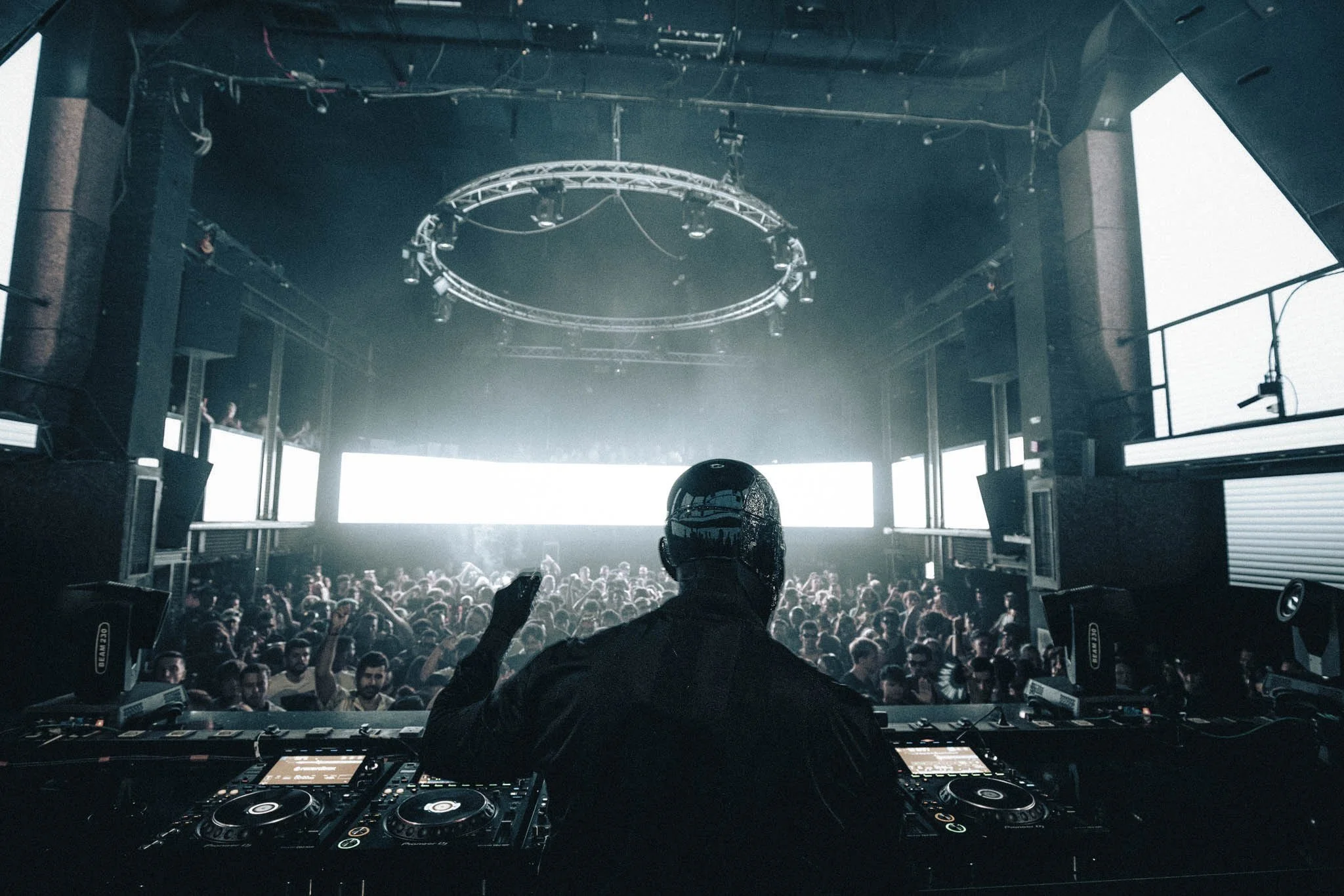
KLOUD: It’s always been that way under this project. I’m not a DJ, I just use CDJs as my form of instrument. I produce, mix, master and play only my own records. It’s important for me because I’m an artist, not a jukebox. You will come to my show and you will leave having heard a piece of me, and only me. It’s not because I think I'm better than anyone else, it’s just my art and how I want to perform it.
GATA: I suppose the advantage of only playing your own sounds is that you can craft your own sonic universe and tell a complete story. Do you feel like we need more storytellers in 2026?
KLOUD: I’m a big fan of Eric Prydz. He is a north star for me, playing primarily his own records and building an environment that is consistent yet unpredictable because of his catalogue. I try to accomplish the same. My goal is to get to a discography that is ten-plus hours and something I am proud of, and can pull from in any set. Right now I have about four to five hours worth of music, but some of it is so old I barely play it, or it doesn’t hit right, so realistically I have about 3.5 hours of music I’d play… When mixing, I’m layering two to three tracks at a time, creating combinations that fans will never hear outside of my set, and I’m excited to make more records that fit my story.
The only downside of this, and kind of contradictory to my previous answers, is that, when mixing your own records, you’re bound to the BPM range of your catalogue. Sometimes I find it hard to continue producing music that is only in the 150-155 bpm range, and push boundaries within it. I think I’m doing a good job but there are moments when I hit walls, and have to take a break from producing so that my creativity comes and I can push through it again.
GATA: If we look at the history of techno, we find an underground movement with roots in Black, queer and working-class communities. Now it is much more mainstream with social media visibility and global festivals the norm. What do you think has been gained and lost in this transformation?
KLOUD: I don’t want to give away my age but I’ve been producing for over two decades at this point. I’ve been going to parties throughout, so I have seen parties before phones, and where they are now, and I think social media has killed a bit of the magic of the club space. I couldn’t imagine my time then, worrying if I was going to have a video taken of me while I was enjoying my freedom in this safe space, or that I had to look a certain way or act a certain way. These spaces are supposed to be safe and enjoyed by all and I think at times it’s at times become a fashion show or a way to show off, and it hurts my soul for those who need an escape from that. That’s the loss I think.
The positives is that it’s such a global phenomenon, and there are a lot of people enjoying what was once a hidden gem, and I truly hope all who want to enjoy it, get a chance to. There’s such a positive energy that comes from a good night out at these shows, and I’m glad that more people are able to enjoy it than ever before.
“I have faith that the next generation will become so fed up with data extraction, AI pumping, forced algorithms, that they will create their own communities of authenticity and human connection.”
GATA: The idea of data and online presentation seems to be a theme for you. How do you feel as an artist who must navigate these algorithmically-driven spaces?
KLOUD: It’s a double-edged sword. Never in the history of being an artist, has it become so available to someone to gain traction and gather fans. That being said, so many people are trying to accomplish this, that you have to “play the game” in order to compete for people's attention in this social media filled world.
But instead of complaining about social meda too much, I try my best to connect with my fans and create a community for those who want to attend my shows. At the end of the day, for most independent artists like myself, this is beyond a full-time job, and social media is just another tool and part of the job.
GATA: Do you have a personal philosophy when it comes to your craft that separates you from other techno artists?
KLOUD: Stay true to myself. It’s that simple.
GATA: In alternative spheres of culture I’ve been hearing people clamouring for authenticity and real human connection. What do you see for the future of the techno scene? An embracing of technological innovation or even a return to its roots?
KLOUD: I couldn’t tell you, because the next generation of kids grew up in such a different culture, that I think “returning to the roots” could even be lost to them. But I have faith that the next generation will become so fed up with data extraction, AI pumping, forced algorithms, that they will create their own communities of authenticity and human connection. I do my best to create a show that could foster a space for those searching for something else musically, and hopefully that creates true connection amongst some of my fans.
GATA: Wherever you go it’s difficult to avoid the topic of AI, on a creative and artistic level what is your relationship with AI?
KLOUD: My soul rejects it, my brain accepts it. It’s another evolution of our technological footprint and I try not to sit and ponder about its effects too much, otherwise it can overwhelm me. I hope people continue to create art and expand their attention spans, because the best things in life take time.
GATA: What’s next for KLOUD?
KLOUD: I’m in my building phase. I’m working overtime and playing 2-3 shows a week, making sure I give my best at each performance and maintaining a balance in my personal life (when I can), while trying to create more music for my sets. It’s a lot to handle at the moment but I believe it’s creating happiness in other people's lives and the reactions from my fans make the hard days worth it. If you’re a new fan and reading this, Welcome to the KLOUD. And to all of you who have been on this journey with me, thank you.