SARA LANDRY: DIVINITY TOUCHES THE DANCE FLOOR
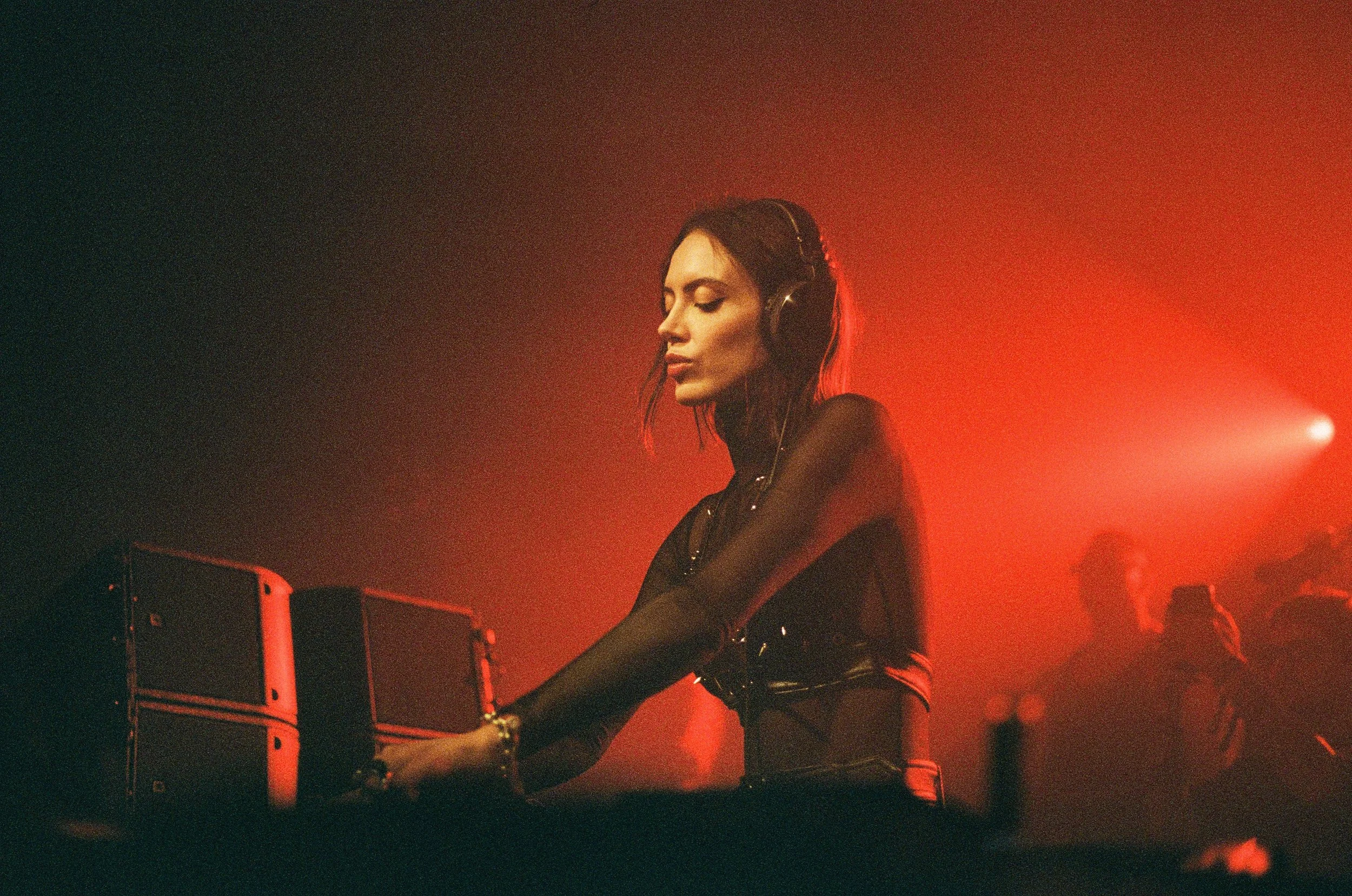
Sara Landry tends to think about her music in terms of energy. Not just the kinetic force of a techno kick, but rather the sonic frequencies that permeate a room, the way bodies react to sound, and the uplifting feeling of embodying something bigger than yourself on the dance floor. It’s an idea that has connected every facet of Landry’s sonic world: the DJ and producer known for punishingly hyper sets, being the founder of HEKATE Records, and for being fascinated by spirituality, spatial design and the possibilities of sound.
It is this infectious curiosity that has shaped Divine Intervention, Landry’s upcoming sophomore album. While the new record retains the intensity that has made her one of the most recognisable names in techno, it sees Landry dabble in the unfamiliar genres of hardstyle, psytrance and hard bounce using these sounds as vehicles to explore ideas of self-discovery and transformation.
Fresh from a performance at ULTRA JAPAN, GATA spoke with Landry about the making of Divine Intervention, the roots of rave culture, the essence of building community in a post-algorithmic world, and her desire to take music beyond the boundaries of the dance floor and into more expansive spaces.
GATA: Hi Sara congratulations on your upcoming sophomore album Divine Intervention. How does this album differ from your debut Spiritual Driveby? What did you do differently this time?
Sara Landry: Thank you so much. I’m super proud of it and I can’t wait for everyone to hear it. I wanted to tell more of a story on this album compared to my last. I took a lot of the themes from Spiritual Driveby and pushed them further. A big part of that story was an exploration of self, which I feel like I uncovered through the writing process and the practice of experimenting with various genres and sounds.
Sonically, Divine Intervention is much more experimental. I played with some genres I’ve really grown to love over the past few years like hard bounce, psytrance and hardstyle. I focused really hard on making this album sound new and exciting; not just exciting for me as a producer getting to create new music, but for my fans to listen to something fresh and new from me. I hope they can listen to this body of work and hear how much I've grown as an artist since my earlier work.
GATA: You played Ultra Japan this month. How was your experience and what does Japanese culture mean to you in general?
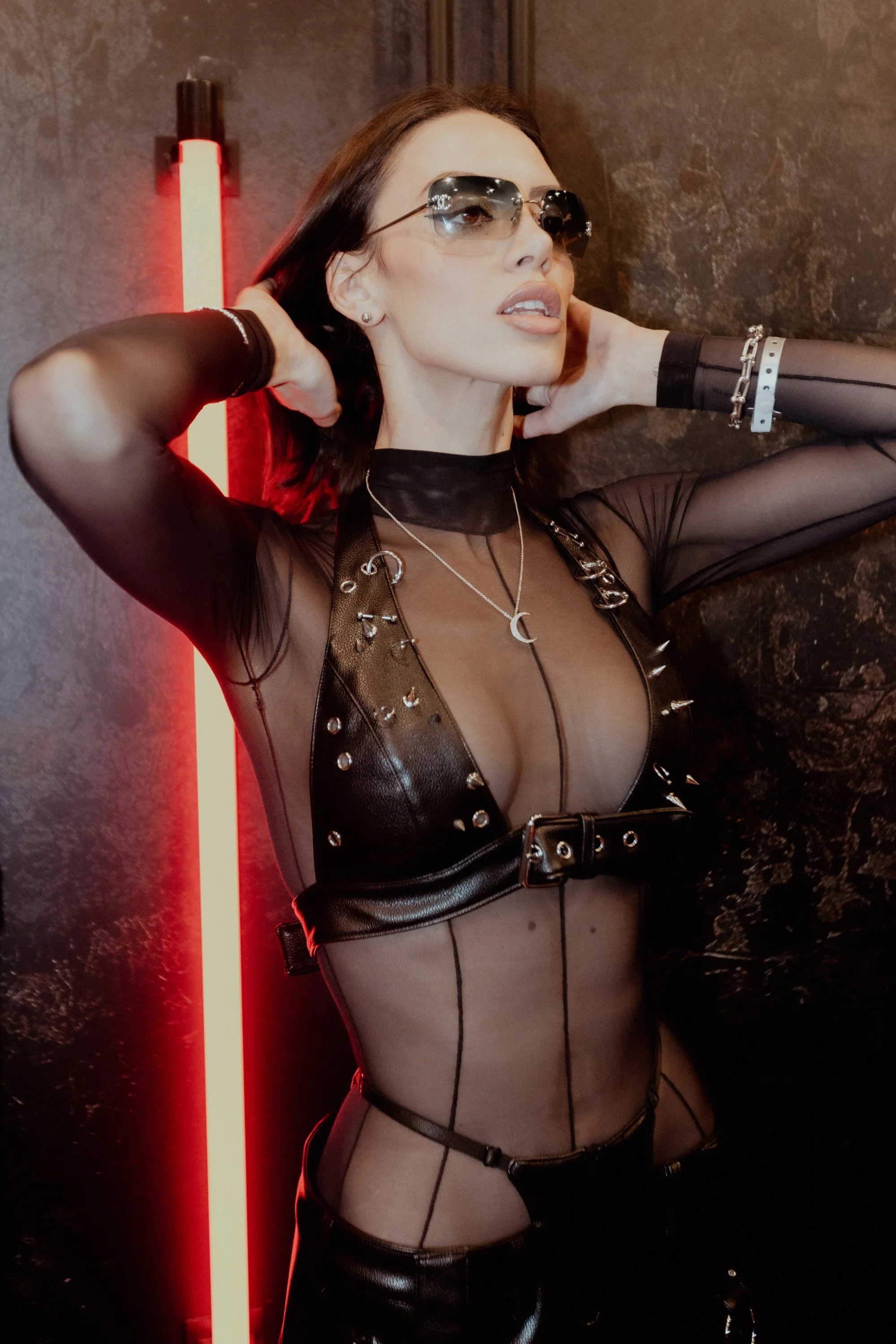
Sara Landry: My experience has been incredible in Japan this time around, as it always is. I don’t find myself in this part of the world often, so it’s always special when I get to come back. ULTRA was absolutely insane. I literally played through a typhoon and the crowd never stopped moving. The energy in Japan is always incredible: everyone is dancing, and I’m so happy every time I’m here.
I love Japanese culture, my birthday actually fell right in the middle of this tour run, so I had to get the whole gang here. On my birthday we went to a traditional tea ceremony, it was so incredible. Definitely one of my most special birthdays so far! Being in Japan always brings me so much joy, and my suitcase always comes home packed tighter than I came.
GATA: I want to go back in time a little bit and talk about your university days at NYU. You studied finance, psychology, and advertising. How have these wide-ranging fields bled into your music?
Sara Landry: When I was at NYU, I studied what I called “the psychology of capitalism,” and I studied social theory and social financial and economic theory and then psychology and advertising. I think, unknowingly, I was informing my business sensibilities also being in the “school of do whatever you want,” as I call it, definitely allowed me to tap into my creativity.
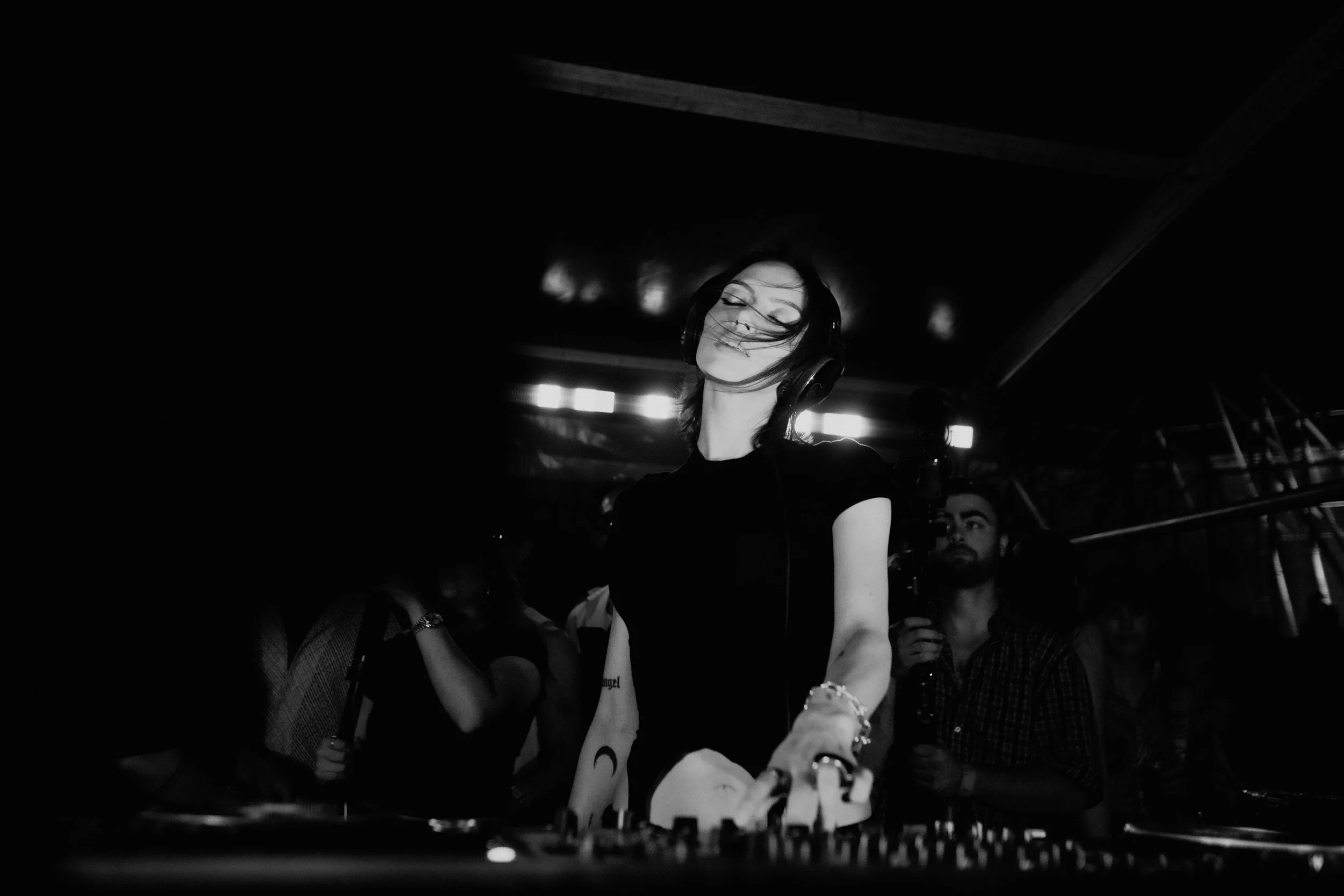
But honestly all of that was kind of just going on as a “I have to do this to graduate” but my days at NYU that really informed my music career was when I was promoting at clubs around town. It was during that first big come-up that electronic music had in the US. I got to watch the shift from a really hip-hop/pop heavy era in the clubs to electronic, and I really liked it. The music made the room feel really alive, not just people watching a performer: it was like everyone was a part of it. It really intrigued me.
GATA: Outside of the techno genre, sonically what has been the biggest influence on your music and production?
Sara Landry: There’s been a lot of inspiration throughout my career, as you can imagine. I think one that’s really carried through throughout is the healing frequencies. That feelings and vibration of those frequencies has always been something I wanted in my tracks. Yes, my music is fast and hard, but they are very uplifting.
Earlier in my career I was definitely inspired by classical music. My mom is a classically trained pianist and you can definitely hear a lot of elements from classical composure in my early works. It kind of scratched an itch. I’m always inspired by the people around me. My first album was entirely collaborative for that reason. They pulled me out of this really intense creative block I went through when I first moved to Europe, and that’s kind of where that album was born. Recently, I’ve been really inspired by psytrance: there’s a lot of it on this new album. I also learned some really cool hardstyle tricks that you can hear throughout the album. I’ve also always been inspired by things and sounds that push the boundaries, of anything really, that’s where I think genius happens, which is probably why I landed in hard dance in the first place.
GATA: Electronic music by its very nature has a formulaic element. With sequenced drum patterns and predictable structures making things easier for DJs during their sets. Have you ever felt limited by this?
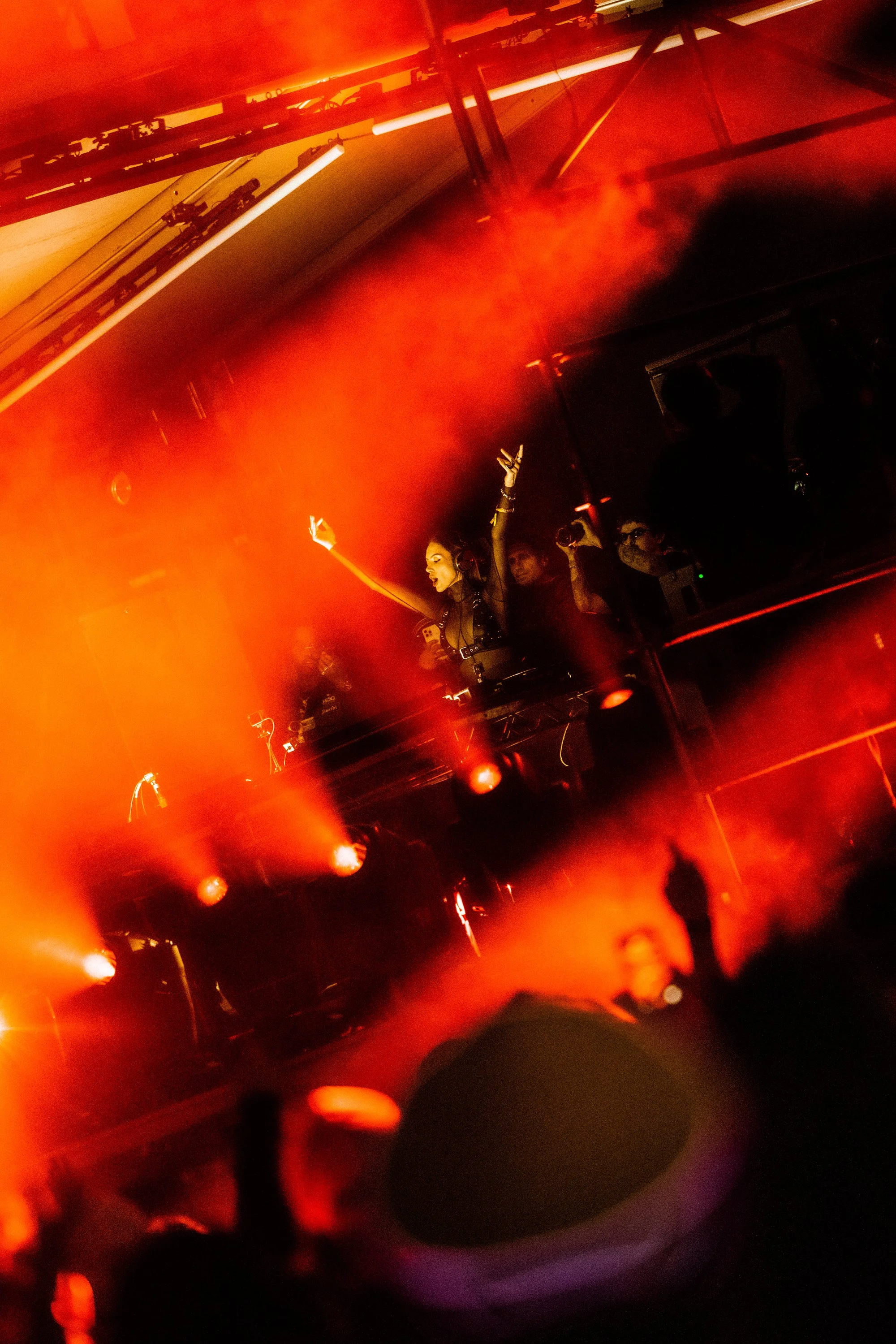
Sara Landry: Definitely not! I fell in love with electronic music for a reason. Even with that formulaic nature, the genre itself has such a vastness to it. Those “formulas” can make all sorts of soundscapes and you can really make anything your own while building on those blocks that define the genre.
Like I mentioned before, I’ve been playing around a bit more with other subgenres on this upcoming record and in doing so, it sounds vastly different from my first album. It’s so exciting that even with the same tools and building blocks, inspiration strikes in all sorts of places and manifests into such diverse soundscapes. I think inherently, most music is, at its core, formulaic, but that’s the exact thing that makes a true artist: being able to grasp that formula and create something entirely new out of it.
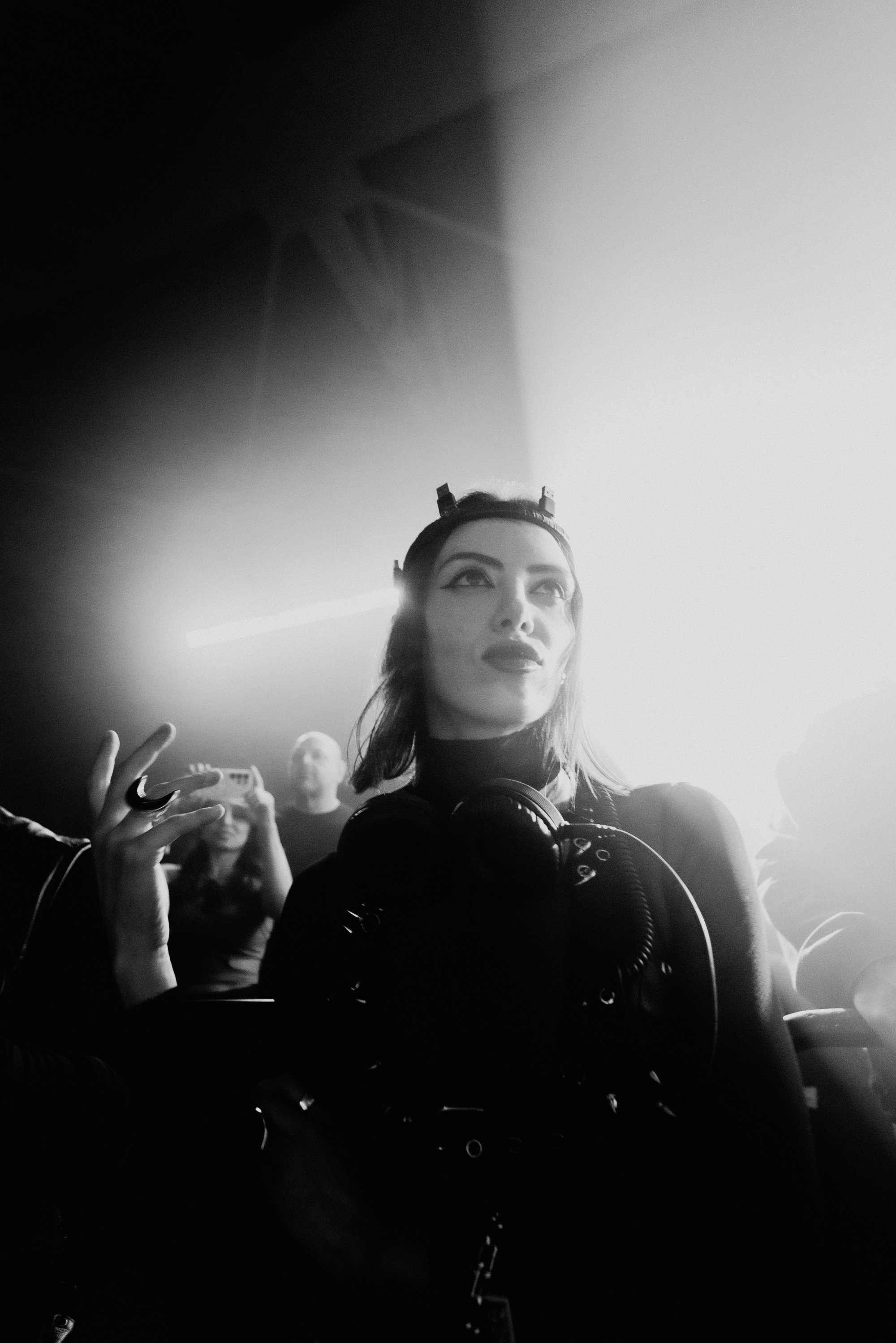
“I don’t think my approach has really changed much over the years, in terms of connecting with my audiences. The most important thing to me has always been authenticity. If I like what I play, and I believe in the music I’m producing, the fans will follow. You can’t force someone to like you or ‘get it’ so why try?”
GATA: You’ve mentioned in the past that techno production is very technical, heavy on engineering and space design. In regards to “space” have you ever considered crafting a “physical" space. This could be an exhibition, a runway show, or even retail?
Sara Landry: I’ve absolutely considered something like this, I would love to do it. I love spatial design, the interaction of the human form within it, and how it’s married to sound. I would love to do sound for a runway show, for example, or design something physical within that space, I’m super interested in interior design and furniture as well.
Actually, the last few times I’ve been in Tokyo has been especially inspiring as every time I’ve gotten to visit teamLab. I love the exhibitions there so much that I just have to go back every time I’m around there, which is admittedly not as much as I’d like to be. The sculptural elements, the marriage and light and sound and the ability for somebody to fully immerse themselves in a piece of visual art and really, truly be able to interact with art in a more tangible way, is so cool and such an interesting experience to get to have.
I’d love to take elements of what I love to see and feel at teamLab and bring it to an experience I’d help create, whether that would be an art installation at a festival or a pop-up gallery experience, or if I’m creative directing a store or interior styling. I’m very interested in this crossover of space, design, and how we interact with the things around us. I’d love to take this love I have for physical space and the way we interact with it and put it into a valuable collaboration, I’m just waiting for the right opportunity.
GATA: In the early days when you were coming up in the scene how did you shape the community around you? As AI, digital technology and our reliance on social media increases, how do you maintain intimacy within a community? And as you sell out to crowds in their thousands and headline bigger and bigger festivals, how has your approach to community changed over the years?
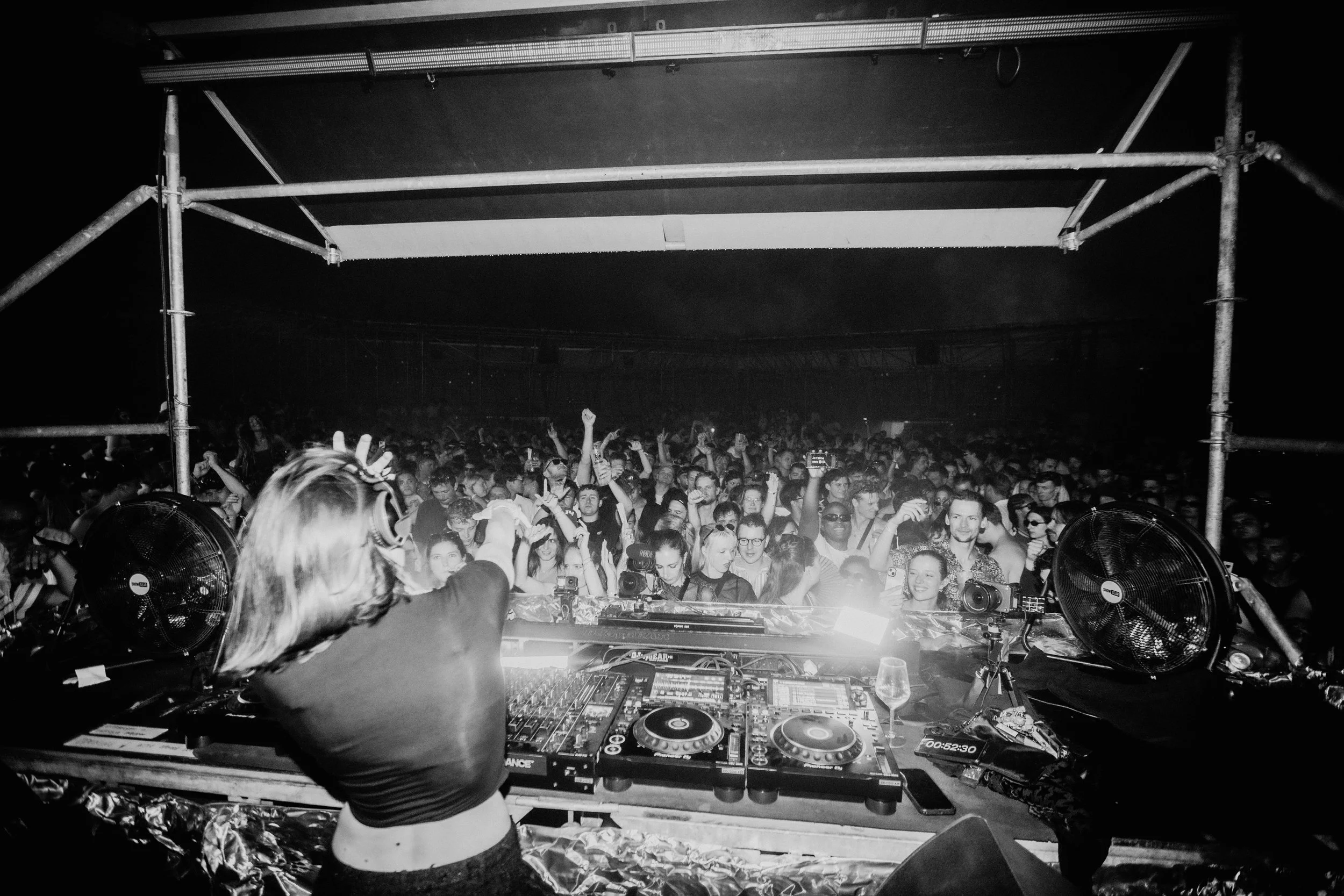
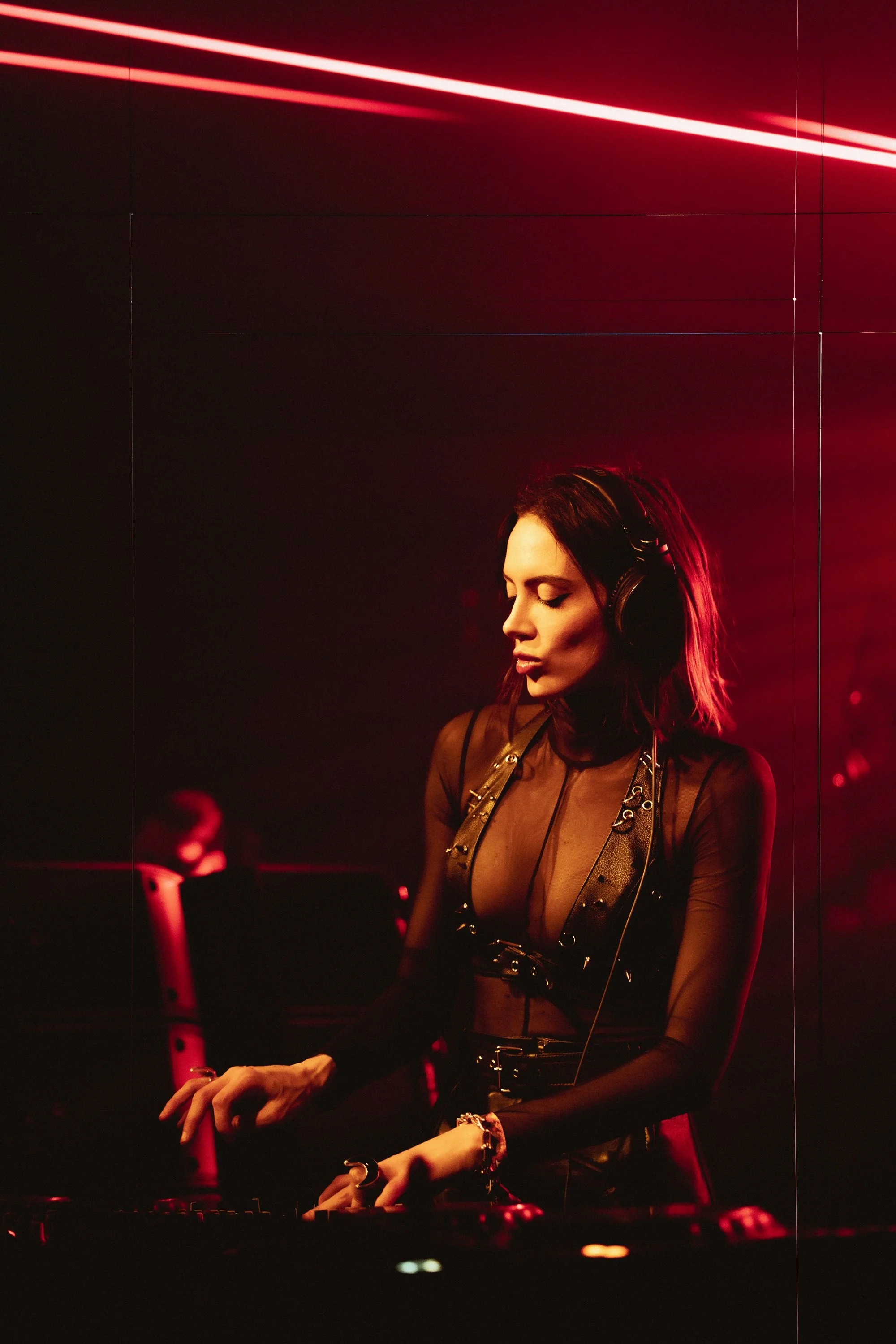
Sara Landry: I really think a lot of it is about understanding your audience. If you’re reading your audience when you play and adjusting the set to meet their needs, no matter how big the crowd is it’s going to feel intimate. What we do as DJs, taking in the energy from a crowd and pushing even more energy back out, is an incredibly intimate experience, if you think about it. I have to be able to read the audience’s reactions and build momentum sometimes for eight hours straight. It’s a give and take of my energy and their’s, there’s really not many performance styles where you can do that.
I know you brought up social media as a potential antithesis to building real and intimate communities, but I think it can be a great tool to stay connected between fan and artist if used the right way. I have a pretty curated main Instagram page, but we just started the Sara Landry Afters page and it’s kind of like my outlet that shows more of my personality: you get to see me after a set eating pizza, or crashing out about my vintage Chanel sunglasses getting smashed. I’m so much more than what I am in the booth and I think I started to recognise that that part of me wasn’t coming through for the fans. Being authentic online is a huge way to foster intimacy and closeness with our fans, and it’s definitely something I’ve prioritised as I’ve gotten bigger.
I don’t think my approach has really changed much over the years, in terms of connecting with my audiences. The most important thing to me has always been authenticity. If I like what I play, and I believe in the music I’m producing, the fans will follow. You can’t force someone to like you or “get it”, so why try?
GATA: Historically electronic music or rave culture has focused more on the audience rather than a single figure, with DJs in the 80s seen more as a selector who shaped the dance floor. We are now in the time of Boiler Room streams and essential rock star DJs headlining huge festivals. Is there anything that we can still take from the roots of club culture?
Sara Landry: It’s keeping the community in mind and making music with soul and purpose that makes all the difference. I think what’s most important as a producer and DJ, as the scene grows and gets more and more popular is to not forget the roots of the underground, or the unity that the rave was intended to create.
We are the leaders shaping the scene, and it’s important to remember where the scene was born out of and what that meant to people. Be kind to your fellow DJs, the guy standing next to you on the dance floor, and most importantly to yourself. We’re not creating music for people, we’re creating it to bring people together. It’s not about the size of an audience or how many people my music appeals to: it’s about staying true to the spirit of the roots of the club culture that inspired me in the first place.
GATA: Besides being an outstanding producer, sound engineer and DJ, you are also the founder and head of your own label Hekate Records. What are the challenges of running a label in 2026?
Sara Landry: It’s a whole mixture of challenges to be honest, but I love it all the same. I’d say my biggest challenge is time: I never have enough of it. I get sent so many incredible tracks from producers every day, I’d need 27 more hours in a day just to listen to them all!
My goal with HEKATE has always been to open doors for the artists I believe in. I think at the beginning, another challenge I had was just having the right team around me so that I could make it a priority to focus on this. HEKATE isn’t just a vanity project for me and my music, it’s a space artists can come to when they need direction. I have such an incredible team at HEKATE and we’ve seen so much growth over the past few years and I’m really proud of that.
“I think our consciousness is this energy that can be neither created nor destroyed, it merely becomes something new. I find this line of thinking to be beautiful, comforting and even optimistic. ”
GATA: Your label is named after the Greek goddess of the underworld. Are you a dualist? Besides your previous comments on reincarnation do you have a belief in some kind of existence or life after death?
Sara Landry: I don’t think I’d necessarily call myself a dualist. My spiritual practices are very much connected and related to my understanding of quantum physics and quantum mechanics. I specifically believe that human consciousness, and to some extent the human soul, is a particular type of energetic matter, or a specific type of state that exists between particle and wave that is bound by all the laws of physics that govern the rest of the universe. Meaning, things are never created or destroyed, they are just merely recycled into something else.
I’ve explored these themes, with death specifically, in my music a lot. I have a track from about five years ago called ‘Rebirth’ where there’s a vocal repeating “death is the new beginning,” and I still agree with and resonate with that. I choose to believe that when we pass, the energy from our human form is transmuted and recycled into something else, which could be another human life, either in the future or the past because I don’t think time is linear but rather circular. But when we pass, our energy could also be recycled into the spirit of an animal or maybe recycled back into a water tower, a source of energy maybe in a different plane we can’t perceive.
I think our consciousness is this energy that can be neither created nor destroyed, it merely becomes something new. I find this line of thinking to be beautiful, comforting and even optimistic. But I could be wrong, it could be nothing! It could just be one life and that’s it, but I don’t think any of us will ever know for sure. And so the most important thing regardless of what you believe is to live life and develop an understanding that feels beautiful, authentic and allows you to live the most of your life while you have it.
GATA: Are there any future projects or plans for the future that you can give us a sneak peak into?
Sara Landry: Right now, I’m fully focused on this album rollout. I’m so proud of Divine Intervention and I can’t wait for the world to hear it. As always, I’m excited to have some fun with my live sets with these tracks too—I often take inspiration from other artists and popular tracks outside of my realm as well so I guess you’ll just have to wait and see where inspiration strikes! 2027 is going to be even more exciting than 2026.
GATA: Here at GATA we love cinema. Its visual language has been a huge influence over the years in shaping our magazine. If you could have soundtracked any film from the past, what would it be? Why?
Sara Landry: This is a great question. The first movie that comes to mind is a crazy one, especially because the soundtrack is already so good. I wouldn’t want to recreate the soundtrack but rather try to put a modern spin on it. 2001: A Space Odyssey was what came to mind first. I love this movie so much and especially love the original soundscape that accompanies the film. I’ve actually done an intro with ‘Also Sprach Zarathustra’ the classical piece that’s at the beginning of the movie.
That movie is so special and already spectacular, but I think I would have a lot of fun creating a more modern, hard-hitting soundtrack to this already remarkable film.
GATA: And lastly, what is one question that you wish people would ask you?
Sara Landry: I want to talk more about my style and what I’m wearing! Fashion is one of my greatest passions. This year I actually signed to IMG Worldwide with a global modelling contract. I’ve recently started expanding my color palette past just black, which has been like my uniform for forever, and it’s really exciting. I’d love to talk about it more: the fun stuff!