
DECODING THE MANGA OF USUMARU FURUYA: A PSYCHOLOGICAL EXCAVATION
©Usamaru Furuya/OHTA Publishing Company
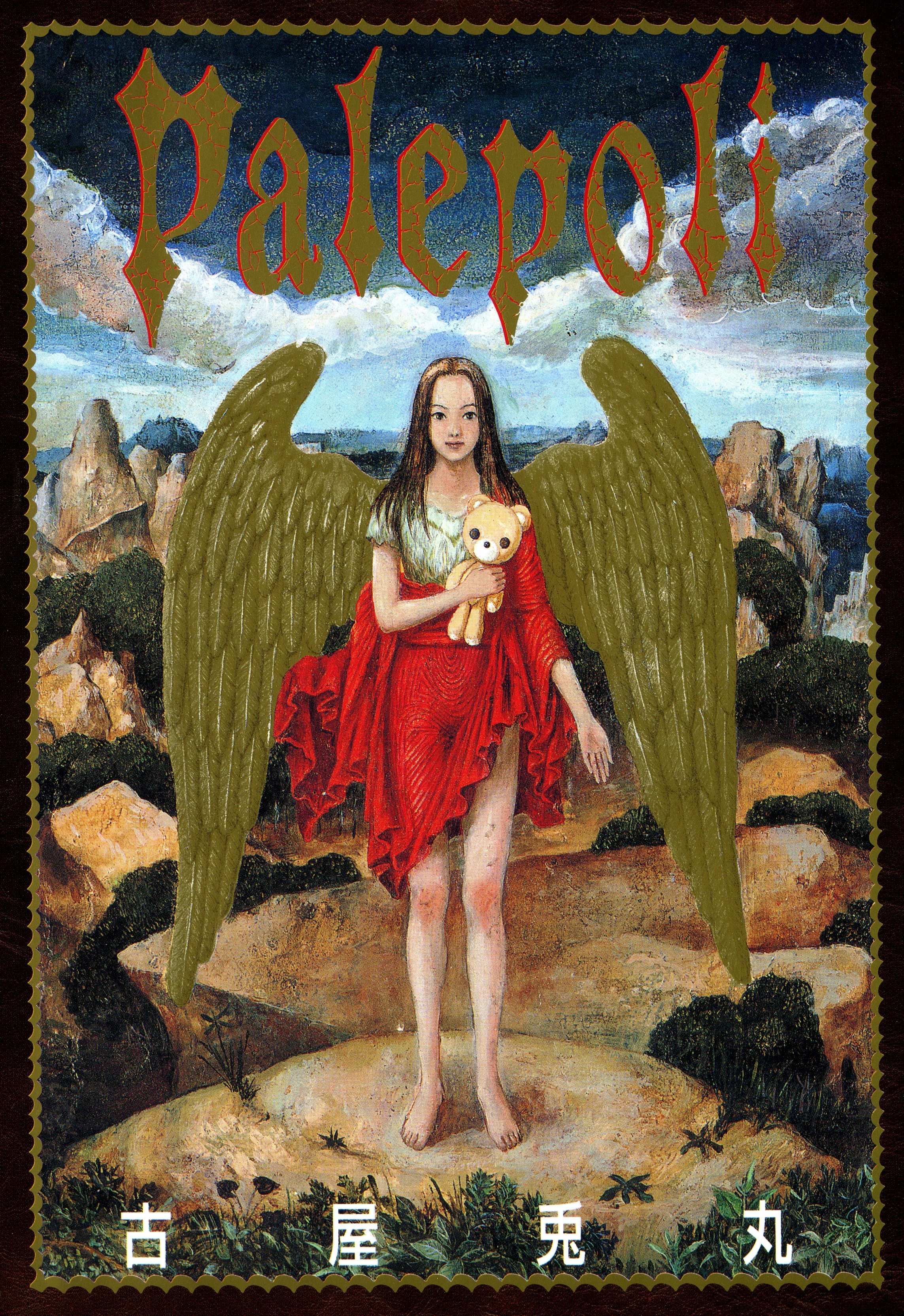
For more than three decades Japanese manga artist Usumaru Furuya has scoured the darkest crevices of the human psyche in search of substance for his stories. From the grotesque absurdity of his debut series Palepoli to the collective madness of Lychee Light Club, the technology-inflected anxiety of The Music of Marie and the psychological abysses of Genkaku Picasso, his worlds are populated by characters caught between obsession, fantasy and reality. Yet for all their extremity, Furuya’s stories never stray to far from an intimate core. His work continuously returns to his own experiences, dreams, fears and compulsions, using manga as a means of projecting his interior world onto the page.
This impulse can be traced back to his earliest encounters with the medium, when as a child he discovered the writing of Osamu Tezuka, and moved to tears by Kimba the White Lion. Later after studying art and pursuing a career teaching, Furuya returned to manga through Palepoli where he drew from influences as far ranging as the surrealist films of Jan Svankmajer, the paintings of Gerhard Richter and the alternative rock of Sonic Youth.
Today, more than thirty years after his debut, Furuya finds himself in an entirely new technological landscape transformed by the advent of the internet and AI, in which the process of research, and creation has been completely turned on its head. Yet rather than push back against the tides of change, he has incorporated them into his own process, while still questioning what must be preserved from the past. His latest work centred on the Taisho-era artist Takehisa Yumeji, sees him deliberately emphasise analogue techniques, an attempt as he describes it to recapture the beauty of Yumeji’s process: something AI seemingly can’t do yet.
GATA had the chance to talk to the artist about his thoughts on beauty, obsession and the sometimes disturbing impulses that make us human.
[EN]
GATA: What were you like as a child? Do you remember the first time you were exposed to drawing or manga in general?
FURUYA: When I was a child, I was fairly active. I played baseball and practiced kendo, and that was the kind of childhood I had. At the same time, I also loved drawing, and I would get together with my friends and draw manga together. During that time, I was a huge fan of Osamu Tezuka. The first work of his I ever read was Kimba the White Lion. I remember reading it and crying my eyes out while hugging my pillow because I was so moved. The work that really shook me with its intricate and epic storytelling was Phoenix. I felt the greatness of Tezuka-sensei through this grand story that transcended time.
[JP]
ガタ: 子どもの頃はどのようなお子さんでしたか? また、初めて絵や漫画に触れたときのことを覚えていらっしゃいますか?
古屋先生: 子供の頃は割と活発で、野球をしたり剣道をしたり、そんな少年時代を過ごしていました。同時に絵を描くのも好きで、友達と集まって一緒に漫画を描いたりしていました。当時は手塚治虫が大好きで、一番最初に読んだ作品は『ジャングル大帝』です。それを読み、感動で枕を抱えながら号泣したのを覚えています。また、物語の緻密さと壮大さに打ち震えたのは『火の鳥』です。時代を越えた壮大な物語に、手塚先生の偉大さを感じました。
GATA: Outside of manga artists, who influenced your work in the early days? Do you think there were any unusual influences that helped you create a more unique and distinct style?
FURAYA: When I was working on Palepoli in the early stages of my career, I had graduated from university and was working as an art teacher. I hadn’t drawn manga since elementary or middle school, so it had been a long time. Since I had spent my university years as an art student, manga itself wasn’t a particularly strong influence on Palepoli. At the time, I was influenced by films by Jan Švankmajer, paintings by Gerhard Richter, music by Sonic Youth, and so on. I wanted to see if I could bring that sense of freedom into manga, and that’s how I approached drawing it.
ガタ:初期の頃、ご自身の作品に影響を与えたのはどのような人物や作品でしたか? 漫画
家以外にも、現在の独自の作風につながった意外な影響源があれば教えてください。
古屋先生:初期の頃、『パレポリ』を描いたのは時は、大学を出たて、その後、美術の先
生として働いている時でしたました。漫画を描くのは小中学生に頃以来ぶりで、久しぶり
でした。自分は美大生として過ごしていたので、『パレポリ』に関しては漫画の影響はあまり強くなく、その頃はヤン・シュヴァンクマイエルの映画や、ゲルハルト・リヒターの絵画、ソニック・ユースの音楽などに影響を受けていたので、ました。そういったものの自由さを漫画に落とし込めたらいいなと思って描いていました。
GATA: After studying art at university, you worked as a high school art teacher. Looking back, do you think that period influenced the themes or perspectives that later emerged in your work?
FURUYA: At first, I took the job as a high school art teacher almost as if it were a part-time job. But as I spent more time with the students, they would come to me with their genuine emotions, worries, and problems. We were also relatively close in age, so I received all kinds of consultations from them. As I listened to those stories, I felt that the teenager inside me never really faded. In a way, I was able to grow alongside them while still carrying that same teenage heart with me. Since I often depict people during their student years, it allowed me to relive those kinds of genuine emotions through their experiences.
ガタ:大学で美術を学ばれた後、高校の美術教師として働かれていましたが、その経験は後の作品のテーマや視点に影響を与えたと思われますか?
古屋先生:最初は高校の美術教師は、最初バイトみたいなつもりで入りました。でも、生徒たちと接していくうちに、生徒の生の感情や悩みなど、年齢が近かったこともあり、いろんな相談を受けました。そういう話を聞いているうちに、いつまでも自分の中にいるティーンエイジャーが色あせないというか、ずっと同じようなティーンエイジャーの心を持ったまま、一緒に成長できましたたというか。そういう面で、僕は学生時代を描くことが多いので、リアルな感情を追体験することができました。
©Usamaru Furuya/OHTA Publishing Company
“Actually, I don’t really consider my own work to belong to the ero-guro genre. I don’t feel that it should necessarily be categorised that way.”
GATA: Then in 1994 your manga career started with Palepoli that was featured in the alternative magazine Garo. Reflecting on that period now, how does that time compare to creating working in 2026. Is your approach any different today?
FURUYA: At that time, of course, there were no computers, so everything was done by hand: from the rough sketches to inking and applying screen tones. Today, you can choose from all kinds of methods, whether digital or hand-drawn, but back then there simply weren’t those options, so everything was done by hand. Even when gathering references, I would go to the library. If I wanted to draw insects, I had to search for books and materials about insects. There was no internet, so looking back, there were certainly a lot of difficulties. However, it wasn’t necessarily that inconvenient for the time. In terms of creating art, I actually think it was relatively free. Today, we’re living in a time when you can immediately check the answer to almost anything. I sometimes feel like there are a lot more people pointing out tiny inaccuracies, almost like picking at the smallest details. For manga artists who have been working since before the internet, I’m not saying I personally do this, but there have recently been controversies and backlash over things like tracing. For artists who started working in an era when there was no way to immediately “check the answers,” I think things are much stricter now, so we have to be careful.
ガタ:1994年、『ガロ』で連載された『Palepoli』によって漫画家としてのキャリアが始まりました。当時を振り返ってみて、2026年の現在の制作環境と比べてどのような違いを感じますか? また、作品づくりへのアプローチは変化しましたか?
古屋先生:この頃は当然のようにパソコンなどがありませんので、下書きからペン入れ、スクリーントーン貼りまで、全て手書きで描いていました。今はデジタルを使ったり、手書きを使ったり、様々な方法を選ぶことができますが、当時はそのような選択肢がありませんでした。また、インターネットがなかったのでなかったので、手書きでした。資料を集めるにしても、図書館に行って、昆虫を描くときも図書館に行って、昆虫の資料を探したり、インターネットがなかったので、今で考えると色々と苦労はありました。。ただ、それがその時代にとってすごく不便だったということでもなく、創作という意味では割と自由だったなと思います。今は答え合わせがすぐできてしまう時代なので、「ここはこう違うぞ」という指摘が結構しやすくされるような、重箱の隅をつつくような指摘が多いような気もします。また、この時代からやっている漫画家が、僕はそういうことではしないんですけれども、最近トレース問題でとか、そういうので話題になったり炎上したりすることがあります。古くから活動しているやっている漫画家にとって、そういう答え合わせみたいなものがない時代からやっている作家は、そのあたり辺が今は厳しいので、気をつけないといけないなと思います。
“I think the pursuit of beauty is almost an inherent quality of being an artist. Maybe it’s not right to generalise that to all artists, but at least I think it’s something that many artists, myself included, possess.”
©Usamaru Furuya/OHTA Publishing Company
GATA: In general before starting a new book, what is your process like? How do you go about consolidating and refining the idea into something that is coherent?
FURUYA: There are many different patterns when it comes to my process. For something like No Longer Human, the basic framework and structure of the story are already established, so I think about how I can bring that story into the present day. With The Music of Marie, for example, the first thing that came to me was a vision of a gigantic, mechanical goddess floating in the sky. From there, I built a world in which people worshipped this goddess, and then developed the story from that initial vision. With I Want to Be Killed by a High School Girl, the title suddenly popped into my head first. I then built the story around the impact of that title. Sometimes I start with words and think, “How could this story become this title?” or “How could this title become a story?” Lychee Light Club, on the other hand, was based on a play I saw when I was in high school. In any case, when choosing subjects for my manga, I tend to choose things that come from my own experiences or are personal to me: subjects that allow me to successfully project my own emotions into the story.
ガタ:新しい作品を始める際、どのようなプロセスでアイデアを形にしていくのでしょうか? 漠然とした発想を、一つのまとまった作品へと磨き上げていく過程について教えてください。
古屋先生:プロセスに関しては、色々なパターンがあります。例えば『人間失格』の場合のようなものでしたら、ある程度の骨組み、骨格が決まっていますので、「それを現代に落とし込むにはどうしたらいいんだろう」というような考え方で構築しますです。あとは『Marieの奏でる音楽』という漫画でしたら、上空に浮かんでいる巨大な機械仕掛けの女神像というようなビジョンがまず浮かんで、それをもとに、それを信仰している世界というような、そこから物語をビジョンから組み立てていきましたいったりもします。また、『女子高生に殺されたい』という漫画では、まずこのタイトルがパーンと頭に浮かんで、そのタイトルのインパクトから物語を構成しました。「どうしたらこの物語になるのかな、このタイトルになるのかな」というように、言葉から考えることもあります。また、『ライチ☆光クラブ』という漫画では、高校生の頃に見た演劇が元になっています。いずれにせよ、自分の漫画というのは自分の経験だったり、そういった個人的な思いものがうまく自分の心情として物語に乗せられるような題材を選んでいます。
GATA: To newcomers who might not be so familiar with the history of manga, could you tell us a little bit about the influence of ero-guro on the medium? How did this cultural movement influence your work, as well as artists such as Suehiro Maruo or Shintaro Kago?
FURUYA: Actually, I don’t really consider my own work to belong to the ero-guro genre. I don’t feel that it should necessarily be categorized that way. That’s because I’m the type of artist who primarily thinks about whether I can successfully project my own experiences and emotions into the work. I’ve almost never created a story specifically within the framework of ero-guro. So it’s difficult for me to explain what ero-guro is to readers. However, artists such as Shintaro Kago and Suehiro Maruo, who are mentioned here, are very good at condensing a particular aesthetic or sensibility and translating it into their work. I think that’s what everyone, myself included, is drawn to: their commitment to that aesthetic. I see myself as a slightly more personal kind of artist, someone who puts his own emotions into his work. Maruo-sensei is essentially one of the leading figures in this world. Artists like Kazuichi Hanawa and Suehiro Maruo, for example, have their roots in artists from the Taisho era such as Kashō Takahata and Hikozō Itō. I think the tradition of highly detailed, SM and erotic-style illustrations that existed throughout the Taisho and Showa periods was eventually passed down to artists like Shintaro Kago and Suehiro Maruo. This is also a kind of hidden Japanese culture, or a part of manga history that isn’t very well known overseas. I would really like to see this entire history introduced to audiences abroad.
ガタ:漫画の歴史にあまり詳しくない読者のために、「エログロ」が漫画表現に与えた影響について教えていただけますか? また、この文化的潮流は古屋さんご自身や、丸尾末広さん、駕籠真太郎さんといった作家たちにどのような影響を与えたのでしょうか。
古屋先生:実は僕、自分の作品はエログロの系統に入れていないというか、そこにカテゴライズされる作家ものではないなとは思っています。というのは、いかに自分の経験やだったり、自分の心情をだったり、自分がうまく物語そこに投影できるかどうかということをメインに考えるタイプの作家なので、エログロという形式の中で物語を作るというったり、そういうことはほぼしたことがありません。ですからなので、そのエログロをに対して、読者に教えることは難しいのですが、ただ、ここに書かれている駕籠真太郎さんや丸尾末広さんらは自分の先生というのは、すごくある美学をであるとか、そういったものを凝縮して作品に落とし込むことが上手な作家だなと思っていますし、それのこだわりに僕も含め、みんなが惹かれるんだと思います。僕はもうちょっと個人的な作家というか、自分の心情を乗せる作家だと自分では思っています。また、丸尾先生はもうこの世界の第一人者というか、エログロ花輪和一さんや丸尾先生はこの世界の第一人者ですが、、そういった方々がいます。でも、その源流というのは、大正時代の高畠華宵やという作家だったり、伊藤彦造という画家作家だったり、。大正、昭和と受け継がれた、そういうSMエロ細密画みたいなものの流れが、駕籠真太郎さん、そして丸尾末広さん、花輪和一さん駕籠真太郎さんさんらに受け継がれたと思います。んじゃないかなと思っています。これもまた一つの日本の隠された文化というか、あまり海外では知られていない漫画史だと思うので、この辺をまとめて海外で紹介していただきたいなと思います。
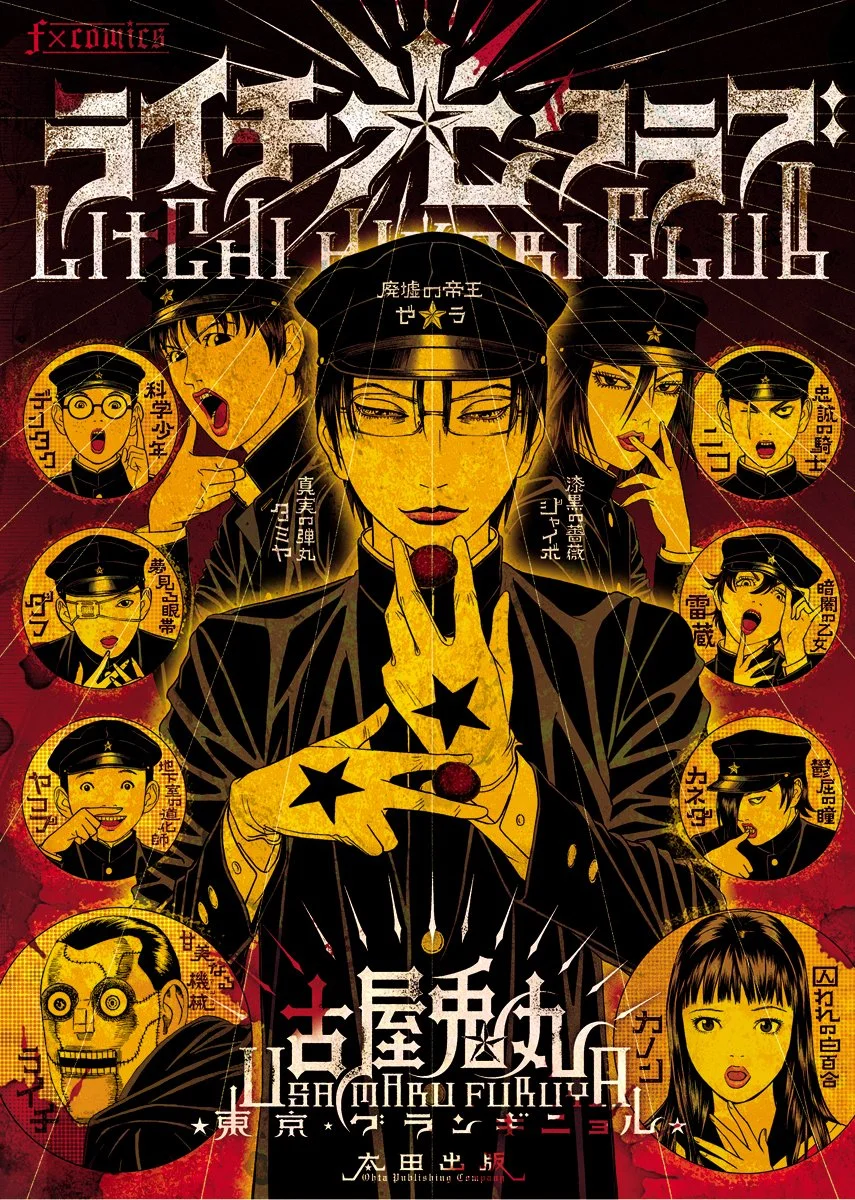
GATA: Your work in Lychee Light Club deals with themes of repression, group thinking and sexual violence. What was your motivation to explore these concepts? Was it social commentary? A way of exposing this dark nature of society?
FURUYA: There is a particular subject that I’m personally very drawn to: the madness that emerges when people are trapped within a group. For example, the madness of the boys in Lord of the Flies, or the Japanese student movements of the 1960s and 1970s. There were incidents within those student movements where students turned against one another, and eventually young people ended up killing each other. The Asama-Sansō Incident and the various United Red Army incidents are examples of this. I’m strongly fascinated by the theme of people ultimately losing their lives because of a rigid, extreme ideology. I’ve explored a similar theme in Genkaku Picasso as well. The reason is that, when I was at university, I was very drawn to things resembling the student movements of that era, even though they no longer existed in the same way at the time. I read underground newspapers and was fascinated by the world in which those student movements had taken place. I sometimes imagine that if I had lived during the 1960s, I probably would have participated in the student movement. And perhaps I would have ended up among those people who turned on and killed their own comrades. I think I’m particularly drawn to stories about young people like this because of my own personality. I’m quite susceptible to believing in things, and I also have a tendency to run headfirst into worlds of fantasy and imagination.
ガタ:『ライチ☆光クラブ』では、抑圧、集団心理、性暴力といったテーマが描かれています。こうした題材を扱おうと思われたきっかけは何だったのでしょうか? 社会への批評的な視点があったのでしょうか。
古屋先生:僕がとても個人的に惹かれている題材のひとつにというものがありまして、「それは集団の中に閉じ込められた時の狂気」がありますです。例えば『蠅の王』で見られるような少年たちの狂気やであるとか、あとは60年代、70年代にあった日本の学生闘争。その学生運動の中でお互い、最終的には学生同士が殺し合い、そして最終的には青年同士で殺し合ってしまうというような事件がありました。浅間山荘事件など、そういう連合赤軍の事件などがそうです。一つの凝り固まった、行き過ぎた思想により、最終的に命を落としていく。、そんなテそういったテーマに強く惹かれています。これのテーマは『インノサン幻覚少年十字軍十二人』でも描同じようなテーマで描いています。というのは、もし僕自身が大学時代、そういう学生運動的なものに、もうその当時はなかったのですが、でもそういうものに惹かれて、そういうアンダーグラウンドの新聞を読んだりとか、そういう学生運動が行われている大学の演劇を見に言ったりしました。ような世界に興味を持っていたので。もし自分が60年代に学生だったらとかを生きていたら、学生運動に参加していただろうし、そして同じように、もしかしたら仲間同士で総括し合い、殺し合っている中のうちに入っていたんじゃないかなと想像してしまいます。僕自身がなので、自分の資質がそういう、信じ込みやすくやすいし、そして割と妄想の世界に突っ走りやすい性格をしているので、こういった若者たちの物語にとても惹かれるんだと思います。
GATA: In Lychee Light Club, I drew a parallel to the work of Oscar Wilde in A Picture of Dorian Gray and the tension between beauty and corruption. By chasing beauty over morality one can run the risk of obsession and possession rather than merely appreciation. Was this something in the forefront of your thinking while creating this work?
FURUYA: A similar theme is explored in Death in Venice, which I saw when I was a student. It’s also a film I really love. It’s about pursuing a beautiful boy and eventually wanting to make that beauty your own. The protagonist becomes absorbed into this world of obsession and fantasy. I think there is an element of that within myself as well, and I imagine it’s probably something that many artists and writers have in them. I’m currently drawing a manga about the Taisho-era artist Takehisa Yumeji. He also depicted the beauty of women, was constantly at the mercy of women, and had a relationship in which his art and women existed alongside one another. I think the pursuit of beauty is almost an inherent quality of being an artist. Maybe it’s not right to generalise that to all artists, but at least I think it’s something that many artists, myself included, possess.
ガタ:『ライチ☆光クラブ』を読んでいて、私はオスカー・ワイルドの『ドリアン・グレイの肖像』との共通点を感じました。そこには美と腐敗のあいだの緊張関係が描かれているように思います。美を追い求めることが、やがて執着や所有欲へと変わっていくというテーマは、本作を制作するうえで意識されていたのでしょうか。
古屋先生:これはも学生時代に見た、『ベニスに死す』という作品でも似たようなテーマが描かれています。これもとても大好きな映画なんですが、やっぱり一人の美少年を追い求める主人公。ているうちに、その美しさを自分のものにしたいというか、彼の中ではその美への世界、その妄想の執着の世界の中に取り込まれていきますくというような物語だと思うんですが。、僕これは自分の中にもそういう要素はあるし、芸術家というか、作家にはそうという人も結構多いんじゃないかなと思います。今、僕はが描いている大正の画家、竹久夢二の物語を漫画で描いているのですが、彼も女性の美しさみたいなものを描き、そして女性に振り回されました。、彼のそしてその芸術はと女性とは共にありましたあったというよう。な物語があります。やっぱり美を追い求めることはというのは、それは作家の性みたいなもの、作家というふうに全般言うのも良くないのかな。でも、少なくとも僕を含めて、多くの作家が持っている性なのだと思います。
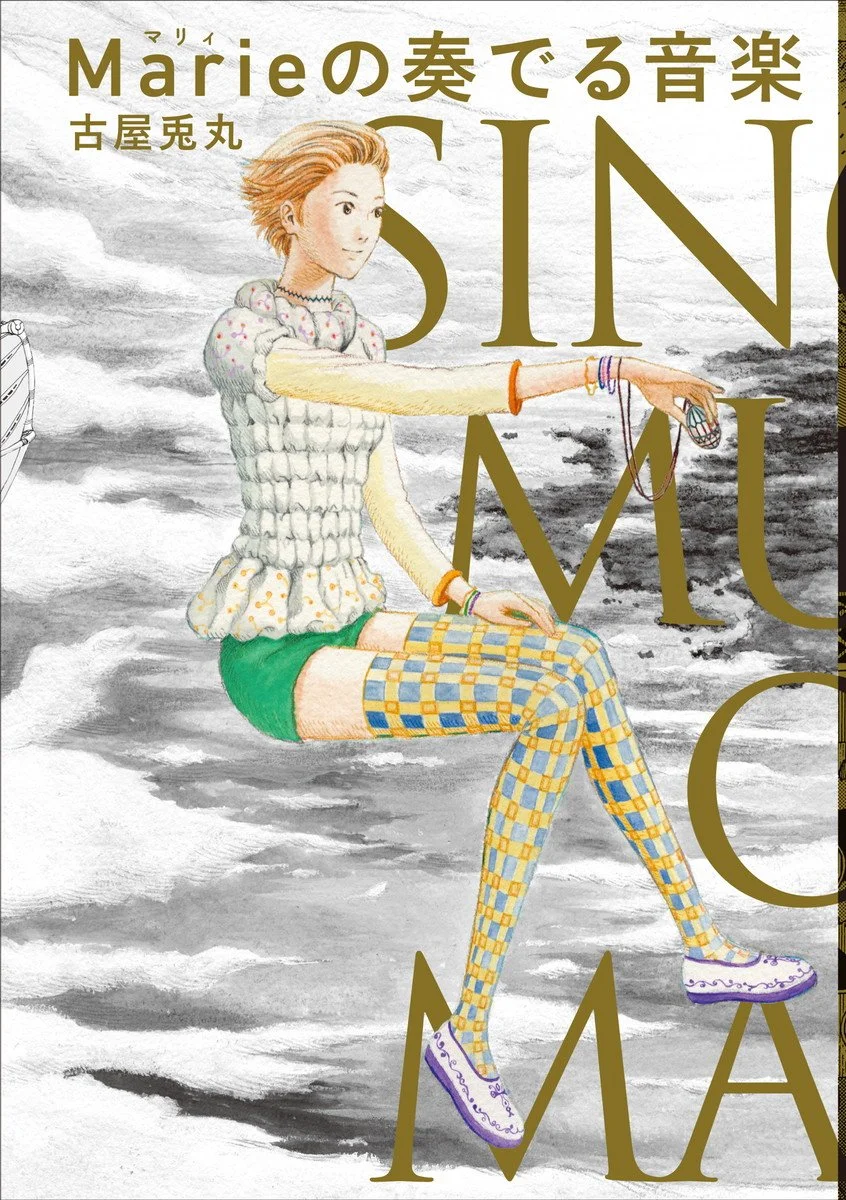
GATA: Your work The Music of Marie, centres on a boy who develops an obsession with a clockwork goddess. Again you’re exploring the human tendency to fixate on objects, in particular objects of beauty. Do you personally have an obsession? Is your work a means of better understanding your own personal compulsion or is it more of a general view on humanity?
FURUYA: Through the character of Marie, I wanted to explore the relationship between humans and technology. At the time, I had also started using computers while creating manga. On one hand, I thought the internet was incredibly convenient. But because I had been creating things since before the internet existed, I also felt a sense of fear about what kind of world all of this technology would eventually lead us to. I use the internet because it’s there and because computers exist, I use them as tools. But sometimes I thought that perhaps we would have been happier if these things had never been invented in the first place. Even if I stopped using them myself, everyone around me would continue using them, so I couldn’t really stop. Once you’ve experienced the convenience, you can’t go back.
Sometimes I think that if everyone had continued creating in the same way they did in the ‘80s and ‘90s, without computers or the internet, perhaps we would have been more free. But once you’ve discovered these technologies, everyone knows that AI can be used as part of the creative process, and there’s no way to escape it anymore. I’m the same. When I’m creating a story set in the Taisho era, I research what things were like at the time, and I sometimes have AI generate images for me to use as references for buildings from that period. I use it as a tool to help create the story. In reality, using these kinds of tools may be suffocating creators themselves, and perhaps humanity really is heading toward its own destruction. But we can’t stop anymore. That’s what I wanted to depict through The Music of Marie.
ガタ:『Marieの奏でる音楽』では、主人公の少年が機械仕掛けの女神に強く惹かれていきます。この作品でも、人間が美しい存在や理想化された対象に執着する傾向が描かれているように感じます。古屋さんご自身にも何か強いこだわりや執着はありますか? また、こうした作品はご自身を理解するための手段なのでしょうか。それとも人間そのものへの考察なのでしょうか。
古屋先生:この作品は、マリィーという存在を通して、人間とテクノロジー、そして愛とテクノロジーの関係を描きたいなと思いました。当時は僕もパソコンなどを使いながら漫画を描くようになっていて、インターネットも便利だなと思う反面、僕はインターネットのない時代から創作をしているので、行き着く先がどういう世界になるんだろうという恐怖感も同時に感じていました。インターネットがあるから、使います。そしてパソコンがあるから、それを道具として使います。だけど、むしろそんなものは発明されない方が幸せだったんじゃないかなと思っていました。それでも自分一人がやめたところで、周りの人はどんどん使っているから、自分もやめるわけにはいかない。というか。便利さを知ってしまった以上、やめることはできない。本当はパソコンもインターネットもない時代のまま、80、90年代のまま、みんな創作していたらだったらもっと自由だったんじゃないかなと思ったりもします。います。でも、知ってしまった以上、今ではAIを創作に活用するということはみんな知っていしていると思うし、そこから逃れることができなくなっている。それは自分自身も一緒です。大正時代の物語を描いているときに、やっぱり当時のことを調べたり、当時の建物を参考に画像生成してもらったり、そういうことをしつつ、物語を作るための道具として使っています。本当はこういうのを使うこと自身がクリエイターの首を絞めているし、人類はもしかしたら本当に破滅に向かっているのかもしれない。でも、もうやめることはできない。『マリーMarieの奏でる音楽』で描きたかったのは、そういうことです。
GATA: In Genkaku Picasso, the main plot point lies in drawing the subject’s “heart” and thus revealing their psychological traumas. What was the research process like for this book? I feel like ideas of repressed sexuality and trauma overlaps with some of the ideas of Freud, or am I reaching with this observation?
FURUYA: When I was working on Genkaku Picasso, I read various books on psychology, including books about where trauma comes from and things related to the subconscious. However, the original inspiration came from much more personal visions within myself: my own dreams, and the fact that I would repeatedly have the same kinds of dreams and wonder where they came from. I would think, “Maybe something I experienced when I was a child is connected to this dream.” I wanted to see if I could turn those ideas into a story and visualize them.
The idea was to turn the inside of someone’s mind into an image, and by solving the mysteries within those images, gradually unravel the darkness inside the character and get closer to the truth. There was also a personal desire behind it. I wanted Picasso and the other characters to unravel the darkness inside me: to figure out what the dreams I kept seeing actually meant.
Rather than thinking about things in terms of rhythm, or developing the story based on the research materials I was reading, I was mainly thinking about how I could create interesting images in a manga context.
When I thought about what I had never done before, I had always wanted to find a real person whose life I could research and depict in a way that was historically truthful while still being interesting as a story. That’s when I chose the Taisho-era Japanese artist Takehisa Yumeji.
For this work, I also changed my artistic style quite significantly. I’m combining Yumeji’s style with my own, creating something like a hybrid. That’s why I’m trying to bring elements of Yumeji’s line work into my own drawings. Since this is about a Taisho-era artist, I’m also using pen, ink, and watercolor-like techniques for the coloring, and I’m hand-lettering the title as well. It’s also an attempt to see how closely I can get to the style of an artist from the Taisho era.
I think this is my way of fighting against AI. AI can create interesting stories and incredibly detailed images. So I thought I’d do the opposite. What AI cannot create is a human life. It cannot depict Yumeji’s life and then draw it by hand in an analogue form. That’s something AI can’t do. So while I may use AI as a tool to research the Taisho era, the people Yumeji met, the women he encountered, and the paintings he created are part of a history that cannot be changed, and AI cannot come up with those things either. That’s why I chose this subject.
ガタ:『幻覚ピカソ』では、「心」を描くことによって登場人物たちの心理的な傷やトラウマが浮かび上がります。この作品を制作するにあたり、どのようなリサーチを行われましたか? また、抑圧やトラウマというテーマにはフロイト的な心理学との共通点も感じましたが、そのような思想から影響を受けた部分はありますか。
古屋先生:『幻覚ピカソ』を書くときはいろんな心理学の本を読みんだり、深層心理とというようなものが、どこからトラウマとして来るのかとか、そういうの関係など書籍を何冊か読みました。を調べました。ただ、その発想の元となっていたのは、自分の中にあるもっと個人的なビジョンであるとか、自分の夢ですであるとか。いつも同じような夢を見て、「この夢はどこから来るんだろう」というような疑問がありました。でも、もしかしたら、僕がの小さい頃体験したこういったことがこの夢につながっているんじゃないかと考えなとか、それその辺を物語、視覚として描けないかなと思いました。心の中を絵にして、するという、その絵の中の謎を解いていくことによって、その登場人物の心の闇を紐解いていくというのかな。真相に入っていくという物語は、自分自身がそうやって自分の中の闇、自分が見ているこの夢は何だろうというのを、をピカソ君たちに解いていってほしいなという、自分が見ているこの夢は何なんだろうとか、そういうのを解いてもらいたいなという願望も含まれています。どちらかというと、資料を読んで理詰めで考えているというよりも、漫画的にどれだけ面白い絵を描けるかというところをメインに考えていました。
GATA: Moving forward, what do we have to look forward to from Usumaru Furuya? Your style of work has felt very different from book to book, is there a new style, or theme that you would like to experiment with in the future?
FURUYA: When I thought about what I haven’t done before, the first thing that came to mind was biography. I had always wondered whether there was a person I could research, someone who actually existed, and whose life I could depict in a way that remained true to the facts while still making for an engaging story.
That led me to Takehisa Yumeji, a Japanese painter from the Taisho period whom I had been interested in since I was a student.
For this project, I’ve also changed my style considerably. I’m combining Yumeji’s visual language with my own, creating something of a hybrid, or a style somewhere in between the two. I’m particularly trying to bring elements of Yumeji’s line work into my drawings.
And because Yumeji was an artist of the Taisho period, I’m drawing everything with pen and ink, then adding colour with watercolours, almost as though I were working in the same way as an artist of that period. I’m also hand-lettering the title. In a sense, the whole project is an attempt to see how closely I can get to the way an artist from the Taisho period might have worked.
I think this is the way I’ve come up with to fight against AI.
AI can create interesting stories and produce incredibly intricate images. So I thought I’d do the opposite. What is it that AI cannot create? A human life.
AI cannot recreate Yumeji’s life, nor can it draw that life by hand using analogue materials. Those are things AI cannot do. Of course, I use AI as a tool, for example, to research aspects of the Taisho period. But the people Yumeji met, the women he encountered, and the paintings he created, their histories cannot simply be changed. AI cannot think or alter those lived experiences.
That’s why I chose this subject.
ガタ:最後に、今後の活動についてお聞かせください。作品ごとに作風やテーマが大きく
変化している印象がありますが、これから挑戦してみたい新しい表現やテーマはあります
か。
古屋先生:今まで僕がやったことがないことって何だろうと考えた思った時に、思い浮かんだのは伝記でした。ある一人の実在した人物の生き様を調べ、そしてそれを嘘がないように、なおかつ物語としても面白く描ける人はいないかなと、ずっと思っていました。そこで学生時代から興味があった大正時代の日本の画家、竹久夢二を選びました。また、今回作風も大きく変えて、竹久夢二の絵柄と自分の絵柄をハイブリッドというか組み合わせて、その中間のような絵柄で描いています。だから、線の要素などは竹久夢二の線に寄せて描こうと思っています。そして今回は大正の画家なので、全てペンとインクと水彩で描きのようなもので色付けもして、そしてタイトルの文字も手書きでレタリングして描いています。いかに自分が大正の時代の画家に近づけるかというような試みでもあります。というのは、これが僕の考えた出したAIとの戦い方だなと思っています。AIは面白い物語を作れる、緻密な絵を作ることができる。なので、その逆を言ってやろうと思いました。AIが作れないもの、それは人間の生き様です。その夢二の生き様を描くこと、そしてそれをアナログで描くこと、これはAIにはできないことです。だから、道具として大正時代のことを調べたりするのにAIを使ったりはしますが、ただ彼が出会った人、彼が出会った女たち、そして彼が描いた絵、それの歴史はもう変えることはできませんし、AIが考えることもできません。なので、僕はこの題材を選びました。