
Stolen Besos: Digital Decay
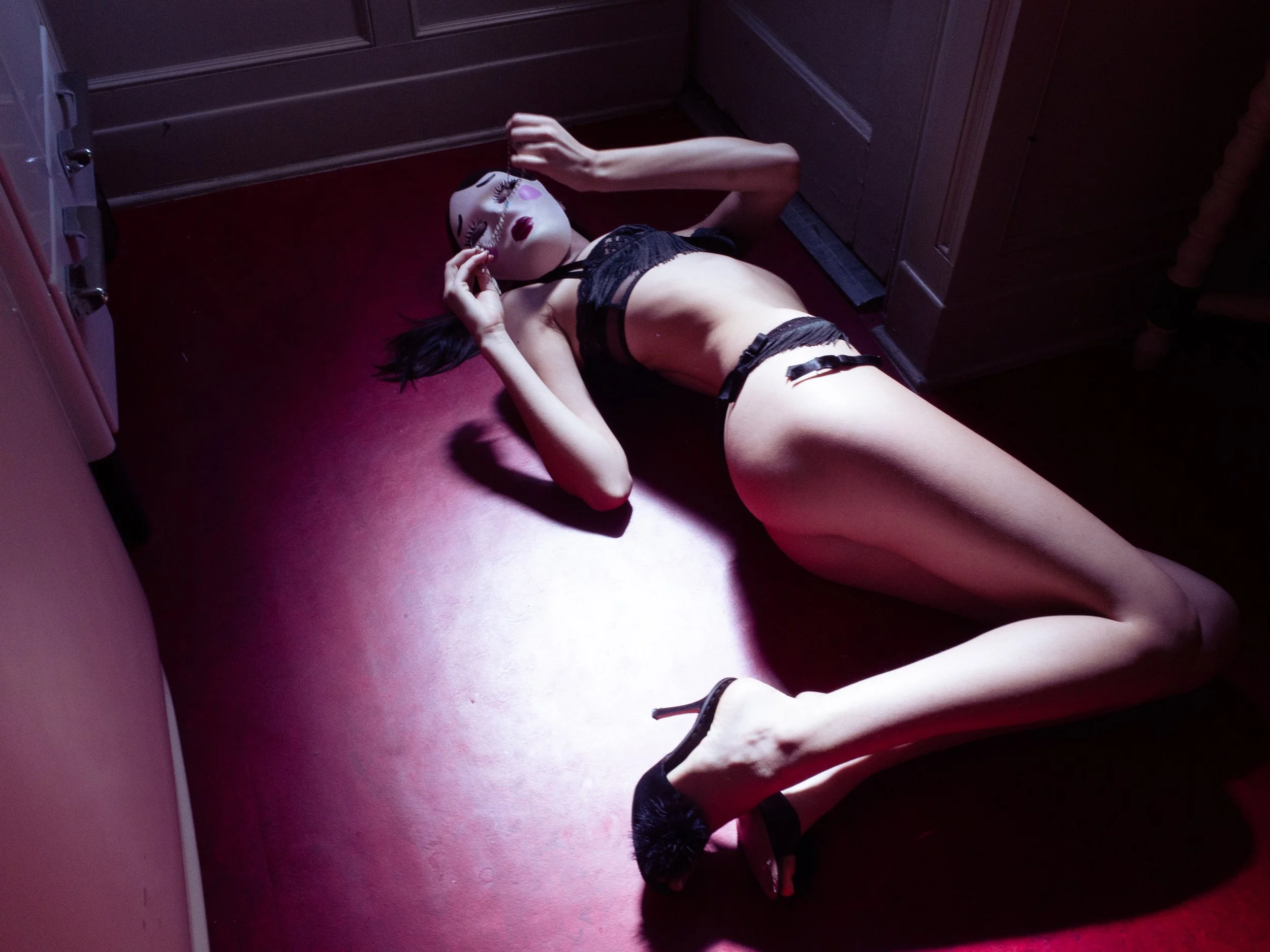
Maya Spangler, better known as Stolen Besos, has been building a world of her own since 2022. Drawing on the landscapes of her Californian upbringing and the visual language of the early internet, her photographs exist somewhere between euphoria and melancholy, intimacy and detachment.
Blank spaces, sparsely furnished bedrooms and girls caught somewhere between indifference and introspection. Maya’s images inhabit a world where softness meets rebellion, and beautynever feels entirely uncomplicated. Her subjects appear distant, almost untouchable, yet evoke something deeply familiar: the peculiar loneliness of growing up, of wanting to belong while trying to figure out who you are.
The world of Stolen Besos gained particular traction during the rise of lobotomy chic, the internet aesthetic that peaked in 2023 and blurred the lines between emotional detachment, hyper-femininity and the romanticization of escapism. While Maya never set out to define an aesthetic, her work became inseparable from its visual language. There is an irony to this: photographs that feel so personal have taken on a life of their own, circulating far beyond the world in which they were created.
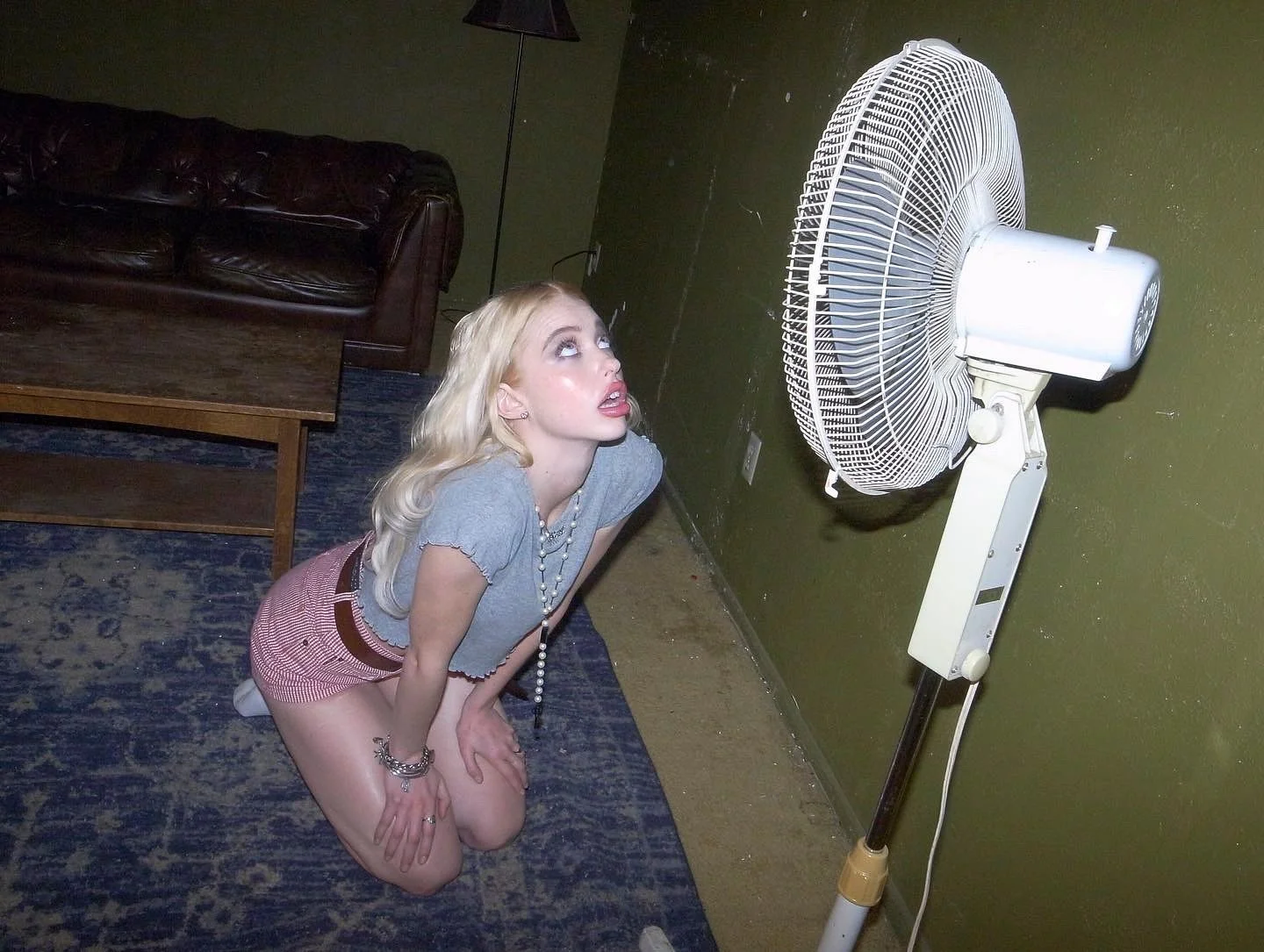
Despite the public figures who have stepped in front of her lens — from Charli XCX behind the scenes of her party 4 u music video to internet personalities like Chloe Cherry, Emma Chamberlain and Addison Rae — Maya’s photographs rarely feel like conventional celebrity imagery. Instead, they capture something elusive and disarmingly intimate, as if the camera had caught a moment that was never meant to be seen.
We spoke to Maya about the internet, the loneliness of girlhood, and what happens when a world that was once entirely your own becomes everyone else’s.
GATA: What initially drew you to photography and this quite particular perspective you're having in your visual language?
Maya: I've been taking pictures for most of my life, but I think what really drew me back in was being in my twenties, feeling lost, and rediscovering this medium that I could develop a world through. The way my work looks now kind of came from this music project I had during Covid called Sound Advice. I was making custom CDs for people and shooting my roommate to make flyers, and I just felt this reinvigorated excitement for taking photos. I started creating this whole world behind the concept.
When I started posting the photos on Tumblr, they kind of blew up. The reason they looked that way is because I randomly got my hands on this camera and was still figuring out how to use it. I was using pretty rudimentary settings with the flash on. It was my first time in a long time not shooting on film, so I was experimenting with that.
When I started posting the photos on Tumblr, they kind of blew up. The reason they looked that way is because I randomly got my hands on this camera and was still figuring out how to use it. I was using pretty rudimentary settings with the flash on. It was my first time in a long time not shooting on film, so I was experimenting with that.
GATA: You just already mentioned Tumblr. Your visual language has this feeling of 2016 Tumblr, coming of age era, what kind of influence did that time have on you?
Maya: At the time, I was on Tumblr a lot. I grew up on Tumblr and had my account since I was twelve. I got so many ideas from there. I would post my shoots on my blog, and it allowed me to really see the world I was building. I grew up in the San Gabriel Valley, not too far from LA, and it was sometimes a really lonely experience. I went to an all-girls Catholic school where things outside the norm were often seen as weird, and most people around me weren't especially interested in art or artists. The mentality was very much: go to college, get a nine-to-five, become a realtor. Tumblr was where I discovered a lot of what interested me. It opened my eyes to the possibility of being a little sleazy, a little risqué.
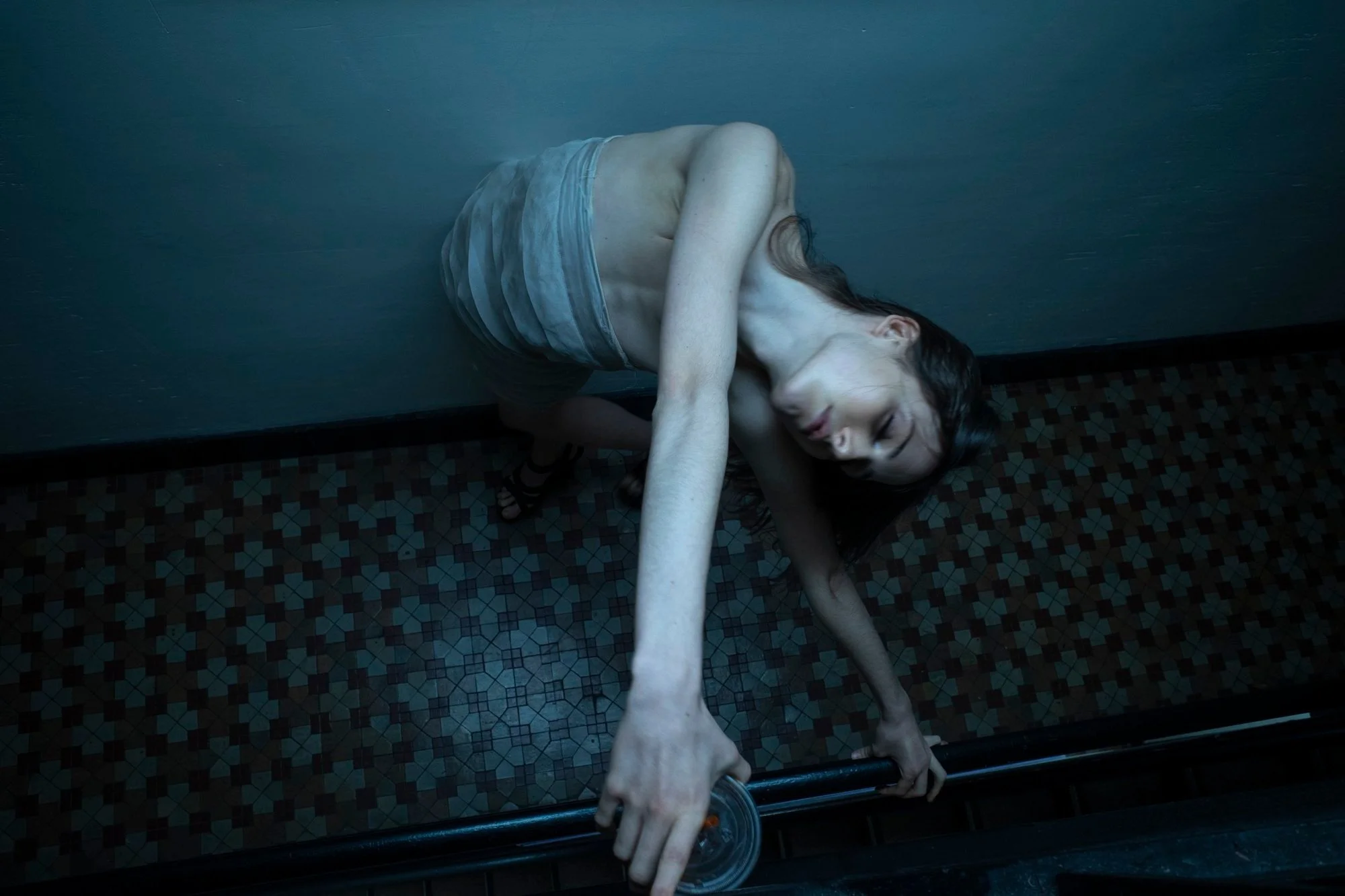
In some ways, I think I still gravitate towards landscapes that bring me back to that time in my life. A lot of my earlier work featured mid-century backdrops that reminded me of houses I'd been in growing up. There's this tension between beauty and decay in my work. You can have nice things, but they're old. I don't really want things to look too clean or perfect.
GATA: I see your work all over online platforms. How do you feel about your work being circulated, reproduced, and used as a source of inspiration online? Where do you draw the line between inspiration and reproduction?
Maya: I think the older I get, the less that really bothers me. I'm more appreciative now. I'm kind of just happy that my work resonates with people enough to be a source of inspiration. That's what I did when I was younger, even if I didn't realize it. It comes with the territory. I think I draw a line at AI. I've seen an AI reproduction of my work selling a jacket I've never shot. That was so upsetting to me.
GATA: How do you navigate your own body of work in an increasingly digital world? What does analogue media mean to you?
Maya: I've been thinking about this more recently, because I've kind of gone through a drought of inspiration, just feeling like I don't know what to shoot. Maybe I need to move somewhere for a bit. I feel like I've kind of exhausted a lot of the landscapes here in LA, and I've been finding excuses to not shoot.
I feel so attached to my work, but I do feel like it's easy to minimize someone's scope of work because of how digital everything is. I even forget my own work. I was redesigning my website and thought I barely had any photographs, only to realize they were just scattered across different folders. I've even had to search for my own name on Pinterest to find my work.
GATA: When it comes to like the process of your work and your pictures always feel quite intimate and spontaneous, how much of that is actually something happening spontaneously and what is well pre-constructed beforehand?
Maya: My personal work tends to be at its best when it isn't too pre-constructed. The girl I shot the other day, I went over to her apartment and we shot for five hours. We did a lot of outfit changes, all with clothes pulled out our closets. Most of it was us talking and getting to know each other, with moments of shooting happening organically in between.
Sometimes a person is so captivating that I feel the need to shoot them, but if in the process I feel like we don't really get each other, it can be a bit harder.
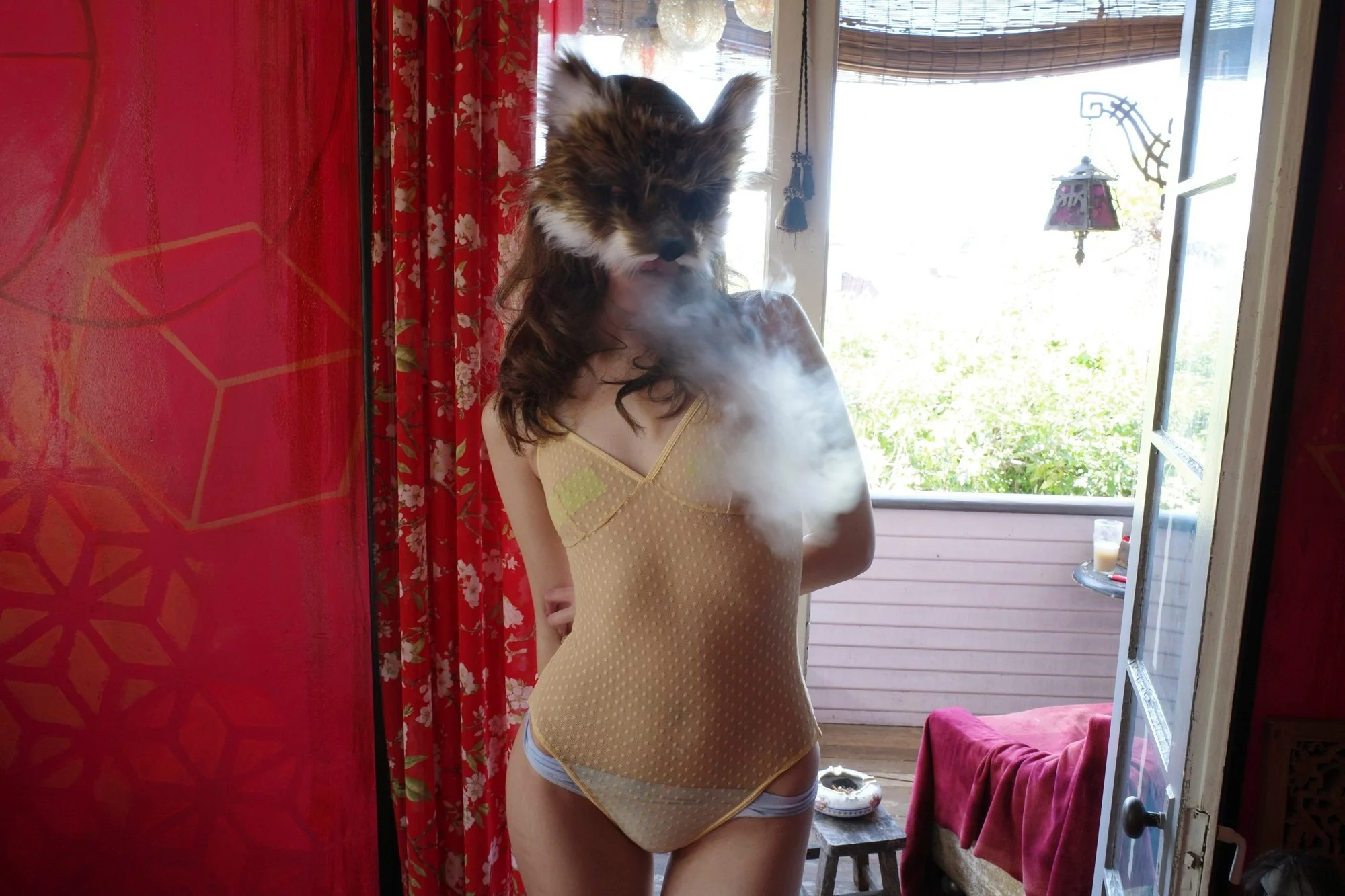
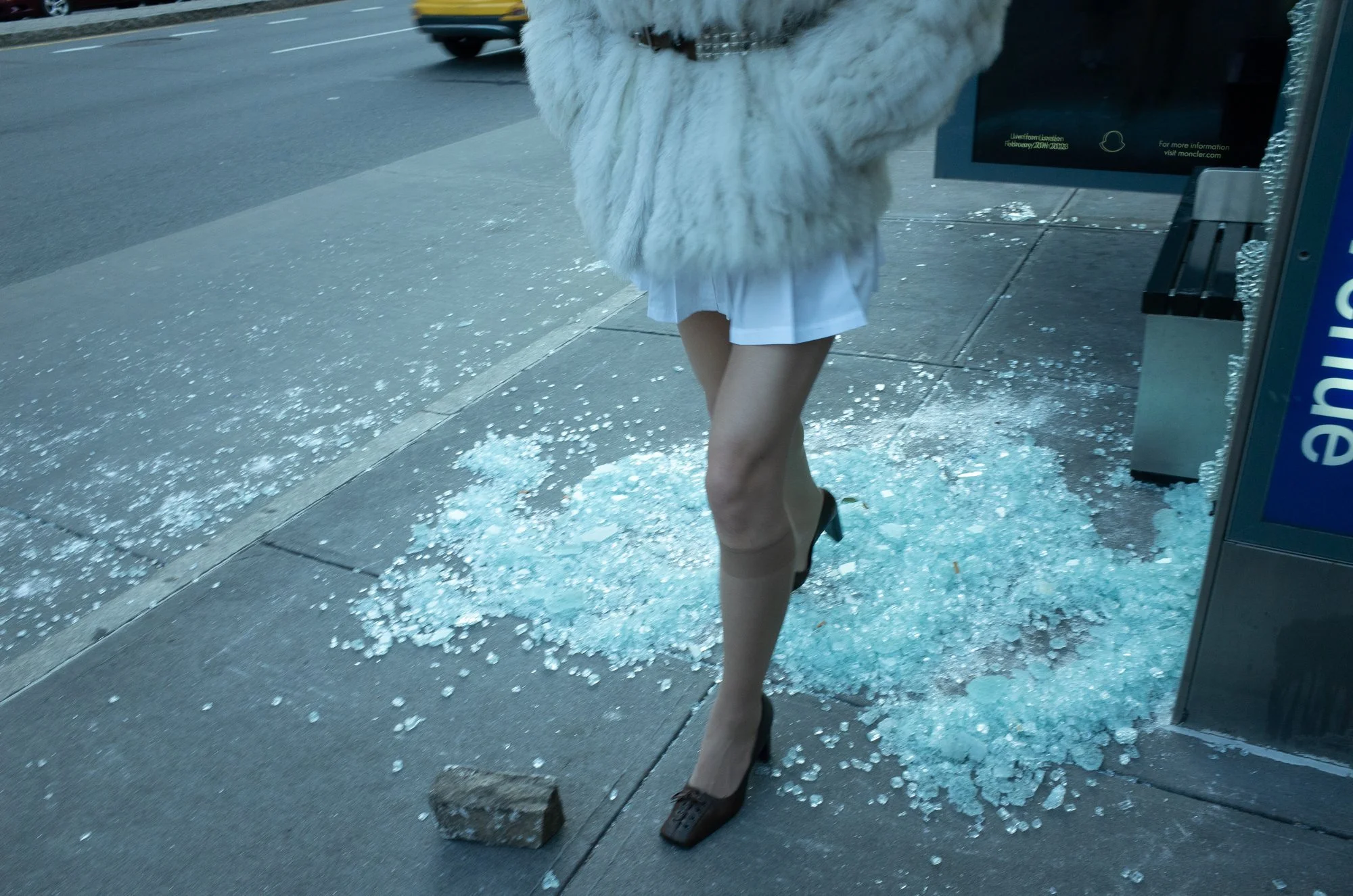
GATA: I feel like there's this tension of contradictory symbols and emotions in your work. For example a dressed up girl walking through shattered glass or a scantily clad girl, lying in the snow on the roof of a house. Is that a tension that you consciously create or does that also happen quite naturally?
Maya: There are themes that bleed into my work because they're part of me. I like to shoot subjects on their own, often in a bedroom or a wide-open landscape, to create that feeling of being in your own world. That part is conscious. In a way, my photographs are self-portraits. They're kind of an extension of me, made through other girls. I'm trying to romanticize these awkward feelings, that geeky lonely girl feeling I had for a lot of my life.
GATA: What was something in life that made you feel less lonely?
Maya: It's not really about being lonely. I'm not lonely in my own company. When I did a five-month trip through Poland, Austria, Paris, London and Spain, I shot so many girls that it became half of my book. That was probably one of the least lonely times of my life, even though I was alone like 90% of it. I don't feel alone when I have ideas brewing and I'm working. Still, that feeling of being really lonely on a set or at a party is something I try to convey in my work.
GATA: There's always this tension between feminine delicacy but also melancholic almost eerie vibes. Where do you think that the tension comes from?
Maya: I think it comes from knowing that you can have nice things one day, and then they can just be gone. Later, when I started photographing more empty houses, those themes became much more direct. I was working through so much internally after my dad died, trying to cope with that loss and discover myself by revisiting thoughts and memories from my childhood, piecing it all together. I think that's something a lot of people go through in their early to mid-twenties: figuring out who they are and understanding their own history.
GATA: Your pictures seem quite cinematic to me. Were there movies that inspired you?
Maya: Movies, for sure. I also really love music videos. I'm usually putting photos together with music in the background, almost like I'm editing a video. Sometimes I already have a particular song in mind for a scene. I want my photographs to feel like a still from a movie, ideally a very specific one. I really love Terrence Malick's films. I know some people have said that my photos remind them of Twilight or Thirteen.
GATA: When I was researching I was writing down something between Spring Breakers and Possession which is so completely opposite.
Maya: I've actually never seen Possession, but Harmony Korine is a big influence. I love Spring Breakers, and I'd say the color palette of my work is much more inspired by him than by Twilight. Other photographers like Corinne Day or Nan Goldin were also major inspirations. They're kind of the obvious references, in a way.
But, ironically, I was really drawn to Terry Richardson's work, especially the animated expressions on his models' faces. They look so happy to be there, which is so different from my own photos. I only just realized I discovered Terry Richardson through Miley Cyrus's "Wrecking Ball" music video. His work, and also Richard Kern's, was so different from what I'd seen before when I was a teenager.
GATA: What changes when women are represented from a female perspective rather than through this outside imagined gaze?
Maya: I think you can tell when a woman is photographed by someone who genuinely cares about her and who she is. The images become a collaboration. You can feel her energy in the images and get a sense of her personality, a more complete picture of her. It's not just about something being raunchy or sexual.
I'm speaking from my own experience, and from seeing images I found degrading and overly sexualized. There's also something about the way violence sometimes enters portraits of women that I find unsettling.
GATA: Why do you think especially young girls were so drawn to the whole lobotomy chic aesthetic?
Maya: I think being a photographer or artist on social media now means your work gets labeled and pigeonholed, for better or for worse. People want to categorize you so they can turn your work into a headline and make it digestible for a big audience. I don't feel like my work fits into only one space, and I don't fully understand why people started calling it that. It's such a vapid term.
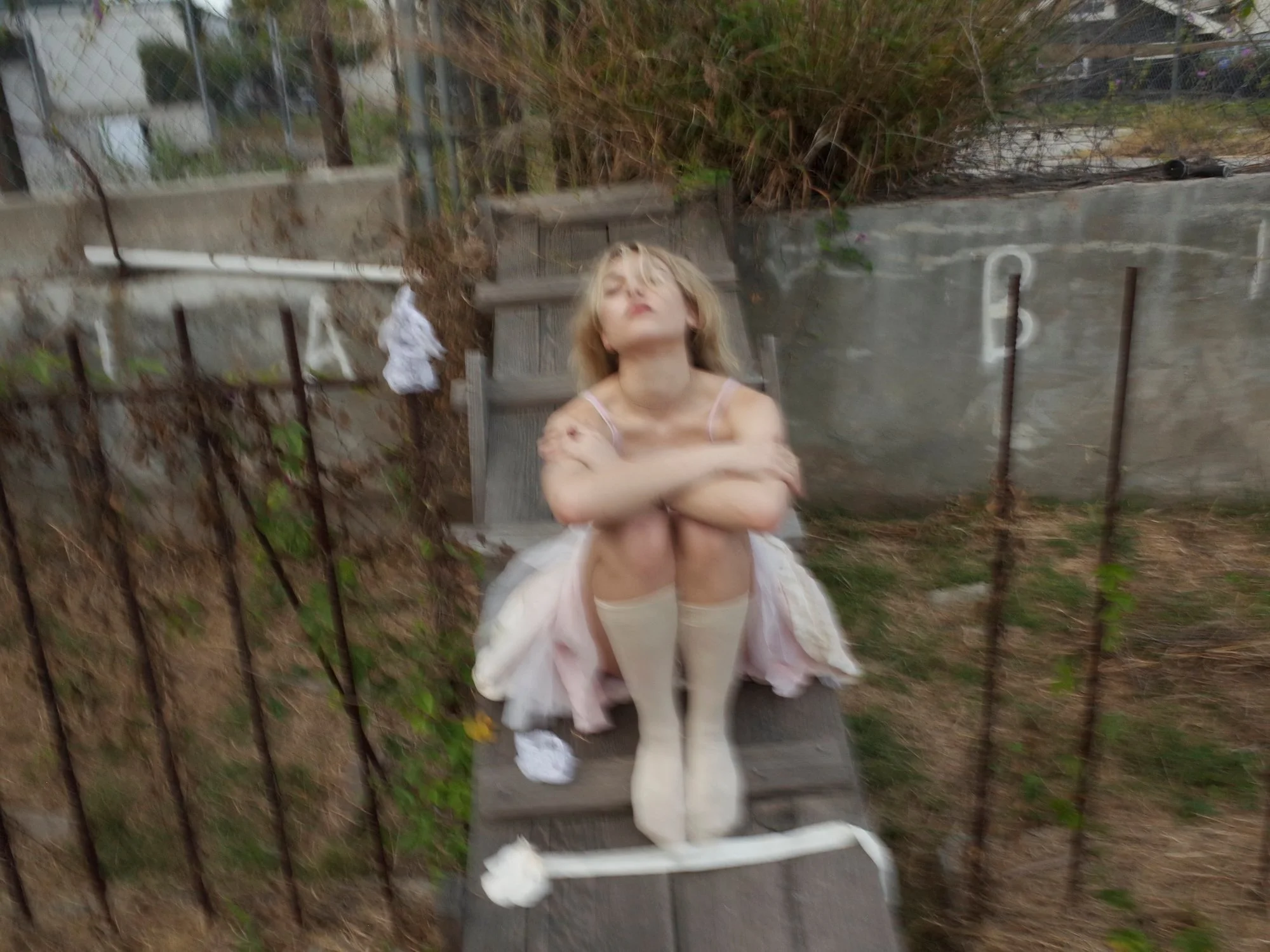
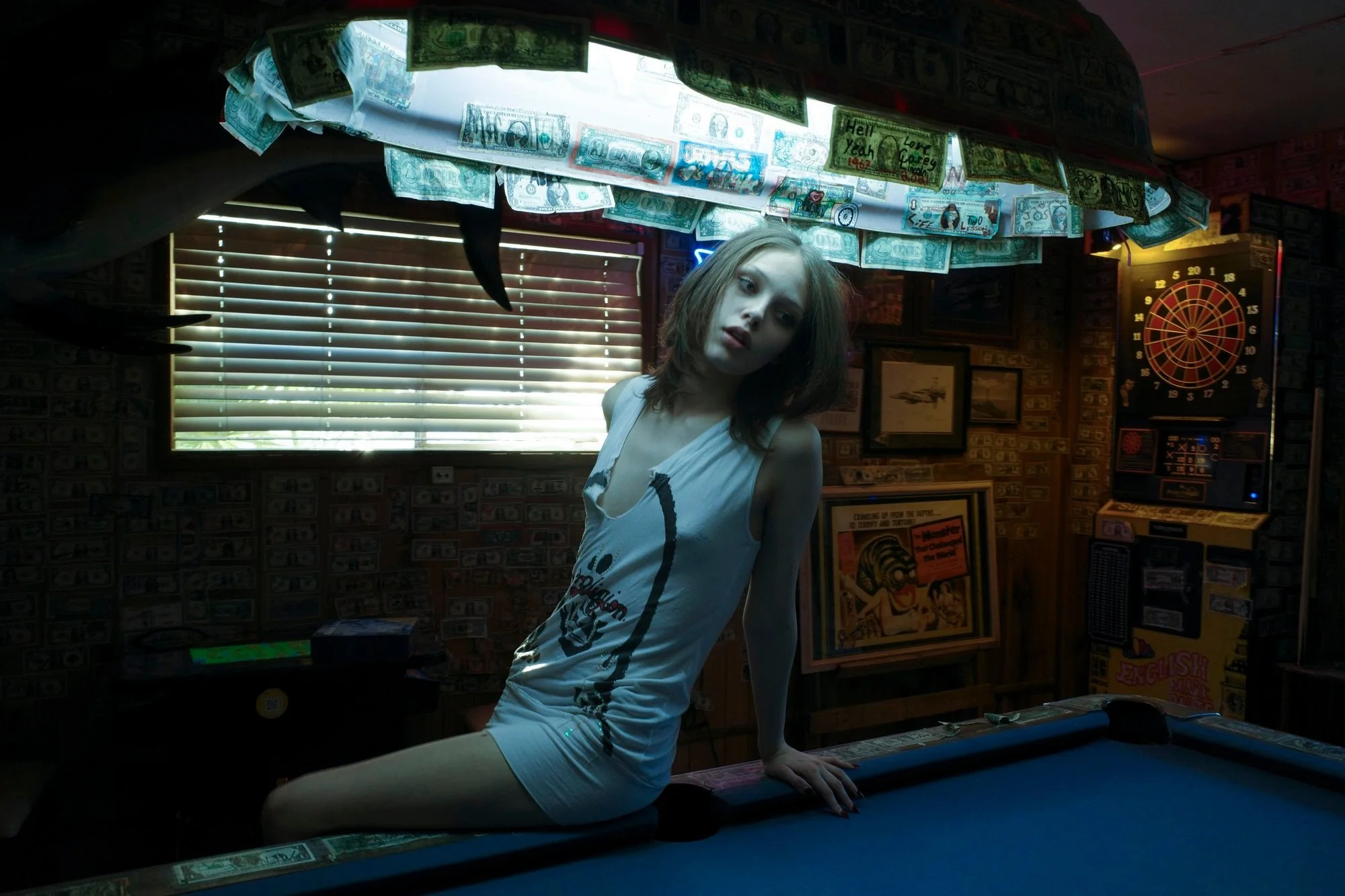
When I was younger, I was shooting girls my age, and shooting them deadpan was kind of an act of defiance. It was about not wanting to perform, not in a sexual way, not in a model way, not needing to mog. As a young woman, I'm often entering other young women's worlds, through their bedrooms or their cars, and I think the rawness of their emotions and lives comes through in my images.
I prefer models who are fully themselves, who aren't posing, which to me is the opposite of being lobotomized. When a girl refuses to perform for the camera, some people decide there's nothing going on behind her eyes. I think that says more about what they expect from girls than it does about the girls in my photos.
At the same time, I think it's cool that my work and influence were recognized. I shaped a genre that encouraged young girls to shoot themselves, and I'm proud of that. I've matured a lot in my work since then, and I don't shoot in that aesthetic anymore, but I still stand by what those images were doing.